


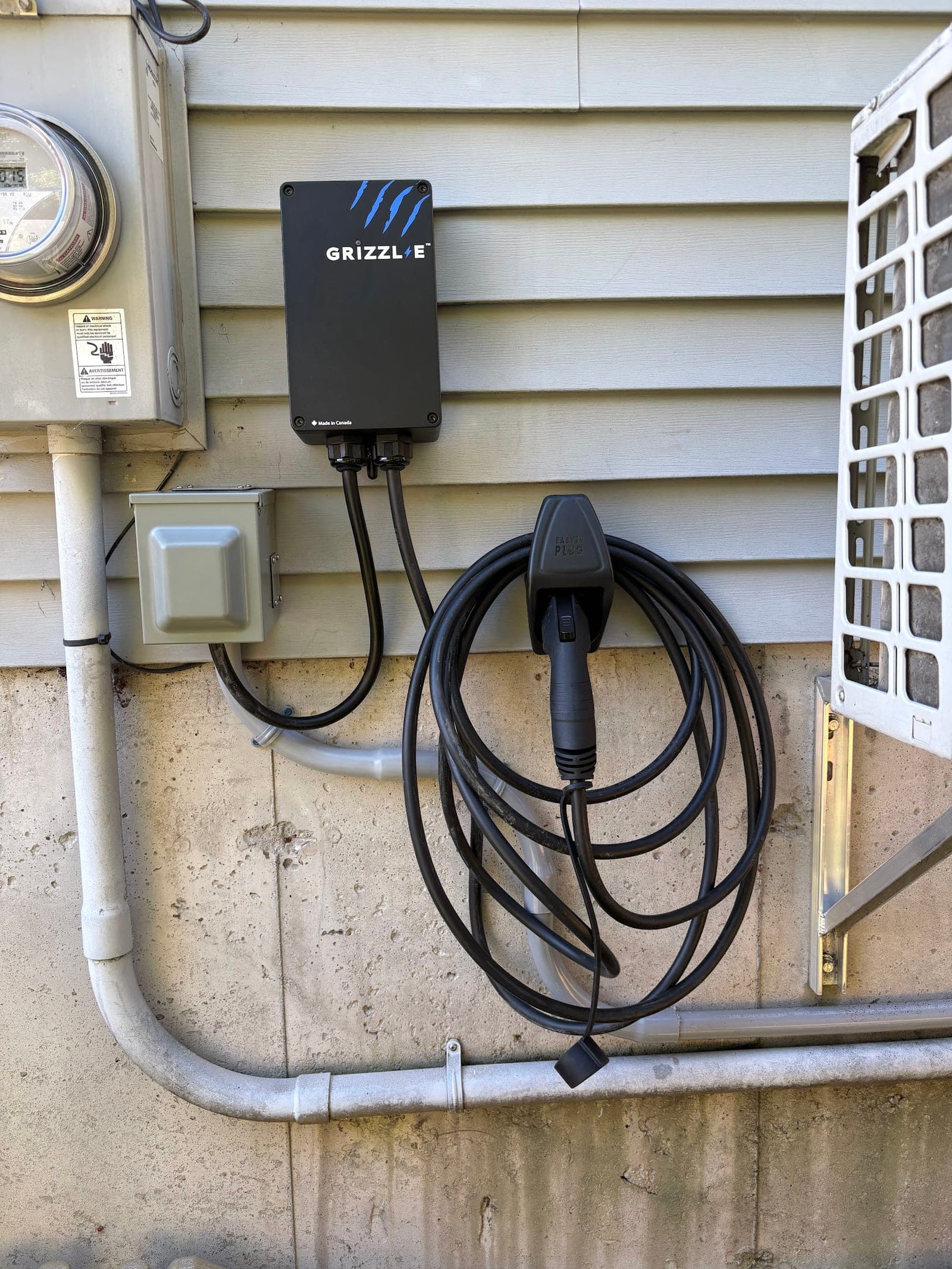
In short
- A 32 A charger on a 40 A circuit, about 7.7 kW, recharges most vehicles overnight.
- A 48 A charger, on a 60 A circuit, only charges faster if the vehicle accepts it.
- In the load calculation, the charger counts at 100%, unless an energy management system is used.
- For the $600 grant, the charger must be connected and on the official list.
- Hard-wired or plug-in: both work, with a label on the outlet and a dedicated circuit.
In this guide
What the amperage changes
- 32 A (40 A circuit, about 7.7 kW): one night is enough to recharge most vehicles after a normal day. It’s the most common choice.
- 48 A (60 A circuit, about 11.5 kW): faster, useful for two vehicles taking turns or long daily drives. Needs a larger cable and more capacity in the panel.
- Some chargers are adjustable: they can be limited to 24 A or 32 A if the panel requires it, then raised after an upgrade.
| 32 A charger | 48 A charger | |
|---|---|---|
| Circuit | 40 A | 60 A |
| Power | About 7.7 kW | About 11.5 kW |
| For whom | The vast majority of drivers | Two vehicles or long drives, if the vehicle accepts it |
| In the load calculation | Counts at 100% | Counts at 100% |
| On a 100 A service with electric heating | Fits more often | Rarely fits without load management |
The charger and its circuit: 80% at most
Charging is a continuous load: the charger uses no more than 80% of the circuit that feeds it.
A 32 A charger goes on a 40 A circuit (about 7.7 kW); a 48 A charger, on a 60 A circuit (about 11.5 kW).
Simplified diagram, not exactly to scale: the full rules and their exceptions are in the text.
What your vehicle accepts
The vehicle’s onboard charger caps the speed: many vehicles accept 7 to 11 kW of AC charging, no more. A 48 A charger on a vehicle limited to 7.2 kW charges no faster than a 32 A charger.
What your panel accepts
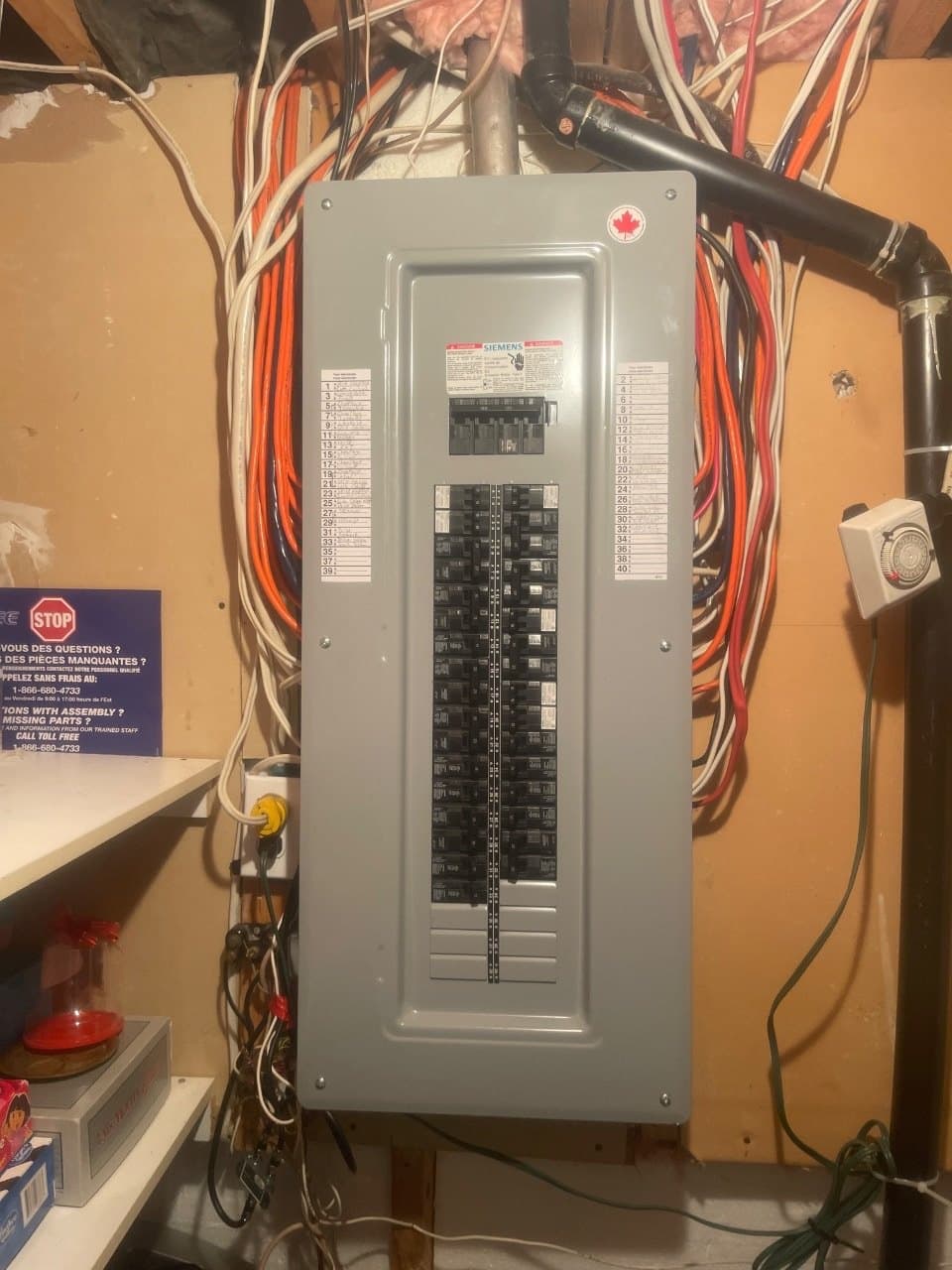
The load calculation decides. On a 100 A service with electric heating, 48 A rarely fits without load management or an upgrade; 32 A fits more often. We tell you before you buy.
Since the 2026 Code, a charger counts at 100% in the calculation, installed or only planned, unless an energy management system (EVEMS) is used. Our load calculation applies it to your house.
Hard-wired or plug-in
- A hard-wired charger is connected directly to its circuit.
- A plug-in charger plugs into a 240 V outlet installed for it. Every charging outlet carries a permanent label stating its purpose. A 50 A outlet can be on a 40 A circuit if the continuous load doesn’t exceed 80% of the circuit and it’s marked on the outlet.
- According to the RBQ, charger outlets aren’t subject to the arc-fault and tamper-resistant requirements of the dwelling’s other outlets.
Cable, outdoor, connected
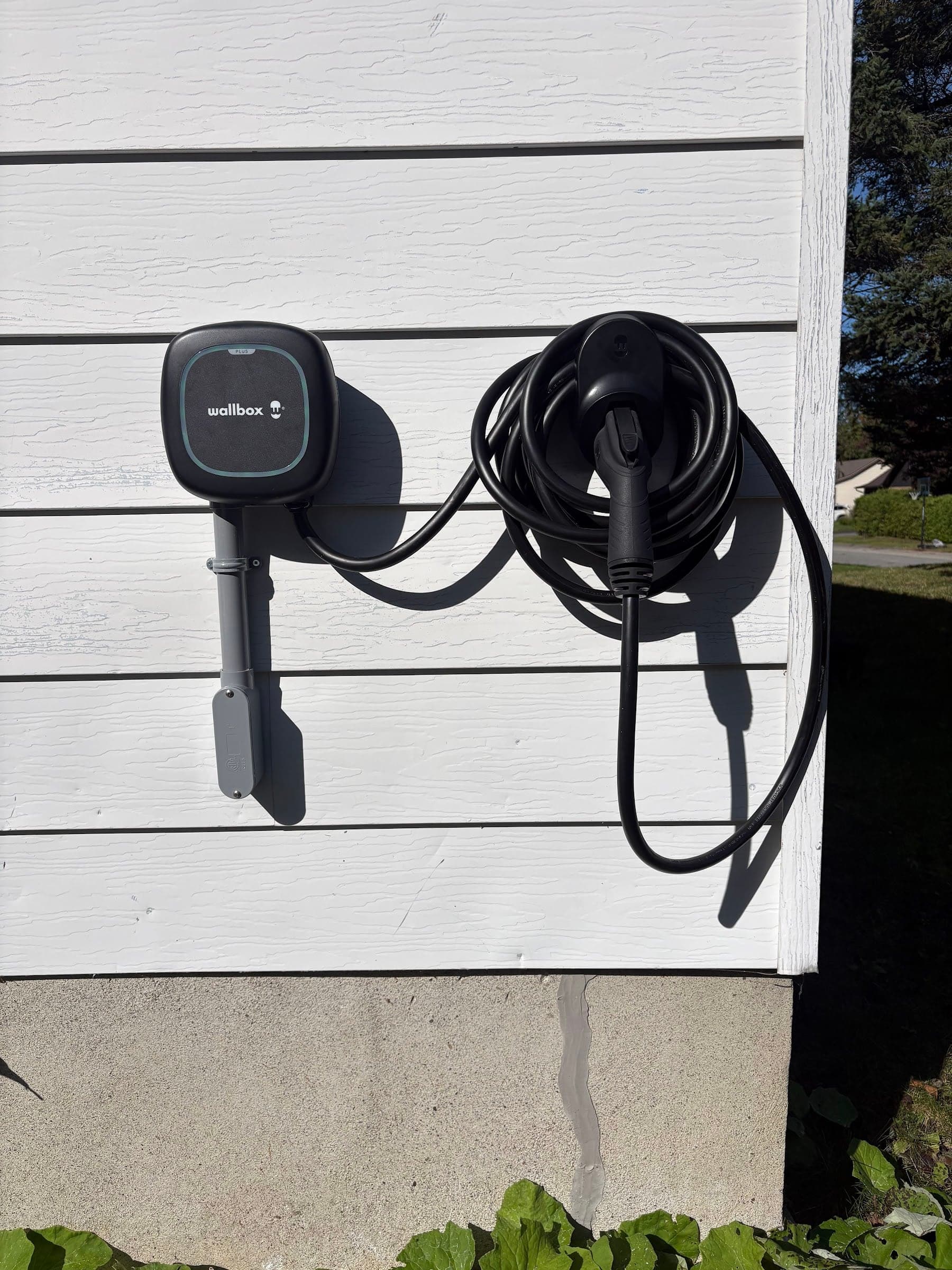
- The cable: long enough to reach the vehicle’s port without pulling, however you park. Seven metres or more is common.
- Outdoor: an outdoor-rated charger and protected wiring; we choose the spot with winter in mind.
- Connected: useful to schedule charging, track consumption or use load management. Not essential to charge.
- The connector: J1772 or NACS depending on the vehicle; adapters exist.
- Approved: the Code prohibits connecting an electrical device that isn’t approved by a recognized organization. Beware of chargers bought online without a certification mark.
Our comparison tool gives the power of the eligible chargers, and our How much does home charging cost? tool calculates the cost of charging at Hydro-Québec’s rate.
The Écorecharge rebate
According to the official pages checked on October 15, 2026, $600 is offered toward a home charger costing more than $600 before taxes, with proof of installation, for an electric vehicle owner. Conditions may change: check the official page before buying.
Since April 1, 2026, only connected chargers on the official list are eligible. It’s all explained in The $600 grant step by step.
With LTE Électrique
We install all brands (Tesla, Grizzl-E, Wallbox, FLO, EVduty), hard-wired or plug-in, after the load calculation. The price is announced in advance, fixed or hourly depending on the project, and labour is guaranteed for 2 years. See also Installing a home EV charger.
Frequently asked questions
- Do I need a smart charger?
- Not to charge. Yes if you want to schedule charging for off-peak hours, track consumption or use load management. We tell you whether it’s useful in your case.
- Can I use a plug-in charger on a 240 V outlet?
- Yes, with a dedicated outlet of the right type, on its own circuit and with the protection the Code requires for these outlets. It must be installed by an electrician, like a hard-wired charger.
- 48 A on a car that accepts 7.2 kW: does it charge faster?
- No. The vehicle’s onboard charger caps the speed: a 48 A charger on a vehicle limited to 7.2 kW charges no faster than a 32 A charger. Check the power your vehicle accepts before choosing.
- My service is 100 A: which charger should I choose?
- The load calculation decides. On a 100 A service with electric heating, 48 A rarely fits without load management or an upgrade; 32 A fits more often. Some chargers can be set to a lower current.
- Is a connected charger mandatory?
- To charge, no. For the $600 grant, yes: since April 1, 2026, only connected chargers on the official list are eligible.
- A 50 A outlet on a 40 A circuit: is that allowed?
- Yes, under the 2026 Code, if the continuous load doesn’t exceed 80% of the circuit and it’s marked on the outlet. Every charging outlet also carries a label stating its purpose.
- What cable length should I choose?
- Long enough to reach the vehicle’s port without pulling, however you park. Seven metres or more is common.
- Can I buy a charger online from anywhere?
- Careful: the Code prohibits connecting an electrical device that isn’t approved by a recognized organization. Check the certification mark, and the official list if you’re aiming for the $600 grant.
Sources
- Aide financière Écorecharge, Gouvernement du Québec, checked on October 15, 2026
- Aide financière pour une borne de recharge à domicile, Gouvernement du Québec, checked on October 15, 2026
- Cahier explicatif sur les principaux changements au chapitre V, Électricité (édition 2026)PDF, Régie du bâtiment du Québec, checked on October 21, 2026
About this guide
Written by LTE Électrique, a master electrician’s business in Sherbrooke (RBQ licence 5874-5597-01, CMEQ member). Every rule comes from Québec’s Construction Code or an official source, listed above with the date it was checked. French version reviewed by William Letendre, master electrician, on October 21, 2026.
About usCite this guide
To cite this guide, use its title, author and address:
“Choosing an EV charger: 32 A or 48 A, cable, outdoor, connected”, LTE Électrique, https://www.lteelectrique.com/en/guides/choosing-an-ev-charger-32-or-48-amps, French version reviewed by William Letendre, master electrician, on October 21, 2026.