
Home electrical glossary
115 terms about EV chargers and electric vehicles, electrical panels, grants and rebates, heat pumps, generators and power outages, explained simply for Québec homeowners by LTE Électrique, master electrician in Sherbrooke. Each term leads to the guide or tool that goes further.
By topic
Chargers and electric vehicles18 terms
- Charger circuit
- Charger in a multi-unit building
- Charging current
- Condo board
- Connected charger
- DC fast charging
- Electric vehicle (EV)
- Eligible charger list
- Hardwired or plug-in charger
- J1772 connector
- kWh per 100 km
- Level 1 charging
- Level 2 EV charger
- Load management
- NACS connector
- Payback
- Plug-in hybrid (PHEV)
- Range
Panel and electrical service22 terms
- Basic load
- Circuit breaker
- Conduit
- Connection point
- Dedicated circuit
- Demand factor
- Double-pole breaker
- Electric vehicle energy management system
- Electrical panel
- Electrical service
- Fuse panel
- Living area
- Load calculation
- Main breaker
- Mast
- Meter base
- Overhead service
- Panel space
- Shutoff and reconnection
- Sub-panel
- Underground service
- Upgrade to 200 A
Grants and rebates7 terms
Heat pumps and heating6 terms
Outages and generators14 terms
Safety and the Code18 terms
- Aluminum wiring
- Arc-fault breaker (AFCI)
- Block heater outlet
- Bonding
- Carbon monoxide alarm
- CO/ALR device
- Construction Code, Chapter V
- Disconnect switch
- Distances around water
- Electrical arc
- Electrical inspection
- GFCI
- Ground fault
- Grounding
- Interconnected smoke alarms
- Outdoor outlet
- Pre-purchase inspection
- Rough-in wiring
The basics24 terms
Choosing an electrician6 terms
A
- Alternating current
- Grid power, which changes direction 60 times per second (60 Hz) in North America. It is what powers the house; a battery, by contrast, supplies direct current.
- Aluminum wiring
- The wiring installed in many houses between the mid-1960s and the mid-1970s. It is not condemned, but its connections need compatible devices and connectors.
- At LTE Électrique: We assess circuit by circuit: connections are fixed with the right devices and connectors, and only problem circuits are redone.
- Learn more: Aluminum wiring in a 1960s-1970s house: what to do, and what your insurer asks
- Ampere (A)
- The unit of electric current. An electrical service is described in amps (100 A, 200 A), just like a breaker or an EV charger (32 A, 48 A).
- Learn more: Upgrading from 100 A to 200 A: when it’s needed and how it goes
- Arc-fault breaker (AFCI)
- A breaker that detects electrical arcs, the small sparks in a damaged wire or a loose connection that can start a fire. The Code requires it for most outlet circuits in living areas, in new work and in renovations that affect those circuits.
- Learn more: Arc-fault breakers (AFCI): what they do, where they’re required, and why they trip
B
- Baseboard heater
- Electric heating along the walls. With furnaces and heat pump backup, electric heating is often the largest item in the load calculation.
- Learn more: Load calculation
- Basic load
- The starting point of a home’s load calculation: 5,000 W for the first 90 m² of living area, plus 1,000 W for each additional 90 m² (section 8-200).
- Learn more: Load calculation
- Block heater outlet
- Block heater outlets, formerly exempt, must now be GFCI-protected like other outdoor outlets (2026 Code).
- Learn more: Outdoor outlets: what the 2026 Code requires, and where to put them
- Bonding
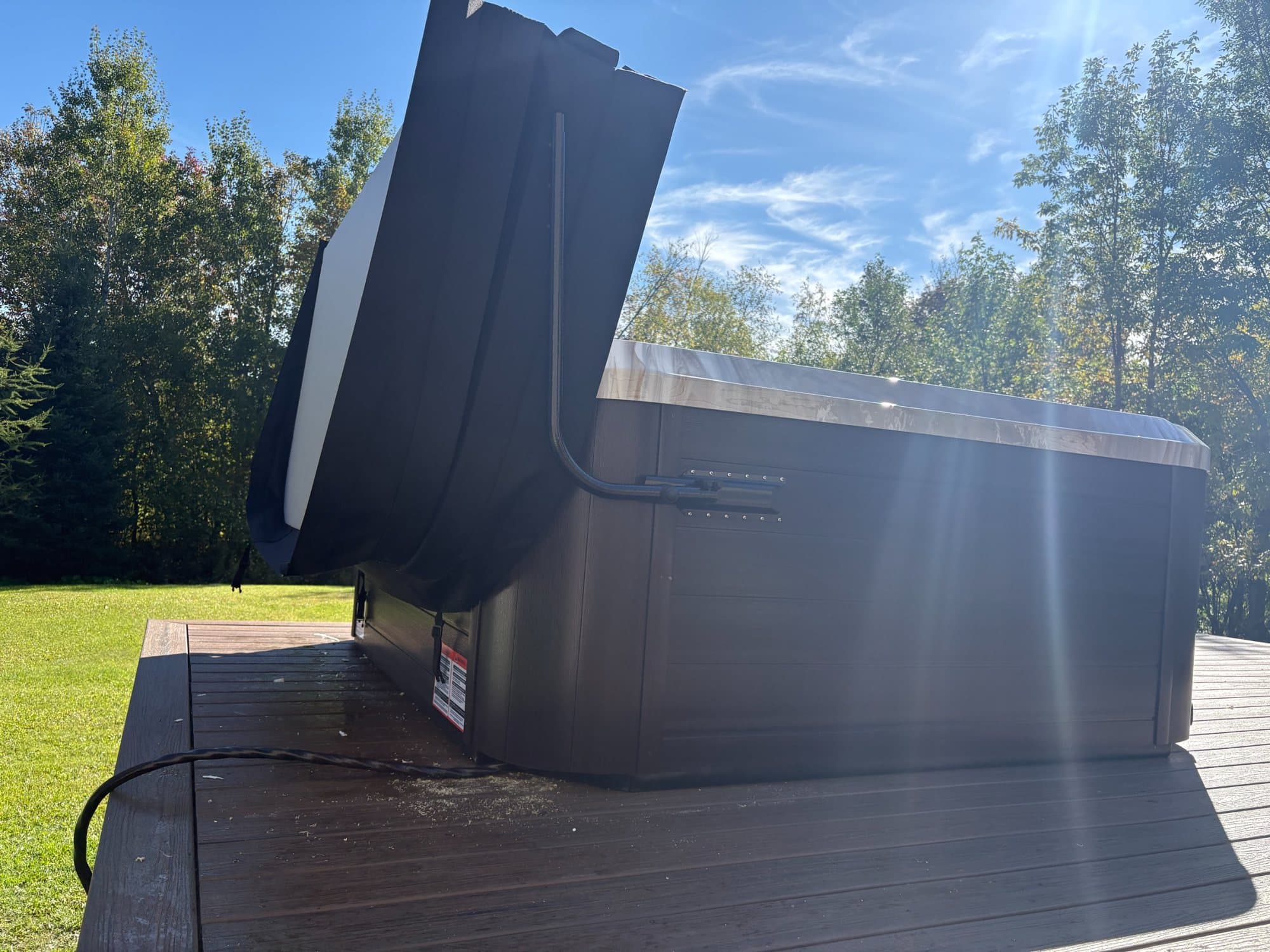
- Connecting the metal parts around a pool or hot tub together. The Code requires it depending on the type of pool and its metal parts, along with GFCI protection and distances from the water.
- Learn more: Hot tubs, pools and pool heat pumps: the electrical rules to know before you dig
- BTU/h
- The unit of heating or cooling capacity for heat pumps. LogisVert calculates its grant from the heating capacity at −8 °C.
- Learn more: Heat pump rebates: LogisVert, the announced federal rebate, and the electrician’s role
C
- Carbon monoxide
- An invisible, odourless gas given off by generators and fuel-burning heaters or lights. That is why a generator is always used outdoors.
- Learn more: Power outages
- Carbon monoxide alarm
- If the house has a fuel-burning appliance (furnace, fireplace, gas water heater) or an attached garage, a carbon monoxide alarm is required near the bedrooms.
- Learn more: Hard-wired, interconnected smoke alarms: what changes when you renovate
- Charger circuit
- A 32 A charger goes on a 40 A circuit (about 7.7 kW); a 48 A charger on a 60 A circuit (about 11.5 kW), which needs more panel capacity.
- Learn more: Choosing an EV charger: 32 A or 48 A, cable, outdoor, connected
- Charger in a multi-unit building
- In a building of 3 or more units with shared parking, Écorecharge can pay up to $5,000 for buying and installing an individual charger, with the owner’s or condo board’s approval.
- At LTE Électrique: We assess the power available in the building and do the installation, with a detailed invoice for the application.
- Learn more: An EV charger in a condo: where to start
- Charging current
- The current the charger delivers to the car: power in kW × 1,000 ÷ 240 V. A 7.7 kW charger charges at 32 A.
- Learn more: Compare eligible chargers
- Circuit
- The path of the current, from the panel breaker to the outlets, fixtures or appliance it feeds. Each circuit has its own breaker.
- Learn more: Breaker keeps tripping: the causes, what to check and when to call an electrician
- Circuit breaker
- The automatic switch that cuts a circuit in overload or fault, to protect the wires from overheating. It is chosen for the gauge of the wires it protects: never replace it with a bigger one.
- Learn more: Breaker keeps tripping: the causes, what to check and when to call an electrician
- CMEQ
- The Corporation des maîtres électriciens du Québec. It issues the electrical contractor licence (subclass 16) on behalf of the Québec government, and the contractor must be a member.
- Learn more: Choosing an electrician in Sherbrooke: licence, CMEQ, quotes and contract
- CO/ALR device
- An outlet or switch marked CO/ALR is designed for aluminum wiring. It is one of the targeted fixes for 1960s-1970s houses.
- Learn more: Aluminum wiring in a 1960s-1970s house: what to do, and what your insurer asks
- Cold-climate heat pump
- A model designed to heat well in severe cold. LogisVert pays $120 per 1,000 BTU/h for these models instead of $50.
- Learn more: Heat pump rebates: LogisVert, the announced federal rebate, and the electrician’s role
- Condo board
- The board that manages a condo’s common areas. Its approval is needed to install a charger, which affects the common areas and the building’s electrical service.
- Learn more: An EV charger in a condo: where to start
- Conduit
- The pipe that protects wires or a cable, in a wall, outdoors or underground, as for an underground service.
- Learn more: Underground or overhead service entrance: how to choose for a new house or a service to redo
- Connected charger
- A charger you can control from an app. Since April 1, 2026, only connected chargers qualify for the Écorecharge grant.
- Learn more: Compare eligible chargers
- Connection point
- Where the house’s electrical service connects to the utility’s grid. For an underground service, the trench runs to this point.
- Learn more: Underground or overhead service entrance: how to choose for a new house or a service to redo
- Construction Code, Chapter V
- Québec’s electrical rules. Chapter V (Electricity), 2026 edition, has been in force since March 26, 2026; according to the CMEQ, it will be the only applicable code as of October 17, 2027.
- Learn more: Outdoor outlets: what the 2026 Code requires, and where to put them
D
- DC fast charging
- Public direct-current chargers along highways, far more powerful than a home charger. At home, you charge at level 2.
- Dedicated circuit
- A circuit that feeds a single appliance, with its own breaker: an EV charger, a heat pump, a hot tub. It is sized from the appliance’s nameplate.
- Learn more: Hooking up a heat pump: what the electrician checks first, and why
- Demand factor
- The share of a load that is counted, because not everything runs at once. Example from the Code: a range counts as 6,000 W, plus 40% of anything over 12 kW.
- Learn more: Load calculation
- Dimmer
- A switch that varies the brightness of the lighting. With LEDs, the dimmer and the bulbs must be compatible.
- Learn more: Indoor and outdoor lighting
- Disconnect switch
- A switch that completely cuts power to an appliance. For a heat pump or a hot tub, it is mandatory and must be within sight of the appliance.
- Learn more: Hooking up a heat pump: what the electrician checks first, and why
- Distances around water
- Around a pool or hot tub, the Code sets minimum distances for outlets and fixtures, and a cable buried at the required depth.
- Learn more: Hot tubs, pools and pool heat pumps: the electrical rules to know before you dig
- Double male cord
- Plugging a generator into a household outlet with this cord is dangerous and forbidden: power flows back into the grid and can kill a line worker.
- Learn more: Generators and transfer switches: powering your house safely during an outage
- Double-pole breaker
- A breaker that takes two spaces in the panel and feeds a 240 V circuit: range, dryer, heat pump or EV charger.
- Learn more: Is my home ready for a charger?
E
- Écorecharge
- Québec’s program that pays $600 toward buying or leasing an eligible, connected level 2 charger, for a house or a duplex.
- Learn more: Rebates
- Efficient pool pump
- LogisVert pays $125 for a two-speed pump and $300 for a variable-speed pump, bought and installed before November 30, 2026.
- At LTE Électrique: We connect the new pump to a compliant circuit, with the protection required near water.
- Learn more: Rebates
- Electric backup heat
- The electric elements that help a central heat pump in very cold weather. With them, the load climbs fast: the load calculation accounts for it.
- Learn more: Hooking up a heat pump: what the electrician checks first, and why
- Electric vehicle (EV)
- A car that runs only on electricity, with a battery you recharge. Its consumption is given in kWh per 100 km.
- Learn more: How much does charging cost?
- Electric vehicle energy management system
- Under the 2026 Code, a charger counts at 100% in the load calculation, unless an energy management system controls its load (sections 8-106 10) to 12)).
- Learn more: Load calculation
- Electrical arc
- A small spark in a damaged wire or a loose connection, which can start a fire. The arc-fault breaker detects it.
- Learn more: Arc-fault breakers (AFCI): what they do, where they’re required, and why they trip
- Electrical box
- The metal or plastic box where wires are connected, behind every outlet, switch and fixture.
- Learn more: Electrical renovation
- Electrical contractor licence
- In Québec, an electrical contractor must hold a subclass 16 licence, issued by the CMEQ. You can check it in the CMEQ directory or the RBQ register.
- At LTE Électrique: LTE Électrique: RBQ licence 5874-5597-01, CMEQ member.
- Learn more: Choosing an electrician in Sherbrooke: licence, CMEQ, quotes and contract
- Electrical inspection
- A check of an installation by a master electrician: after a surge or damage, for an insurer, or before a purchase.
- Learn more: Electrical inspection
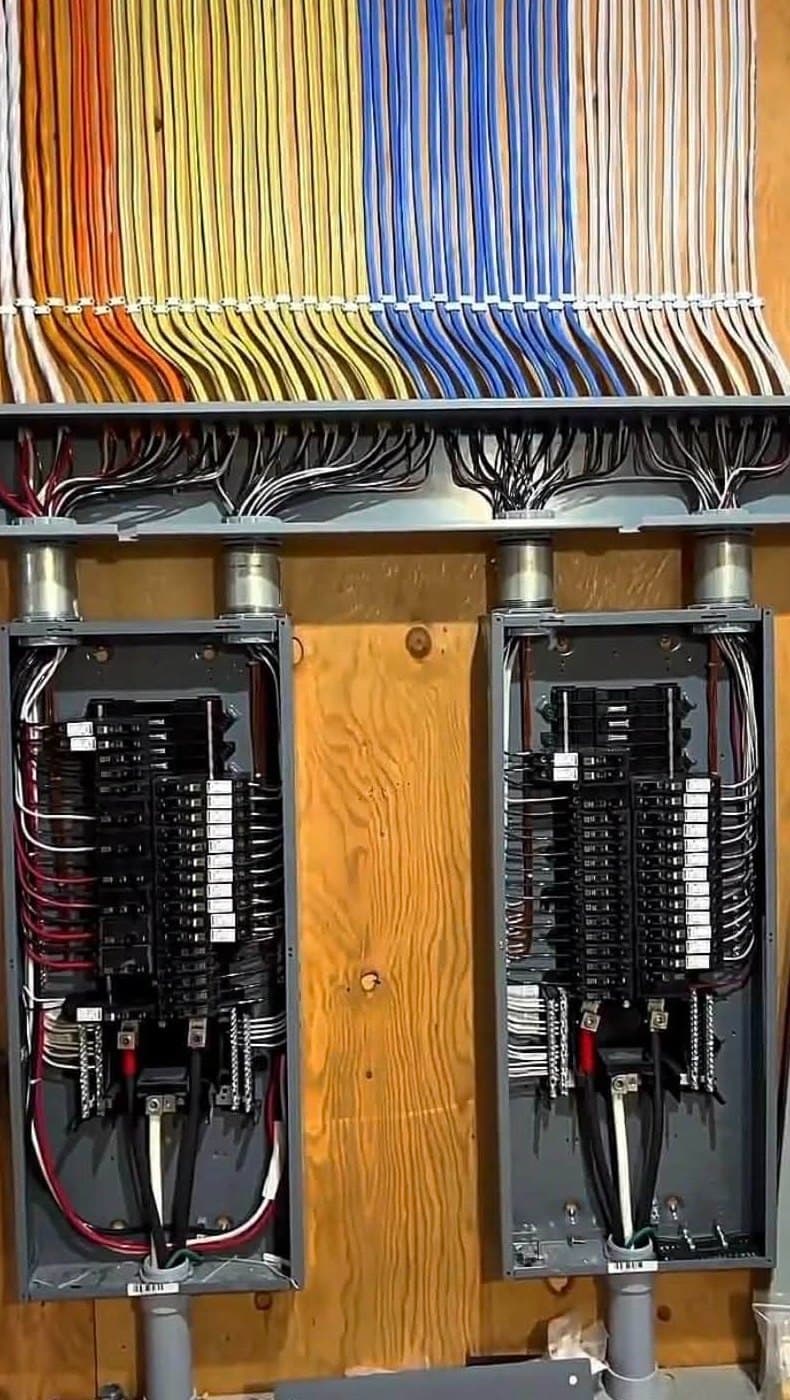
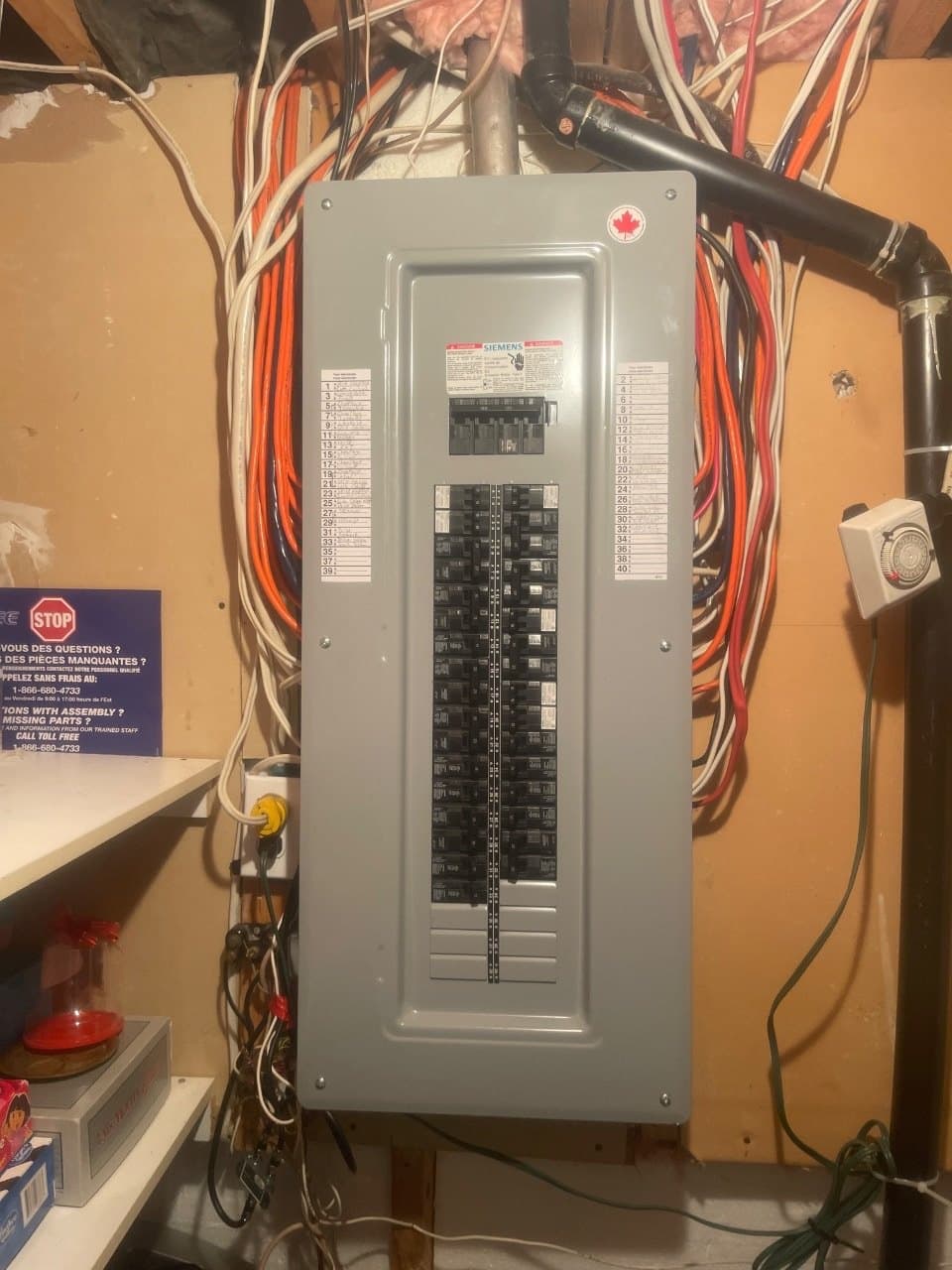
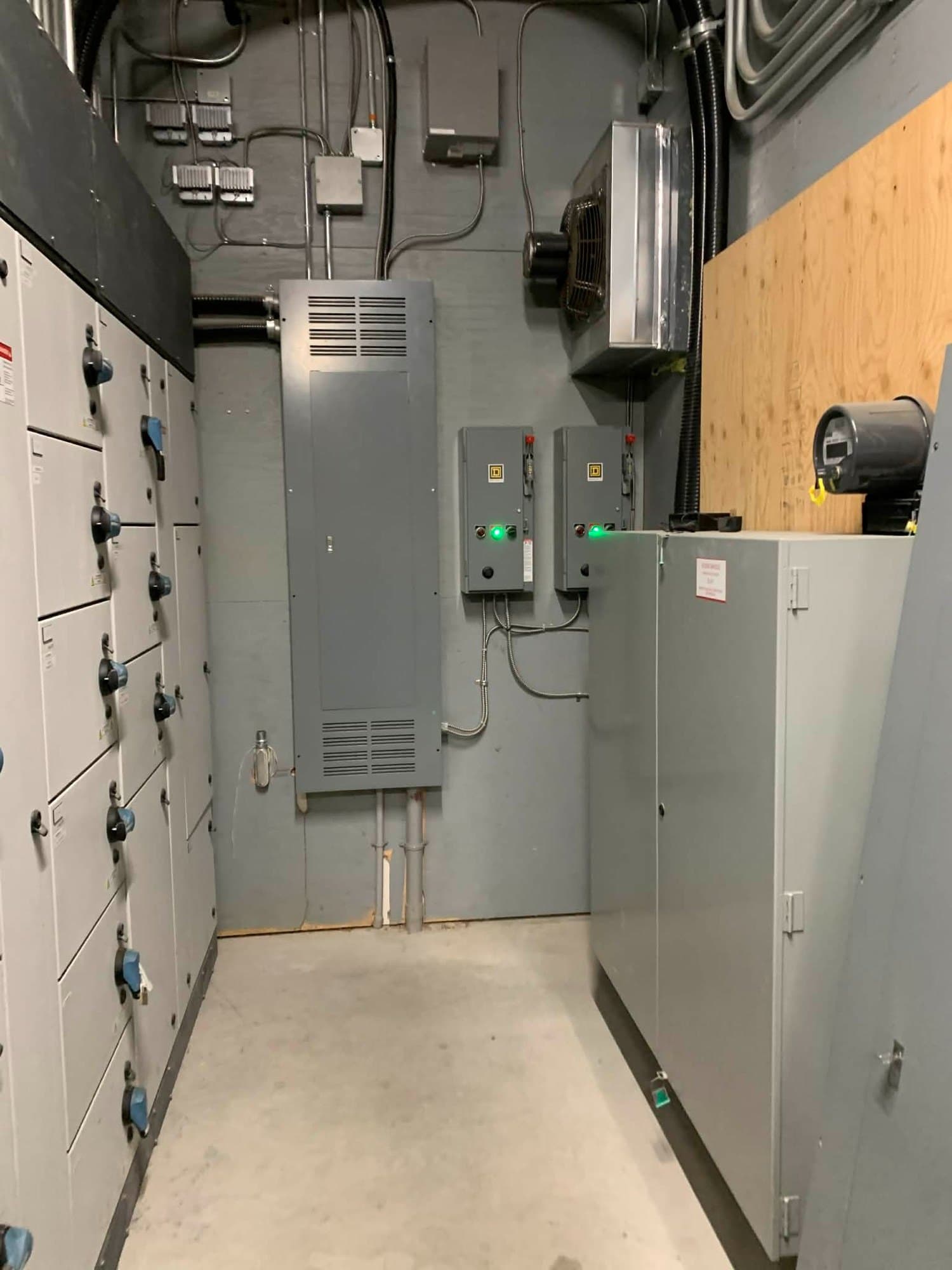
- Electrical panel
- The box that receives the electrical service and splits it into circuits, each protected by a breaker (or by a fuse, in older panels).
- At LTE Électrique: We replace panels and upgrade services to 200 A, in Sherbrooke and across the Eastern Townships.
- Learn more: Panels and service entrances
- Electrical service
- Where the utility’s electricity enters the house: the mast (overhead service) or the trench (underground service), the cable, the meter base and the panel. Its capacity is stated in amps, for example 100 A or 200 A.
- Learn more: Underground or overhead service entrance: how to choose for a new house or a service to redo
- Electricity utility
- The company that supplies your electricity. In the Eastern Townships, it is Hydro-Québec, except in part of Sherbrooke (Hydro-Sherbrooke), in Magog (Hydro-Magog) and in Coaticook (Hydro-Coaticook). Its name is on your bill.
- Learn more: Hydro-Sherbrooke or Hydro-Québec: who is my utility, and what it changes
- Eligible charger list
- Québec’s official list of chargers eligible for Écorecharge. Our comparator uses the October 6, 2026 list, without prices.
- Learn more: Compare eligible chargers
- ENERGY STAR
- The efficiency certification a new heat pump needs to qualify for LogisVert ($50 per 1,000 BTU/h at −8 °C).
- Learn more: Heat pump rebates: LogisVert, the announced federal rebate, and the electrician’s role
F
- Fuse panel
- An older panel where fuses protect the circuits. In good condition it is not dangerous in itself, but it often lacks capacity and space, can’t take modern protection, and many insurers ask for it to be replaced.
- Learn more: Fuse panel: should you replace it, and why your insurer asks
G
- Gauge and rating
- In French, « calibre » means a wire’s size (gauge) or the amp rating of a breaker or a service. The breaker must match the gauge of the wires it protects; a rating that is too high can let the wires overheat.
- Learn more: Breaker keeps tripping: the causes, what to check and when to call an electrician
- Generator
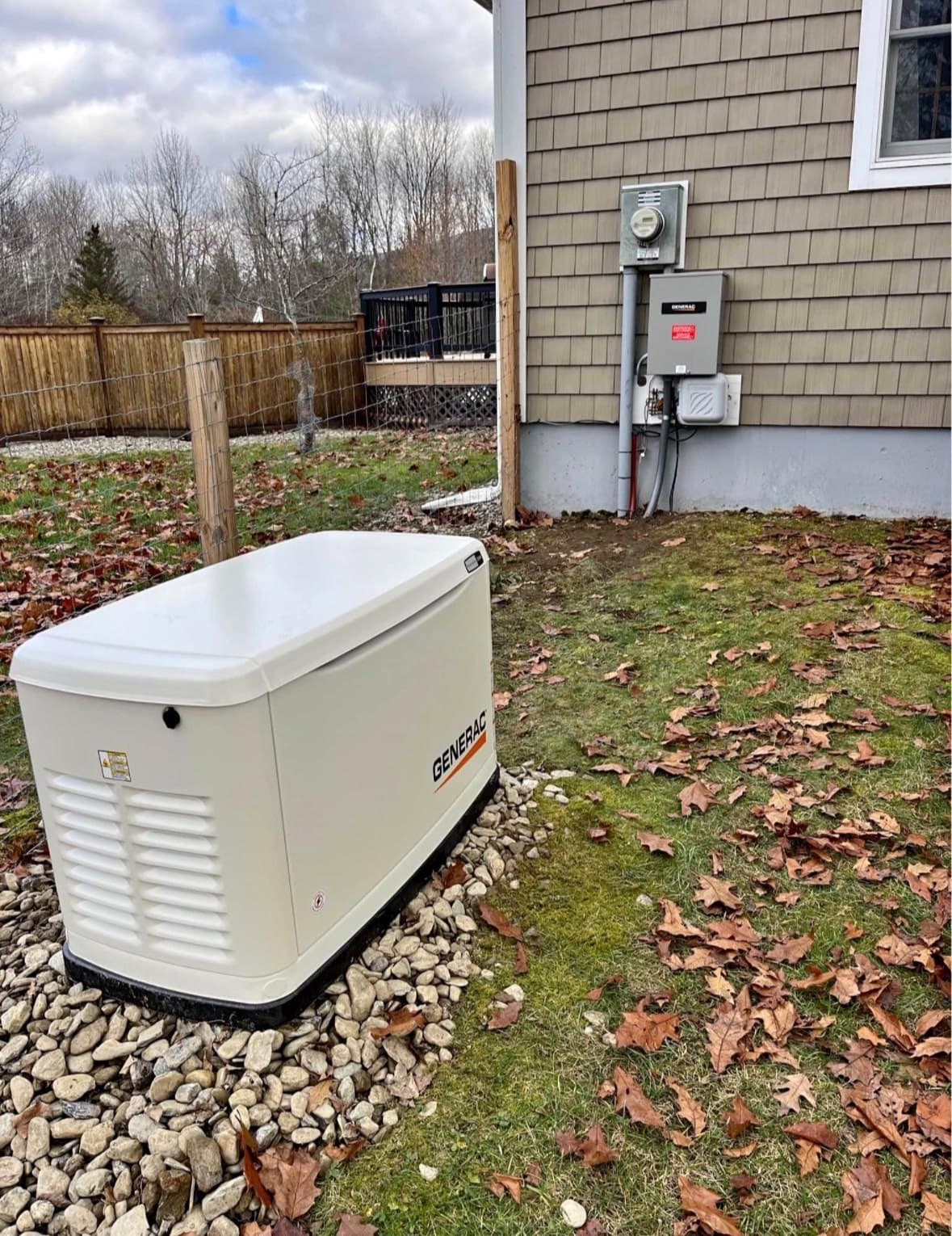
- A machine that produces power during an outage. Always outdoors, because of carbon monoxide, and connected to the house through a transfer switch or an interlock.
- At LTE Électrique: We install the transfer switch and the outdoor power inlet, then test it with you.
- Learn more: Generators and transfer switches
- GFCI
- An outlet or breaker that cuts power in a fraction of a second when current leaks to ground, for example through a person (DDFT in French). The Code requires it near water and outdoors: within 1.5 m of a sink, bathtub or shower, on all outdoor outlets, at the hot tub and at the pool.
- Learn more: GFCI outlets: where they are required, and why they trip
- Ground fault
- Current leaking out of its circuit to ground, for example through a person. A GFCI detects it and cuts power in a fraction of a second.
- Learn more: GFCI outlets: where they are required, and why they trip
- Grounding
- The connection of the electrical installation to the earth. The electrician checks it along with the electrical service; old two-slot outlets have none, and inspection reports often point them out.
- Learn more: Pre-purchase inspection: what to do when the report mentions electrical issues
H
- Hardwired or plug-in charger
- A hardwired charger is connected directly to its circuit; a plug-in charger plugs into a 240 V outlet installed for it. The eligible list includes both.
- Learn more: Compare eligible chargers
- Heat pump
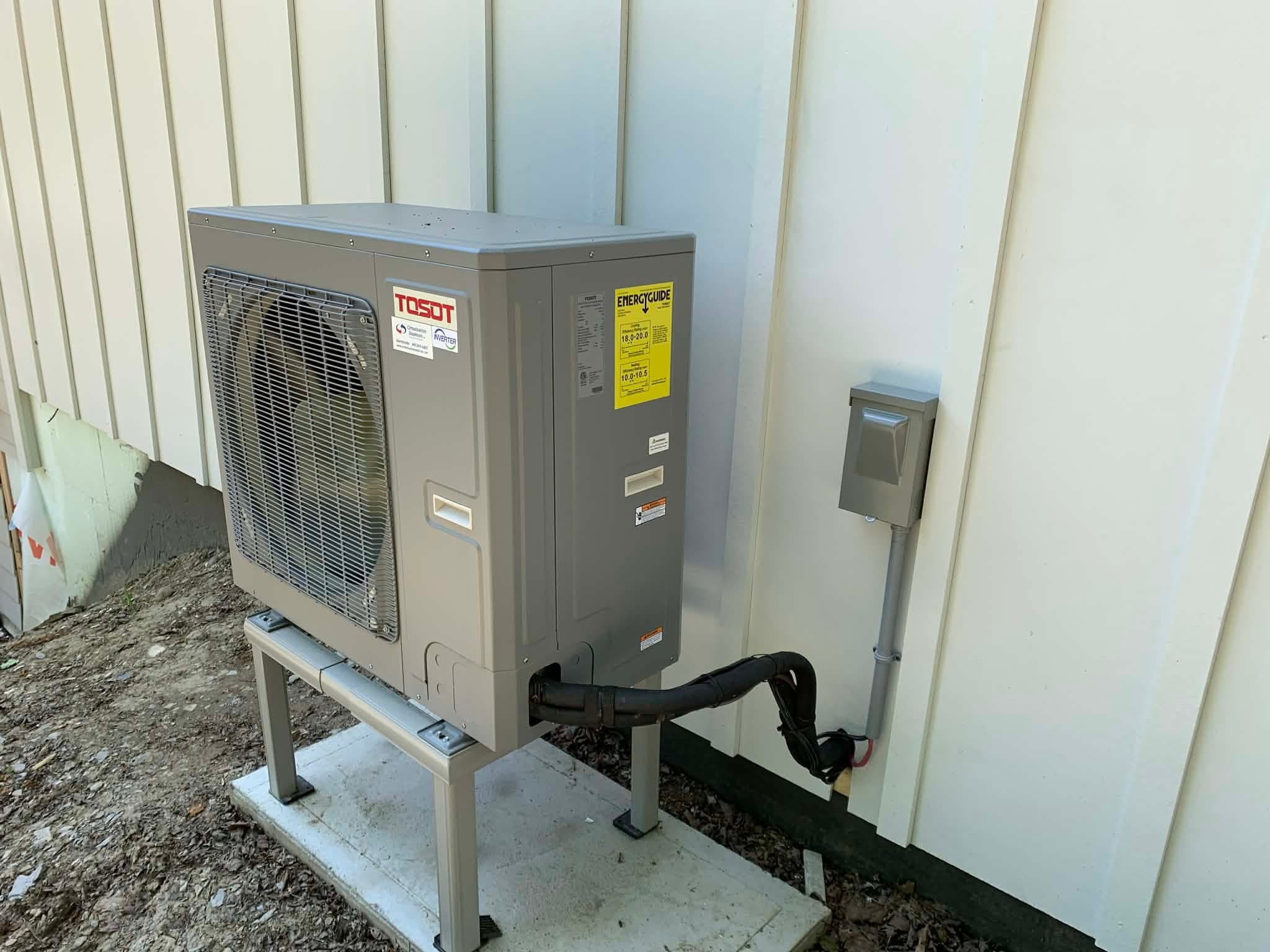
- A unit that heats in winter and cools in summer. It needs its own dedicated circuit, sized from its nameplate, and an outdoor disconnect within sight.
- At LTE Électrique: We do the dedicated circuit, the disconnect and the load calculation, coordinated with your heat pump installer.
- Learn more: Hooking up a heat pump: what the electrician checks first, and why
- Hot wires and neutral
- A house gets 120/240 V through two hot wires and a neutral: 120 V between one hot and the neutral, 240 V between the two hots.
- Learn more: Installing a home EV charger: steps, Code and the $600 grant
- Hydro-Sherbrooke
- Sherbrooke’s municipal electric utility, which serves part of the city. It has its own phone numbers, outage map and rates.
- Learn more: Hydro-Sherbrooke or Hydro-Québec: who is my utility, and what it changes
I
- Induction range
- LogisVert pays $250 for a complete new range with at least four induction elements and a convection oven. A cooktop alone does not qualify.
- At LTE Électrique: We check that the range circuit is adequate and redo it if needed during a kitchen renovation.
- Learn more: Rebates
- Interconnected smoke alarms
- Hard-wired alarms linked together: when one sounds, they all sound. The rules require them on every floor and near bedrooms in new work; they go in during rough wiring.
- Learn more: Hard-wired, interconnected smoke alarms: what changes when you renovate
J
- J1772 connector
- The standard charging connector for non-Tesla electric cars in North America, for level 1 and 2 charging.
- Learn more: Compare eligible chargers
K
- Kilowatt-hour (kWh)
- The unit of energy on your bill: 1 kW for one hour. At Hydro-Québec’s Rate D (April 1, 2026), the first 40 kWh per day cost 7.065¢ and the rest 11.142¢, before taxes.
- Learn more: How much does charging cost?
- kWh per 100 km
- An electric car’s consumption, like litres per 100 km for gasoline. Natural Resources Canada publishes it for each model.
- Learn more: How much does charging cost?
L
- LED
- Light-emitting diode: lighting that uses far less power than an incandescent bulb for the same light, and lasts longer.
- Learn more: Indoor and outdoor lighting
- Level 1 charging
- The charger that comes with the vehicle, plugged into an ordinary 120 V outlet. Slow: it can do in a pinch, but a level 2 charger suits daily use better.
- Learn more: Installing a home EV charger: steps, Code and the $600 grant
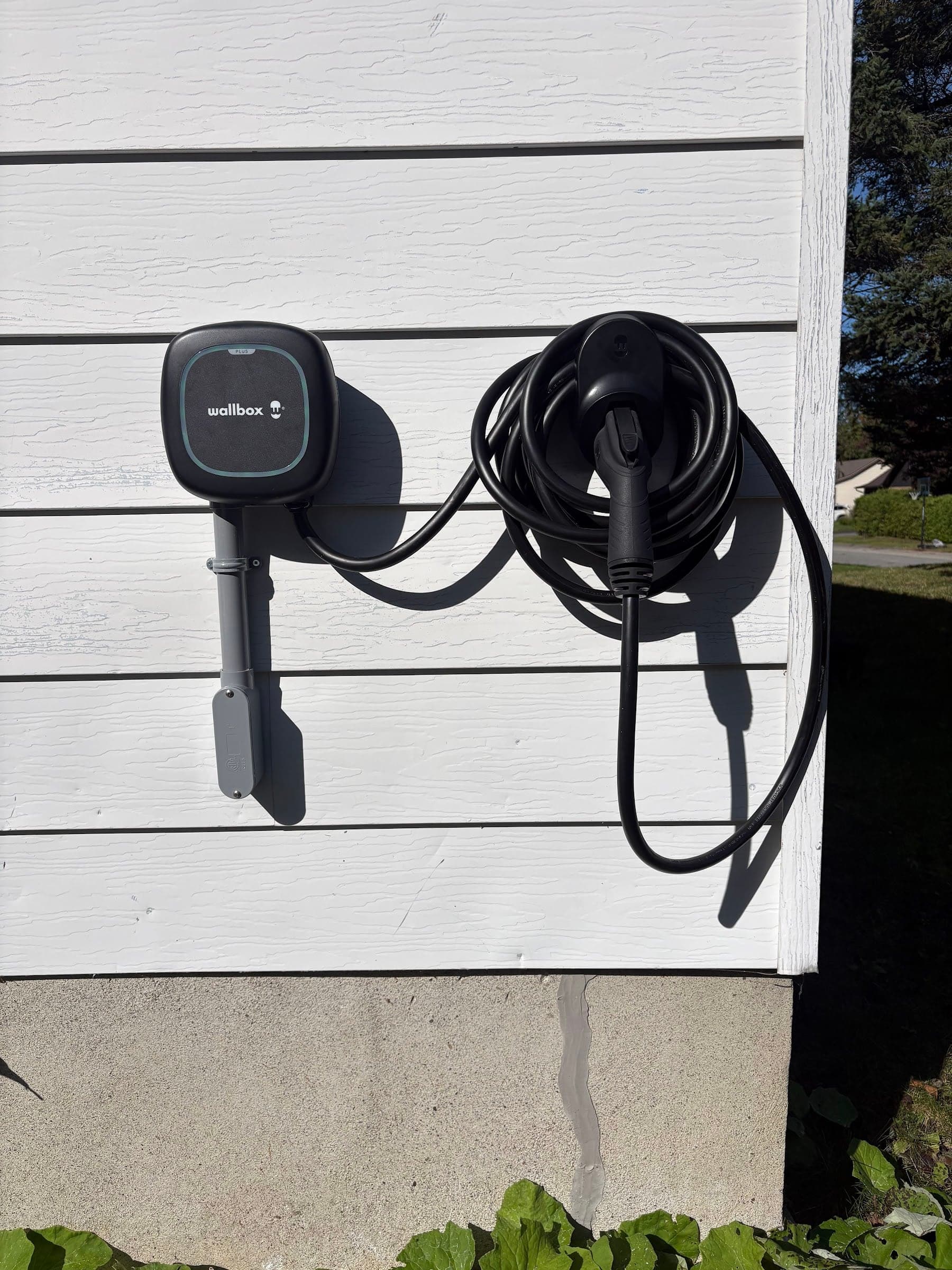
- Level 2 EV charger
- A charger connected at 240 V on a dedicated circuit, faster than an ordinary outlet. A 32 A charger on a 40 A circuit (about 7.7 kW) is enough for the vast majority of drivers: a full charge overnight.
- At LTE Électrique: We install the charger and its circuit, and give you the installation invoice that serves as proof for the $600.
- Learn more: Choosing an EV charger: 32 A or 48 A, cable, outdoor, connected
- Liability insurance
- A contractor’s insurance covering damage they could cause during the work. Ask for it before signing.
- At LTE Électrique: LTE Électrique is insured for $2 million, policy no. 4002769936.
- Learn more: About us
- Light fixture
- The lighting fixture mounted on the ceiling or wall, connected to a lighting circuit.
- Learn more: Indoor and outdoor lighting
- Living area
- In the load calculation, it is measured inside the exterior walls: the main floor and upper floors at 100%, the basement at 75% (section 8-110 of the Code).
- Learn more: Load calculation
- Load calculation
- The sum of what the house draws from the grid, done according to the Code’s rules (section 8-200). It tells whether a 100 A service is enough, or whether you need a sub-panel, load management or an upgrade to 200 A. Do it before adding a charger, a heat pump or a hot tub.
- At LTE Électrique: The exact rating is always set by the load calculation, done by the master electrician at the estimate.
- Learn more: Load calculation
- Load management
- A device that reduces or cuts the charger (or another appliance) when the house is drawing a lot, so the electrical service is never exceeded. It can sometimes avoid an upgrade to 200 A.
- Learn more: The load calculation: is your 100 A enough before you buy an EV charger, a heat pump or a hot tub?
- LogisVert
- Hydro-Québec’s program that pays $50 per 1,000 BTU/h at −8 °C for an ENERGY STAR heat pump, or $120 for a cold-climate model. It is open to Hydro-Sherbrooke, Hydro-Magog and Hydro-Coaticook customers.
- Learn more: Heat pump rebates: LogisVert, the announced federal rebate, and the electrician’s role
M
- Main breaker
- The large breaker at the top of the panel, which cuts power to the whole house. Its rating is printed on it (100 A, 200 A): that is your service size.
- Learn more: 100 A or 200 A?
- Mast
- The pipe attached to the house where the utility’s overhead cable arrives, then runs down to the meter base and the panel. An underground service has none: the cable comes in through a trench.
- Learn more: Underground or overhead service entrance: how to choose for a new house or a service to redo
- Master electrician
- The electrical contractor who is a member of the CMEQ and holds the licence (subclass 16). That is who should assess an electrical issue flagged in an inspection report.
- At LTE Électrique: William Letendre, of LTE Électrique, is a master electrician and a CMEQ member (RBQ licence 5874-5597-01).
- Learn more: Pre-purchase inspection: what to do when the report mentions electrical issues
- Meter
- The utility’s device that measures the electricity used, in kWh. It plugs into the meter base, outside.
- Learn more: Underground or overhead service entrance: how to choose for a new house or a service to redo
- Meter base
- The outdoor box the utility’s meter plugs into, between the mast (or the underground cable) and the panel. It is part of the electrical service.
- Learn more: Underground or overhead service entrance: how to choose for a new house or a service to redo
- Municipal charger grant
- Some Eastern Townships municipalities add their own grant to Québec’s $600. Coaticook, for example, refunds up to $250 for a charger installed by a master electrician.
- Learn more: Which grants apply to your project?
N
- NACS connector
- Tesla’s connector, also adopted by other automakers. Some chargers on the eligible list offer it, alone or alongside J1772.
- Learn more: Compare eligible chargers
- Nameplate
- An appliance’s label giving its electrical values (volts, amps or watts). It sets the circuit size, and it gives your appliances’ actual watts for choosing a generator.
- Learn more: Hooking up a heat pump: what the electrician checks first, and why
- National Heat Pump Rebate
- Announced on October 8, 2026: up to $10,000 for households below median income, $2,000 for others. Not yet open: the conditions have not been published.
- Learn more: Rebates
O
- Outdoor outlet
- Under the 2026 Code, every ordinary outdoor outlet must be GFCI-protected, unless it is 2.5 m or more above ground. It also needs a weatherproof box and a protective cover.
- Learn more: Outdoor outlets: what the 2026 Code requires, and where to put them
- Outdoor power inlet
- The outdoor inlet where the generator plugs in. It is connected to the transfer switch or the panel interlock.
- Learn more: Generators and transfer switches: powering your house safely during an outage
- Outlet
- Ordinary household outlets are 120 V. Near water and outdoors, the Code requires GFCI protection.
- Learn more: GFCI outlets: where they are required, and why they trip
- Overhead service
- The utility’s cable runs from the pole to a mast on the house. Simpler to install, but visible and exposed to branches, ice and tall trucks.
- Learn more: Underground or overhead service entrance: how to choose for a new house or a service to redo
- Overload
- Too many powerful appliances at once on the same circuit (kettle, microwave, space heater): the breaker trips to protect the wires.
- Learn more: Breaker keeps tripping: the causes, what to check and when to call an electrician
P
- Panel interlock
- A mechanical part that prevents the main breaker and the generator breaker from being on at the same time. It is the other safe way to connect a generator, with an outdoor power inlet.
- Learn more: Generators and transfer switches: powering your house safely during an outage
- Panel space
- The free slots for adding breakers. A full panel is solved with a sub-panel or an upgraded panel, depending on the load calculation.
- Learn more: Is my home ready for a charger?
- Payback
- The time it takes for fuel savings to pay back the charger and its installation, minus rebates. Our tool calculates it as a range.
- Learn more: How much does charging cost?
- Planned interruption
- A power cut announced in advance by the utility, for work on the grid. Hydro-Québec publishes its own with the date, the hours and the number of customers affected.
- Learn more: Power outages
- Plug-in hybrid (PHEV)
- A car with a gasoline engine and a rechargeable battery. As with an EV, its owner may qualify for Écorecharge’s $600 for a home charger.
- Learn more: Rebates
- Power outage
- An unplanned power cut. If the whole street is dark, it is on the grid: report it to your utility. If it is only your house, check the panel.
- Learn more: Power outages
- Power restoration
- Power coming back after an outage. Hydro-Québec’s map often gives an estimated restoration time, which our outage map shows.
- Learn more: Power outages
- Power surge
- A sudden rise in voltage, for example when power comes back after an outage. Hydro-Québec advises unplugging electronics during an outage.
- At LTE Électrique: After damage, Hydro-Québec recommends having the installation inspected by a master electrician: exactly what William Letendre does.
- Learn more: Electrical inspection
- Pre-purchase inspection
- The inspection of a house before buying, by an RBQ-certified inspector (certificate mandatory as of October 1, 2027). An electrical issue it flags should be assessed by a master electrician.
- At LTE Électrique: William Letendre, a master electrician, assesses the flagged issue and can give you a quote before you waive your condition.
- Learn more: Pre-purchase inspection: what to do when the report mentions electrical issues
- Proof of installation
- For Écorecharge, installation costs are not covered, but proof of installation is required: the electrician’s invoice.
- At LTE Électrique: We give you the detailed invoice and proof of installation; you file the application.
- Learn more: Rebates
R
- Range
- The distance an electric car travels on a full battery, according to Natural Resources Canada ratings. It drops in very cold weather.
- Learn more: How much does charging cost?
- Rate D
- Hydro-Québec’s residential rate. As of April 1, 2026: 46.154¢ per day for access, 7.065¢ per kWh for the first 40 kWh per day and 11.142¢ for the rest, before taxes.
- Learn more: How much does charging cost?
- Rated and maximum power
- A generator’s two power ratings: the rated power must cover the appliances running, the maximum the start-up of the largest motor.
- Learn more: What size generator do you need?
- RBQ
- The Régie du bâtiment du Québec. Its register lets you check a contractor’s licence, as does the CMEQ directory.
- Learn more: Choosing an electrician in Sherbrooke: licence, CMEQ, quotes and contract
- Recessed light
- A fixture set into the ceiling, flush with the surface; often called a “pot light”.
- Learn more: Indoor and outdoor lighting
- Report an outage
- Tell your utility about an outage that isn’t on its map. The right number depends on your address: your bill says who your utility is.
- Learn more: Power outages
- Rough-in wiring
- The stage when the electrician runs the wires through open walls, before finishing. It is the time to add hard-wired, interconnected smoke alarms.
- Learn more: Hard-wired, interconnected smoke alarms: what changes when you renovate
- Running and starting watts
- A motor (fridge, pump, furnace fan) draws more power for a moment when it starts. The generator must supply the running watts of all appliances, plus the extra starting watts of the largest motor.
- Learn more: What size generator do you need?
S
- Short circuit
- Direct contact between two conductors that should not touch: the current jumps and the breaker trips.
- Learn more: Breaker keeps tripping: the causes, what to check and when to call an electrician
- Shutoff and reconnection
- To replace the service or the panel, the utility shuts off the power, then reconnects the house once the work is done. The shutoff lasts as long as the replacement.
- Learn more: Upgrading from 100 A to 200 A: when it’s needed and how it goes
- Sub-panel
- A second panel, fed by the main panel, that adds room for circuits. It adds no capacity to the electrical service: the load calculation tells whether the service is enough.
- Learn more: The load calculation: is your 100 A enough before you buy an EV charger, a heat pump or a hot tub?
- Switch
- It opens or closes a lighting or appliance circuit. On aluminum wiring, switches designed for aluminum (marked CO/ALR) or compatible connectors are used.
- Learn more: Aluminum wiring in a 1960s-1970s house: what to do, and what your insurer asks
T
- Transfer switch
- The device that switches the house’s circuits from the grid to the generator, without ever connecting the two. Without it, power can flow back into the grid and kill a line worker. It is installed by an electrician.
- At LTE Électrique: We install the transfer switch and the outdoor power inlet, then test it with you.
- Learn more: Generators and transfer switches: powering your house safely during an outage
- Tripping and resetting
- A breaker that cuts a circuit has “tripped”. You can reset it once after unplugging the appliances; if it trips again, leave it off and call an electrician.
- Learn more: Breaker keeps tripping: the causes, what to check and when to call an electrician
- Two-slot outlet
- An old outlet with no ground. Inspection reports often flag it; a master electrician assesses what needs to be done.
- Learn more: Pre-purchase inspection: what to do when the report mentions electrical issues
U
- Underground service
- The cable comes in through a trench and conduits to the meter base. It is out of sight and safe from branches, but needs a trench, conduits and close coordination with the utility.
- Learn more: Underground or overhead service entrance: how to choose for a new house or a service to redo
- Upgrade to 200 A
- Replacing a 100 A service with a 200 A one, often when adding a heat pump, an EV charger or electric heating. A load calculation confirms it.
- At LTE Électrique: We coordinate the shutoff and reconnection with Hydro-Québec or Hydro-Sherbrooke, depending on your address.
- Learn more: Upgrading from 100 A to 200 A: when it’s needed and how it goes
V
- Volt (V)
- The unit of voltage. At home, ordinary outlets are 120 V; large appliances, such as a level 2 EV charger, are connected at 240 V.
- Learn more: Installing a home EV charger: steps, Code and the $600 grant
- Voltage drop
- The loss of voltage along a long cable. The longer the run, the bigger the cable must be: that is why the distance to the panel matters for a charger.
- Learn more: Installing a home EV charger: steps, Code and the $600 grant
W
- Watt (W) and kilowatt (kW)
- The unit of power: what an appliance draws at a given moment. Watts = volts × amps, and 1 kW = 1,000 W. A 32 A charger at 240 V delivers about 7.7 kW.
- Learn more: What size generator do you need?
- Written quote
- A written, detailed price before the work. Before signing, compare written quotes and ask for a written contract.
- At LTE Électrique: Free estimate within 24 hours; the price, fixed or hourly, is announced in advance.
- Learn more: Request a quote
A word missing, or a more specific question? Text us at 819 570-9836.
An electrical project?
We call you back the same day.
Call or text 819 570-9836. Free estimate within 24 hours, anywhere in Sherbrooke and the Eastern Townships.
Monday to Friday, 8 a.m. to 4 p.m.
5.0 from 43 Google reviews