
6 guides
EV chargers
Everything about charging at home in Québec: the power you need, what the Code requires, the $600 grant, and what changes in a condo or a rental.
- 6 guides
- 6 reviewed by a master electrician
- Official sources cited
- Free, no sign-up
Install and choose
3 guides
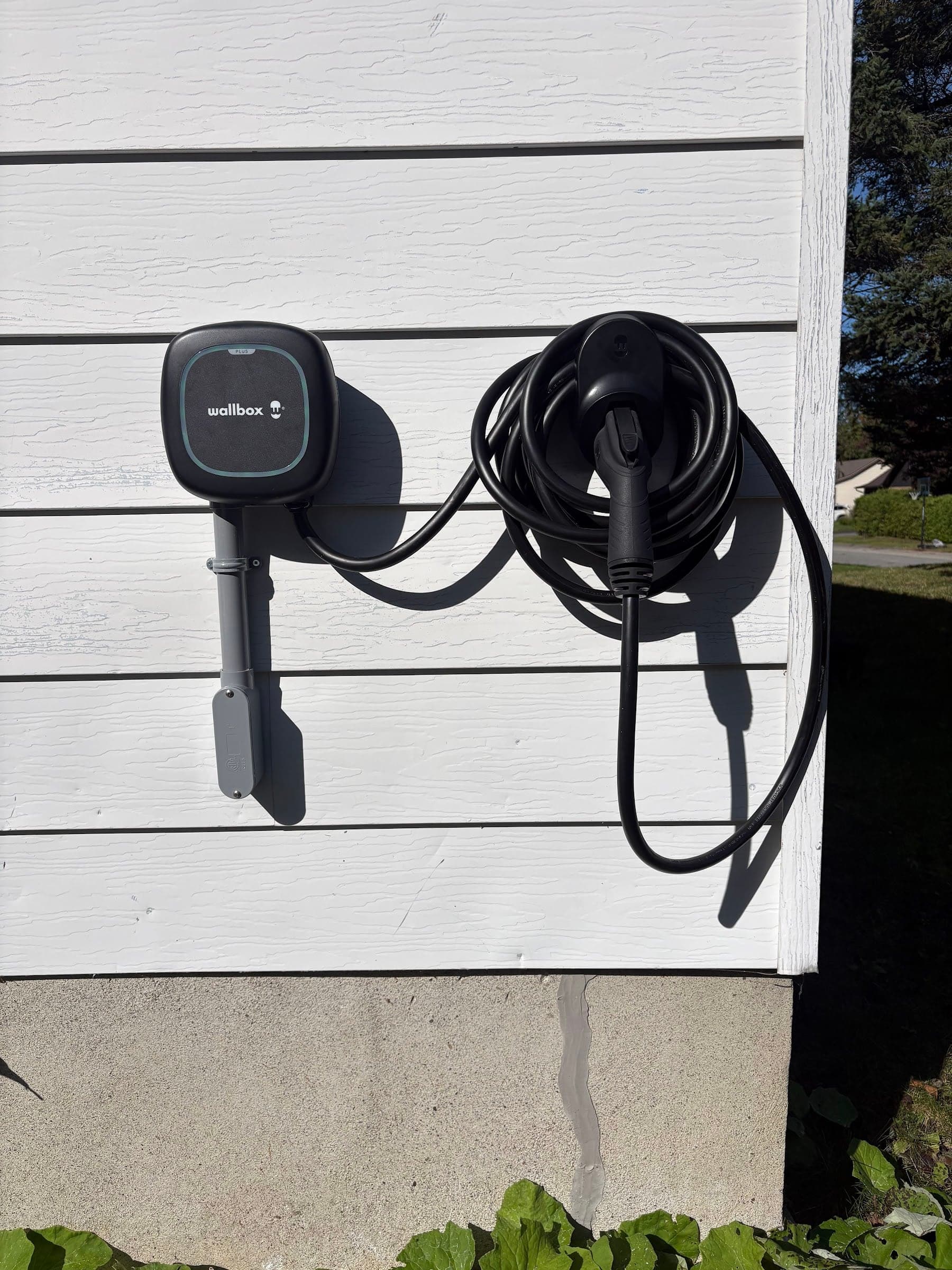
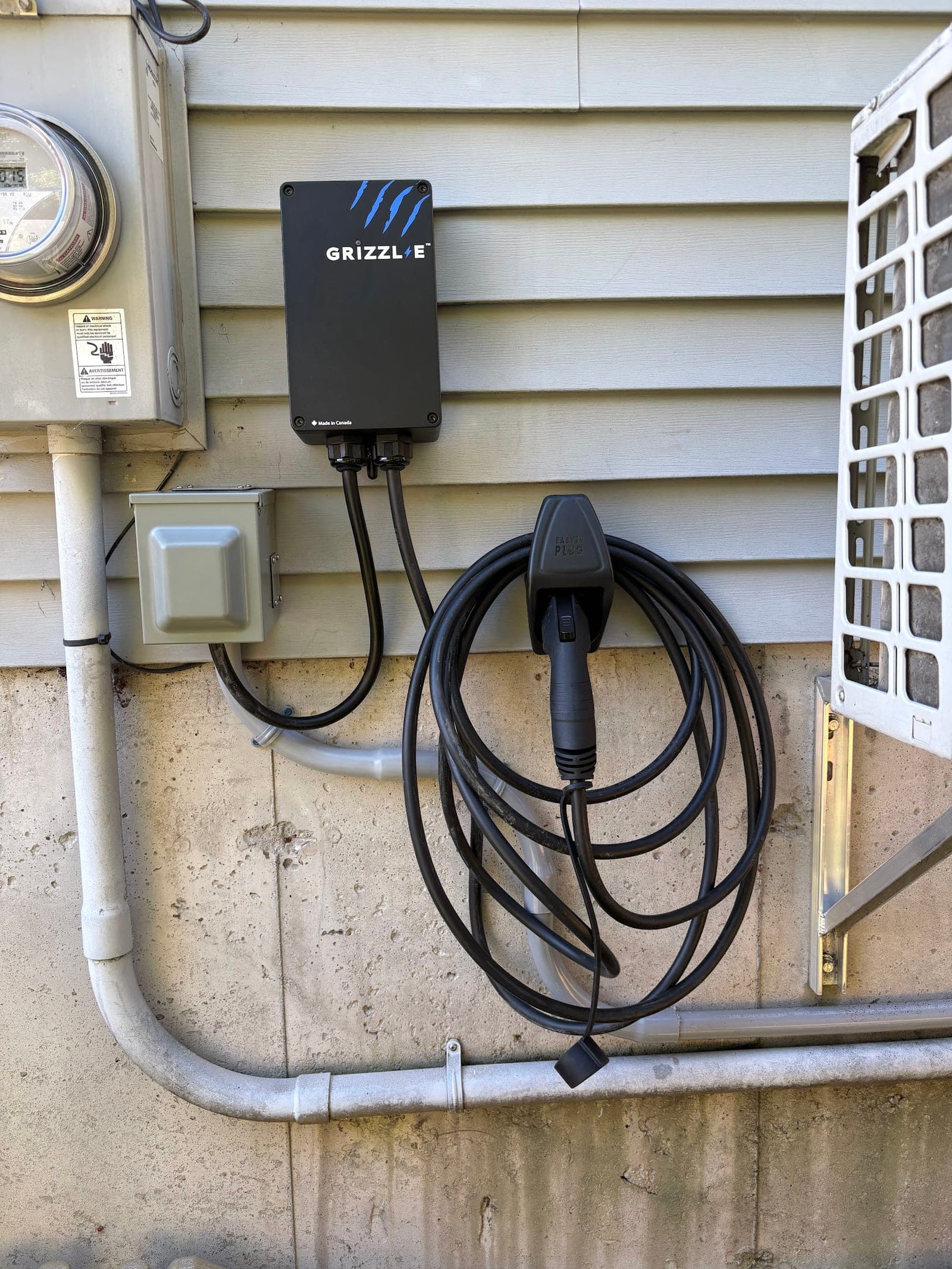
7 min readInstalling a home EV charger: steps, Code and the $600 grantA level 2 charger needs a dedicated 240 V circuit and enough capacity at the electrical service. Here are the steps with an electrician, what the Code requires for the outlet and the circuit, the solutions when the service is tight, and Québec’s $600 grant.
- Level 2 is a 240 V charger on a dedicated circuit: a 32 A charger on a 40 A circuit is enough for most drivers.
- Before buying, the load calculation tells whether the service is enough; if not, the 2026 Code recognizes three solutions without necessarily going to 200 A.
- A charger outlet carries a label; at 120 V outdoors and within 2.5 m of the ground, it is protected by a Class A GFCI.
The $600 grant
1 guide
Condos and rentals
2 guides
5 min readAn EV charger in a condo: where to startIn a condo, the charger involves the common areas and the building’s electrical service: you need the board’s approval, a decision on which meter it connects to, and a check of the available capacity. A clear electrical assessment moves the file forward faster than any discussion at a meeting. An Écorecharge rebate exists for chargers in multi-unit buildings.
- Three questions to settle: the board’s approval, the meter and the capacity of the building’s service.
- 2026 Code: in a building of 5 or more units, an overall plan must provide for charging at every space, except visitor spaces.
- An individual charger from your panel, or shared infrastructure with load management: the choice depends on the building.
Words to know
The whole glossary- Load management
- A device that reduces or cuts the charger (or another appliance) when the house is drawing a lot, so the electrical service is never exceeded. It can sometimes avoid an upgrade to 200 A.
- Level 2 EV charger
- A charger connected at 240 V on a dedicated circuit, faster than an ordinary outlet. A 32 A charger on a 40 A circuit (about 7.7 kW) is enough for the vast majority of drivers: a full charge overnight.
- Écorecharge
- Québec’s program that pays $600 toward buying or leasing an eligible, connected level 2 charger, for a house or a duplex.
- LogisVert
- Hydro-Québec’s program that pays $50 per 1,000 BTU/h at −8 °C for an ENERGY STAR heat pump, or $120 for a cold-climate model. It is open to Hydro-Sherbrooke, Hydro-Magog and Hydro-Coaticook customers.
- Electric vehicle (EV)
- A car that runs only on electricity, with a battery you recharge. Its consumption is given in kWh per 100 km.
- Plug-in hybrid (PHEV)
- A car with a gasoline engine and a rechargeable battery. As with an EV, its owner may qualify for Écorecharge’s $600 for a home charger.
- Level 1 charging
- The charger that comes with the vehicle, plugged into an ordinary 120 V outlet. Slow: it can do in a pinch, but a level 2 charger suits daily use better.
- DC fast charging
- Public direct-current chargers along highways, far more powerful than a home charger. At home, you charge at level 2.
In your town
We do this work in Sherbrooke and the surrounding municipalities. Each town page gives the electricity utility and the municipality to contact for permits.
An electrical project?
We call you back the same day.
Call or text 819 570-9836. Free estimate within 24 hours, anywhere in Sherbrooke and the Eastern Townships.
Monday to Friday, 8 a.m. to 4 p.m.
5.0 from 43 Google reviews