

In short
- $600 toward buying or leasing a new, certified, connected Level 2 charger costing more than $600 before taxes.
- For a detached, row, semi-detached house or a duplex; three or more units: another stream, up to $5,000.
- Since April 1, 2026, only connected chargers on the official list are eligible.
- When you apply, the charger is installed and you have your vehicle; the installation invoice serves as proof.
- The program ends on March 31, 2028; a charger acquired before January 1, 2024 isn’t eligible.
In this guide
The grant at a glance
| Condition | What’s needed |
|---|---|
| Amount | $600 |
| Charger | Level 2, new, certified, connected, on the official list |
| Charger price | More than $600 before taxes, bought or leased |
| Home | Detached, row or semi-detached house, or duplex, main or secondary residence |
| Vehicle | Electric or plug-in hybrid, or electric motorcycle, new or used |
| When applying | Charger installed and vehicle in hand |
| Proof | The installation invoice, or photos if the 240 V outlet already existed |
| Dates | Charger acquired since January 1, 2024; program until March 31, 2028 |
1. Check that you’re eligible
- You are the owner or long-term lessee of an electric vehicle: fully electric, plug-in hybrid or electric motorcycle, new or used, and you live in Québec.
- The charger goes in a detached, row or semi-detached house, or a duplex, your main or secondary residence. Buildings of three or more units fall under another stream.
- One grant per charger and per vehicle; the invoices are in the vehicle owner’s name.
2. Choose an eligible charger
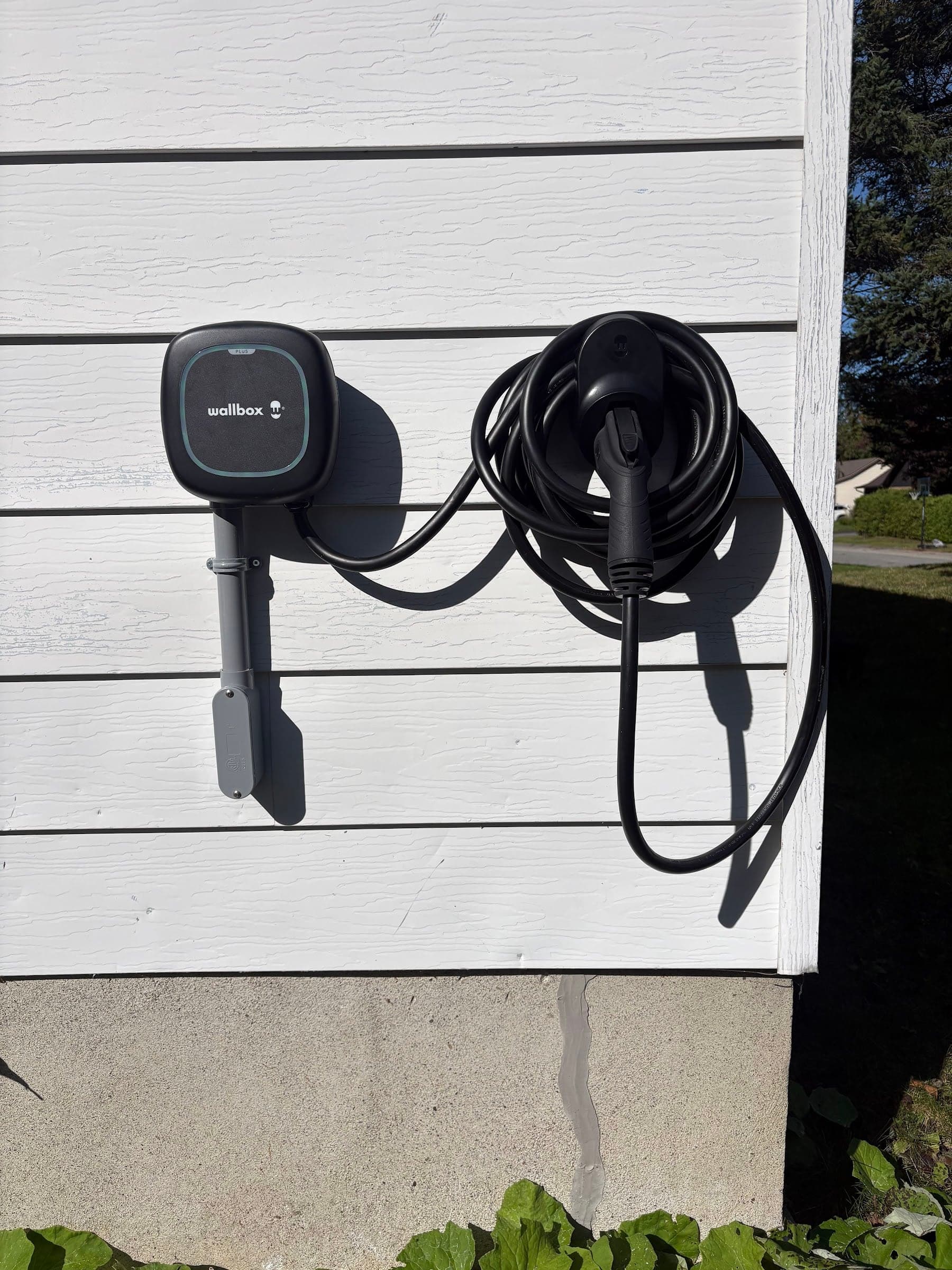
A new, certified Level 2 charger on the list of eligible chargers. Since April 1, 2026, only connected chargers are eligible. Its purchase or lease cost must exceed $600 before taxes. Our comparison tool lists the chargers on the official list. See also Choosing an EV charger: 32 A or 48 A.
3. Have it installed
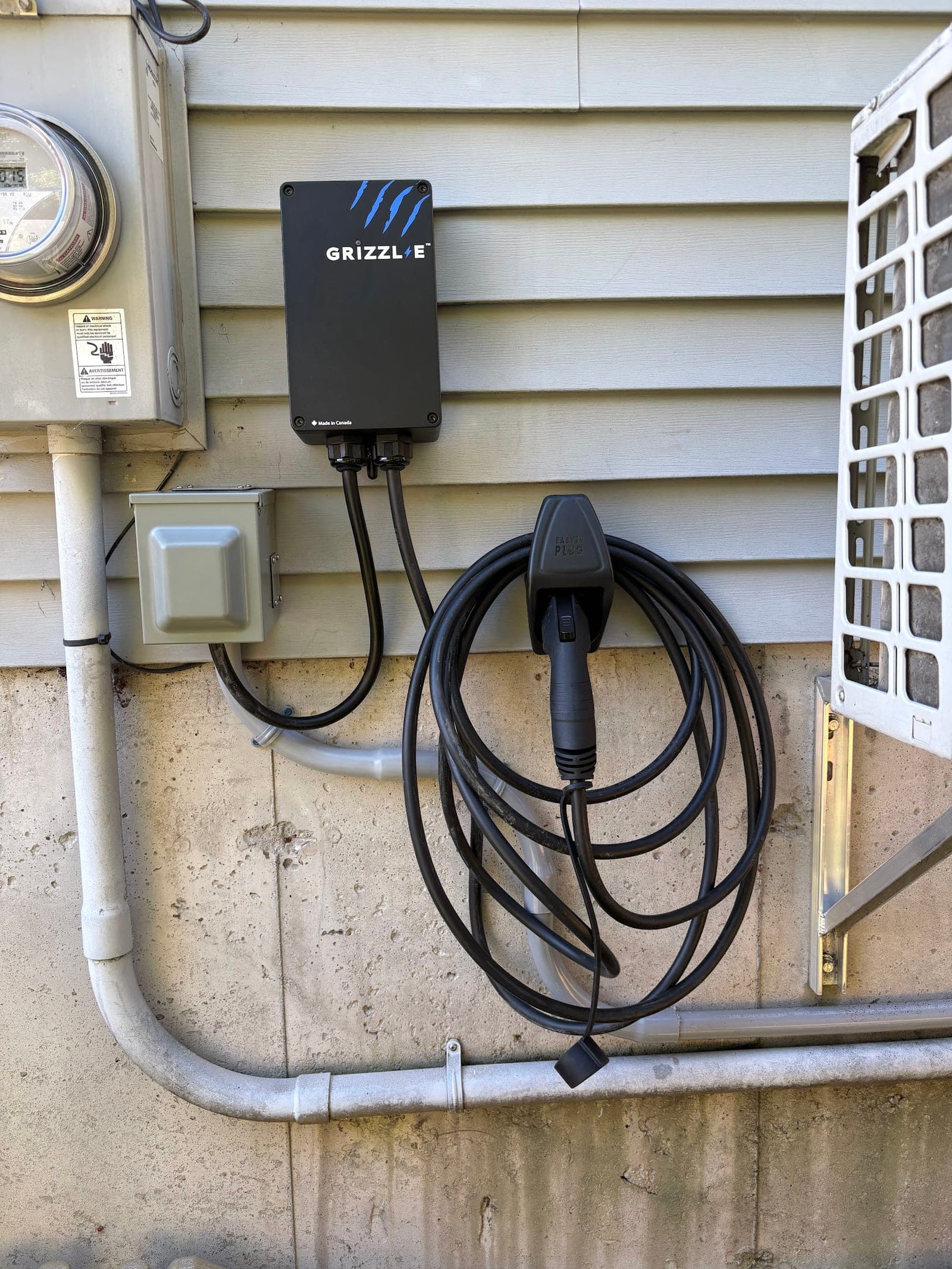
The Code requires electrical work to be done by a licensed electrical contractor. The invoice for the work serves as proof of installation. For a charger that works on Levels 1 and 2, the invoice must state that the installation is suitable for a Level 2 charger. If you already had a compliant 240 V outlet, photos can serve as proof.
Before buying, have the load calculation done: it tells you whether your service is enough for the chosen charger. See The load calculation.
4. Apply online
When you apply, the charger must be installed and you must have your vehicle. There’s no maximum delay between buying the vehicle and applying, but Québec.ca advises not to wait, so you don’t lose the invoices. A charger acquired before January 1, 2024 isn’t eligible.
In multi-unit buildings
In a building of three or more units with shared parking, another stream can pay up to $5,000 for buying and installing an individual charger, electrical infrastructure included. See EV charger in a condo and EV charger for tenants.
What’s next
- Some municipalities add their own assistance: our “Which grants for your project?” tool finds them based on your town.
- The program ends on March 31, 2028. Conditions may change: check the official page before buying.
At LTE Électrique, we install the charger and its circuit, and give you the installation invoice that serves as proof; you make the application.
Frequently asked questions
- Are installation costs covered?
- No: the $600 is for buying or leasing the charger, but proof of installation is required, namely the invoice for the work.
- I already have a compliant 240 V outlet: do I need an electrician?
- According to Québec.ca, maybe not. Without an installation invoice, photos then serve as proof.
- I live in a triplex: am I eligible for the $600?
- No: this stream is for detached, row and semi-detached houses and duplexes. Buildings of three or more units with shared parking fall under another stream, which can pay up to $5,000 for an individual charger.
- I have two electric vehicles: two grants?
- The program pays one grant per charger and per vehicle. The invoices must be in the vehicle owner’s name.
- My charger isn’t connected: is it eligible?
- No, if it was bought on or after April 1, 2026: only connected chargers on the official list are. Check the list before buying.
- Do I have to apply before buying?
- No. You apply online once the charger is installed and you have the vehicle. There’s no maximum delay, but Québec.ca advises not to wait, so you don’t lose the invoices.
- Does my municipality add its own grant?
- Some municipalities add their own assistance. Our “Which grants for your project?” tool finds them based on your town.
- Who applies: the electrician or me?
- You do. The electrician installs the charger and gives you the installation invoice, which serves as proof in your application.
Sources
- Aide financière pour une borne de recharge à domicile, Gouvernement du Québec, checked on October 20, 2026
- Demandeurs admissibles, Gouvernement du Québec, checked on October 20, 2026
- Travaux d’installation, Gouvernement du Québec, checked on October 20, 2026
- Quand demander l’aide financière, Gouvernement du Québec, checked on October 20, 2026
- Cadre normatif du programme ÉcorechargePDF, Gouvernement du Québec, checked on October 20, 2026
- Borne de recharge individuelle en multilogement, Gouvernement du Québec, checked on October 21, 2026
About this guide
Written by LTE Électrique, a master electrician’s business in Sherbrooke (RBQ licence 5874-5597-01, CMEQ member). Every rule comes from Québec’s Construction Code or an official source, listed above with the date it was checked. French version reviewed by William Letendre, master electrician, on October 21, 2026.
About usCite this guide
To cite this guide, use its title, author and address:
“The $600 home charger grant, step by step”, LTE Électrique, https://www.lteelectrique.com/en/guides/ev-charger-600-grant-step-by-step, French version reviewed by William Letendre, master electrician, on October 21, 2026.