

In short
- Since the 2026 Code, every switch location controlling a fixed light fixture has a neutral conductor.
- Electronic dimmers, occupancy sensors and smart switches need this neutral to work.
- A pot light in contact with insulation must be IC-rated; otherwise, 13 mm of clearance from combustible material and 76 mm from insulation.
- In a bathroom or outdoors, the fixture must be approved for a damp or wet location, and marked accordingly.
- Every fixture must carry a recognized body’s mark: the Code prohibits connecting unapproved equipment.
In this guide
A neutral at every switch
Since the 2026 Code, every switch location controlling a fixed light fixture must have a neutral conductor. The reason: today’s controls need it to work.
| Control | Why the neutral matters |
|---|---|
| Electronic dimmer | It needs a permanent supply |
| Occupancy sensor | It stays powered on standby to detect |
| Smart switch | Its module, often wireless, is always powered |
| Ordinary switch | It can be replaced later without rewiring |
The end of the switch loop
For a long time, many circuits were wired as a switch loop: the supply reached the fixture, and only the switched wire went down to the switch, with no neutral. According to the RBQ, this method no longer meets the requirements for new circuits; the neutral must be brought to the control, including for three-way and four-way circuits. The RBQ recommends the same for switched outlets and fans.
LED pot lights
- A pot light in contact with insulation or combustible material must be approved for that use: IC-rated.
- A non-IC pot light needs 13 mm of clearance from combustible material, and insulation must stay at least 76 mm away.
- Under an insulated attic or in an insulated basement ceiling, IC-rated pot lights are therefore planned.
Pot lights go in before the ceiling is closed, with their switches and boxes: our basement guide shows where they fit in a project.
Damp and wet locations
In a bathroom, above a shower or outdoors, the fixture must be approved for a damp or wet location and marked accordingly. Near a tub or shower, the switch goes at least 1 m away, or inside the room with a Class A GFCI: see our bathroom guide.
Dimmers and LEDs
A dimmer must suit the LED bulbs or fixtures it controls: otherwise the light may flicker or buzz. We check the compatibility stated by the manufacturers, and the neutral when the dimmer requires one.
Approved fixtures
Every fixture must carry a recognized body’s mark. The Code prohibits connecting electrical equipment that isn’t approved: be careful with fixtures bought online without a mark.
Who can do this work
According to the RBQ, replacing a fixture or a switch means working on the electrical installation: this work must be done by a licensed contractor, even in your own home. Our what you can do yourself guide details what remains safely allowed.
With LTE Électrique
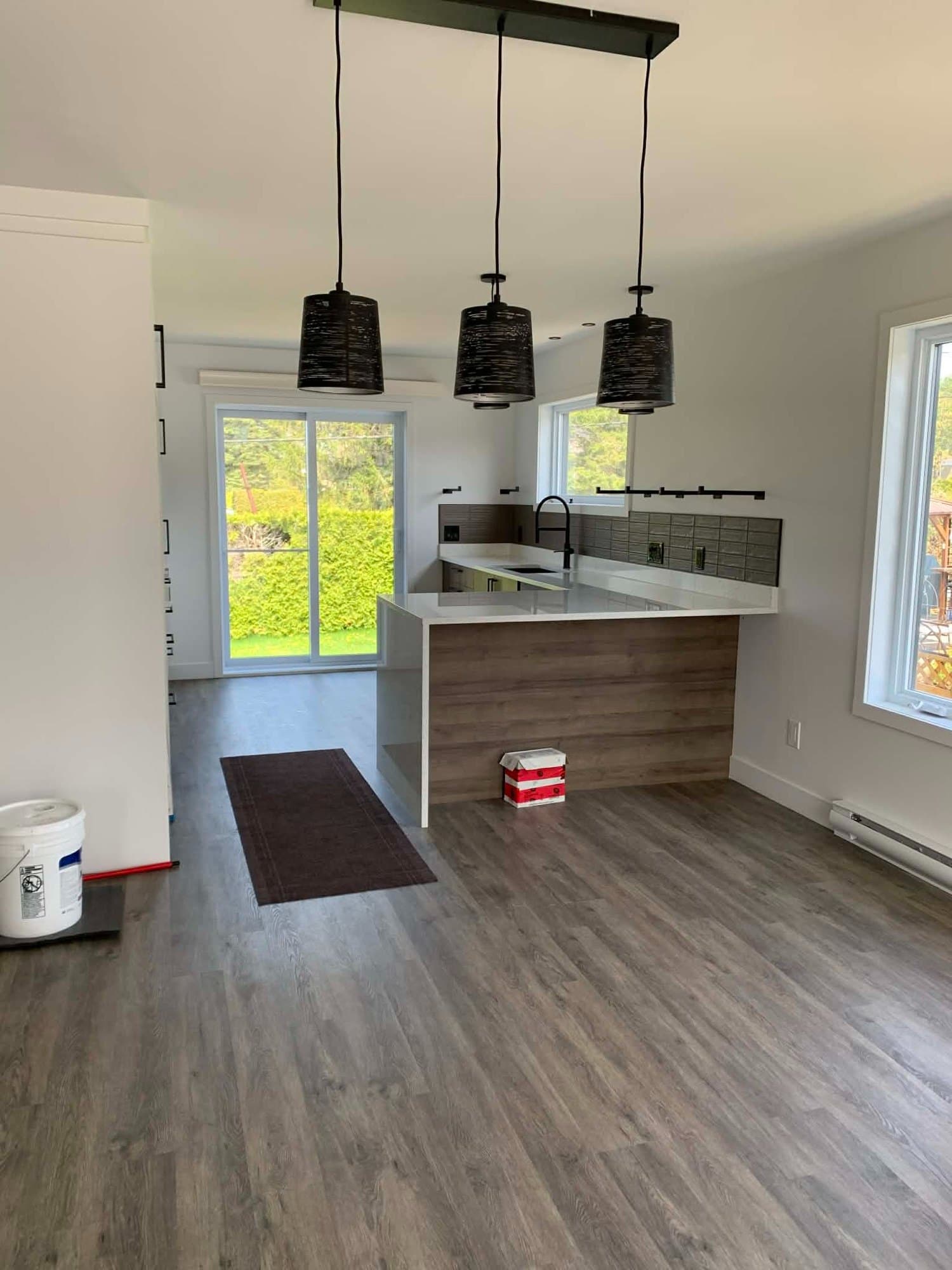
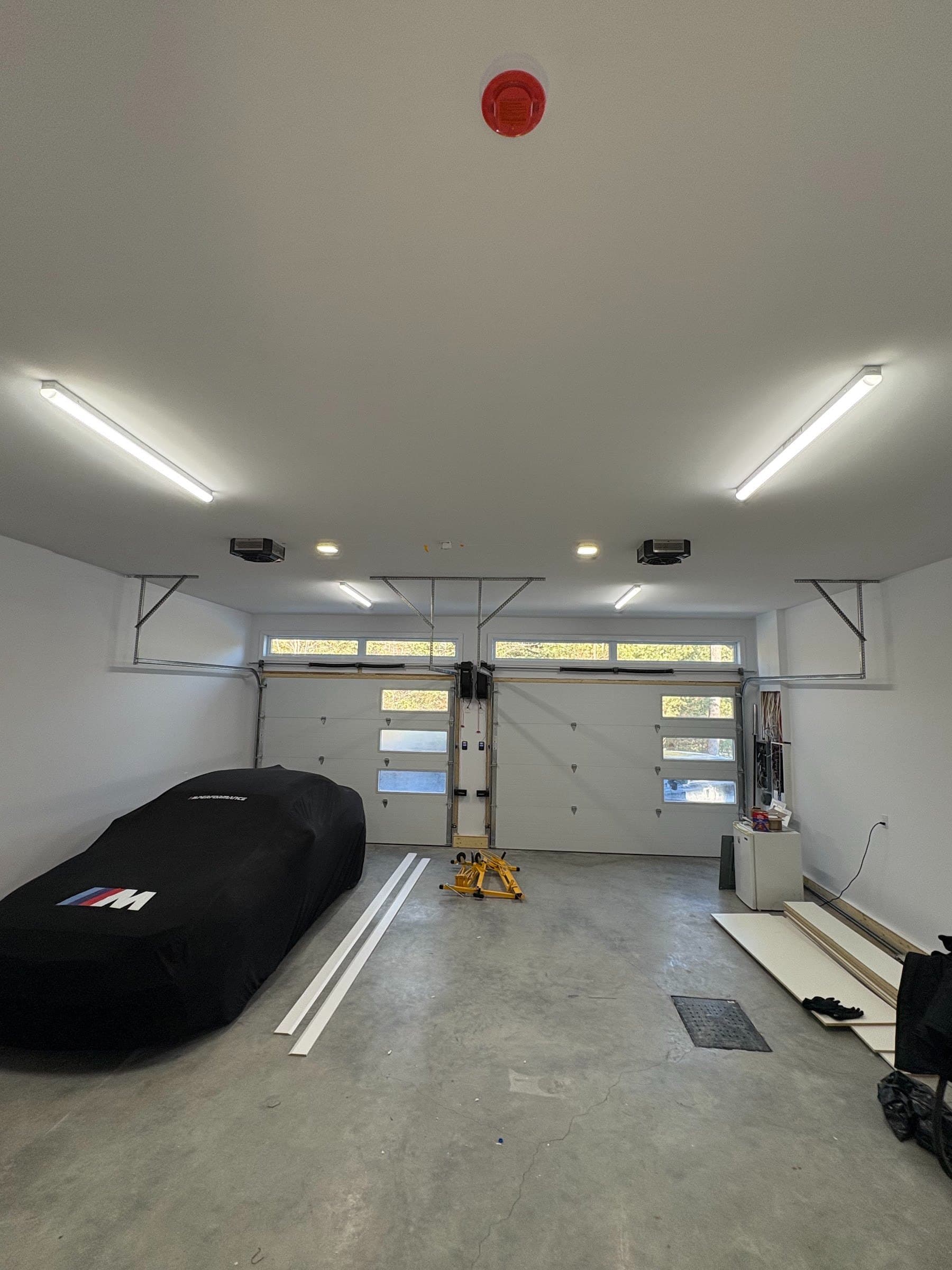
- Lighting is one of our services: pot lights, island pendants, exterior wall lights, garage and workshop lighting.
- We provide the neutral at every switch and IC-rated pot lights where needed.
- Free estimate within 24 hours; price announced in advance, fixed or hourly depending on the project; anything unexpected is done only with your approval.
- 2-year labour warranty.
Frequently asked questions
- Why doesn’t my smart switch work?
- Often because there is no neutral in the switch box. Many houses were wired with a switch loop, without a neutral at the control. Since the 2026 Code, new lighting circuits provide a neutral at every switch.
- Do my old circuits have to be redone?
- No: the rule covers new circuits and those being modified. An existing circuit that isn’t touched stays as is; to install a smart control, we check what is in the box.
- Do I need IC-rated pot lights?
- Yes, if they are in contact with insulation or combustible material. A non-IC pot light needs 13 mm of clearance from combustible material, and insulation must stay at least 76 mm away.
- Is a fixture above the shower allowed?
- Yes, if it is approved for that damp or wet location and marked accordingly. The switch goes at least 1 m from the tub or shower, or inside the room with a Class A GFCI.
- My dimmer makes the LEDs flicker: why?
- A dimmer must suit the LED bulbs or fixtures it controls, and some electronic dimmers need a neutral. We check the compatibility stated by the manufacturers before installing.
- Can I buy my fixtures online?
- Yes, if they carry a recognized body’s mark, such as CSA or cUL. The Code prohibits connecting electrical equipment that isn’t approved.
- Can I replace a light fixture myself?
- No: according to the RBQ, replacing a fixture means working on the electrical installation, and this work must be done by a licensed contractor, even in your own home. Our guide on what you can do yourself details what remains allowed, such as resetting a breaker or testing a GFCI.
Sources
- Cahier explicatif sur les principaux changements au chapitre V, Électricité (édition 2026)PDF, Régie du bâtiment du Québec, checked on October 20, 2026
- Guide d’accompagnement : contrôle de la qualité des travaux d’installation électrique (octobre 2023)PDF, Régie du bâtiment du Québec, checked on October 20, 2026
- Travaux que vous pouvez faire vous-même, Régie du bâtiment du Québec, checked on October 20, 2026
About this guide
Written by LTE Électrique, a master electrician’s business in Sherbrooke (RBQ licence 5874-5597-01, CMEQ member). Every rule comes from Québec’s Construction Code or an official source, listed above with the date it was checked. French version reviewed by William Letendre, master electrician, on October 21, 2026.
About usCite this guide
To cite this guide, use its title, author and address:
“Lighting: LED pot lights, dimmers and smart switches”, LTE Électrique, https://www.lteelectrique.com/en/guides/lighting-led-pot-lights-dimmers-switches, French version reviewed by William Letendre, master electrician, on October 21, 2026.