
In short
- The Code’s load calculation (Rule 8-200) decides: the calculated load, divided by 240 V, gives the amps the service must supply.
- Since the 2026 Code, a planned EV charger counts at 100% in this calculation, installed or not, unless a system manages the charging.
- Load management or a switching device sometimes avoids 200 A; a sub-panel adds room, not capacity.
- Only a master electrician who is a CMEQ member sends the request to the utility, which handles the disconnection and reconnection.
- Replacing the service doesn’t require redoing existing circuits that aren’t touched.
In this guide
100 A, 200 A: what are we talking about?
A service’s amperage tells how much current it can supply. At 240 V, a 100 A service supplies at most 24,000 W, and a 200 A service, 48,000 W. Many older houses have 100 A; recent or highly electrified houses often have 200 A.
100 A or 200 A: what the service can supply
At 240 V, a 100 A service supplies at most 24,000 W; a 200 A service, 48,000 W.
The Code’s load calculation (Rule 8-200) tells which one you need: the calculated load, divided by 240 V.
Simplified diagram, not exactly to scale: the full rules and their exceptions are in the text.
Signs to look at
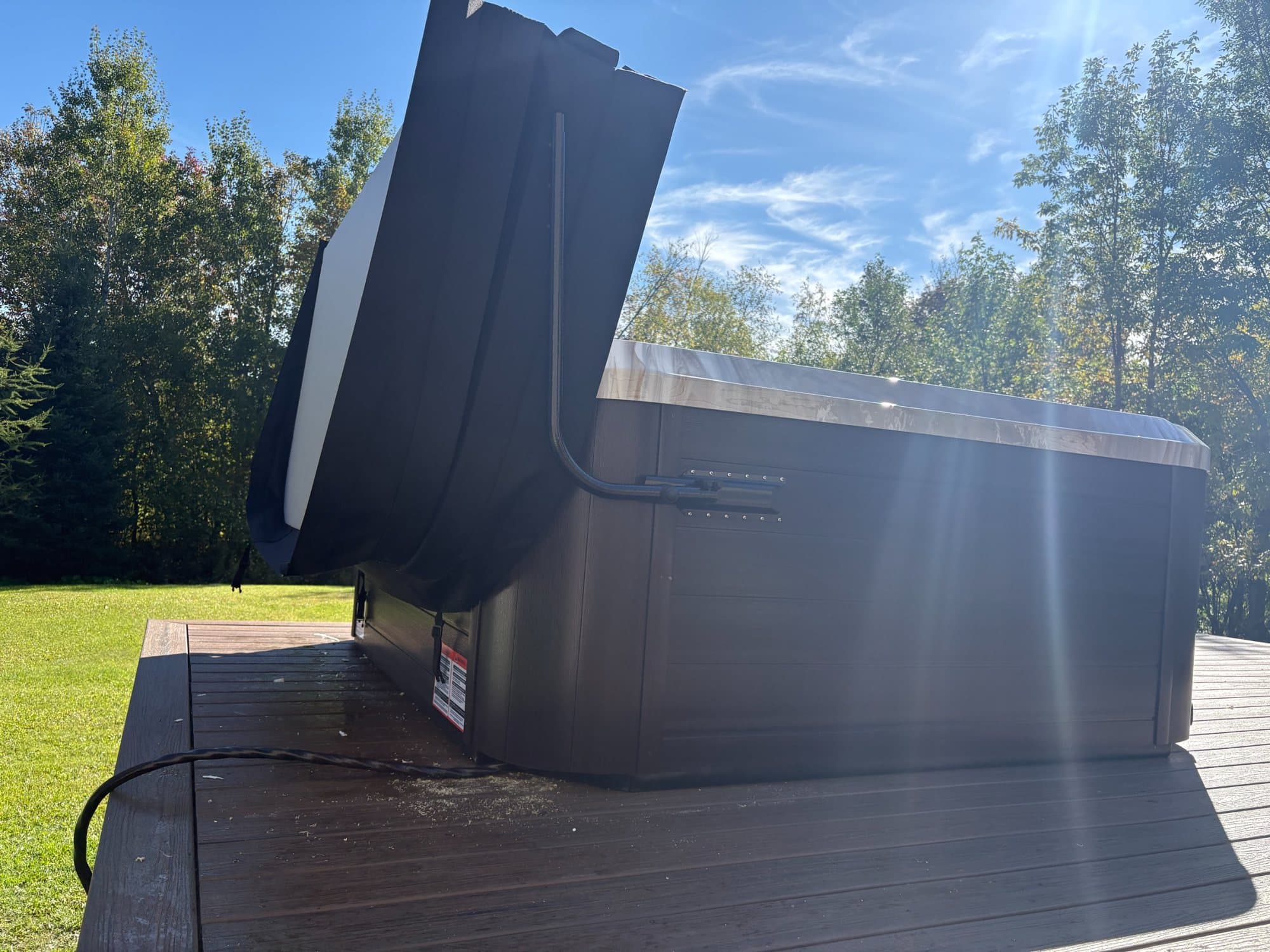
- You are adding a heat pump, an EV charger, a hot tub or electric heating.
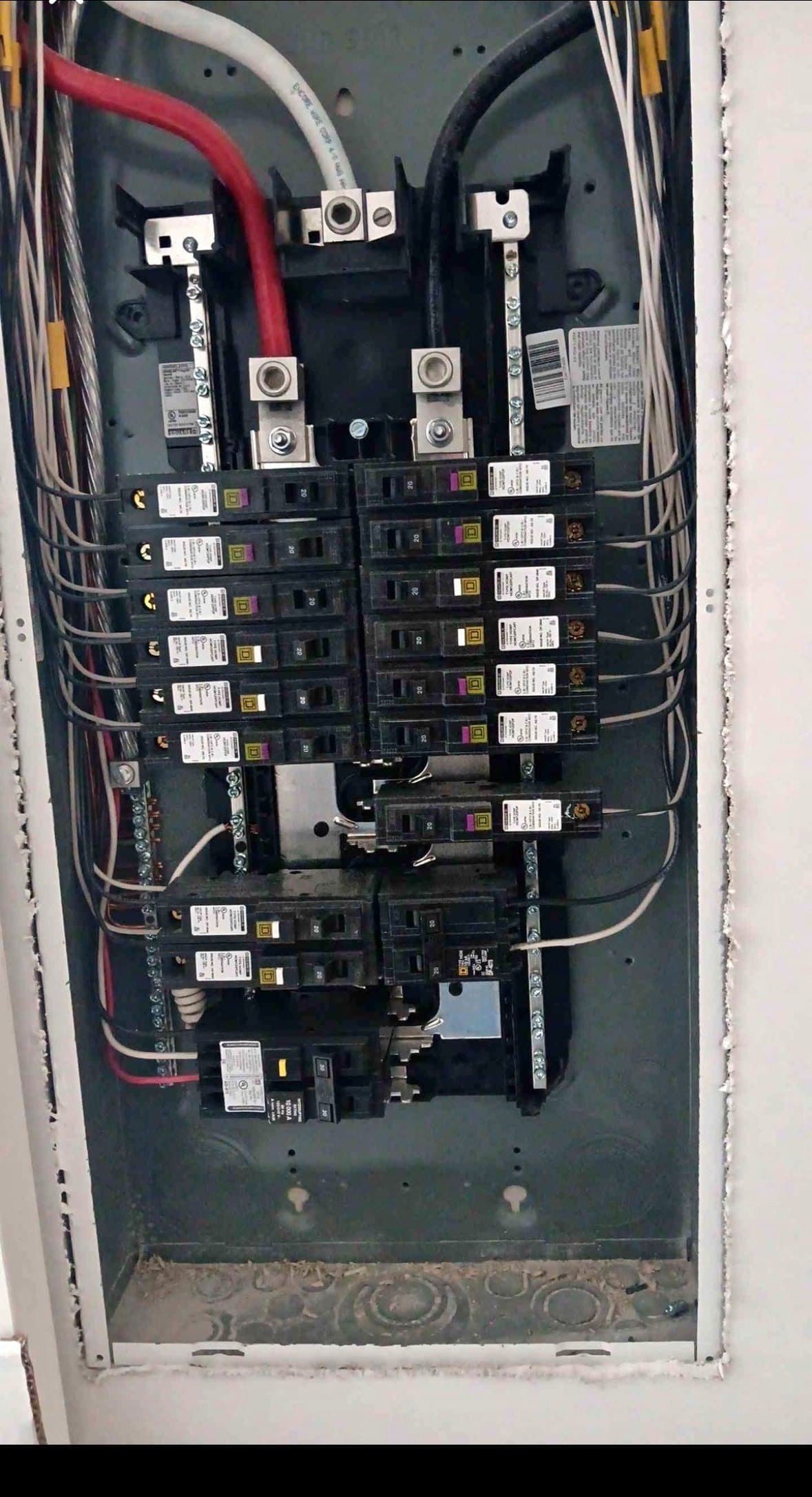
- The panel has no more room for new circuits.
- You are renovating or adding on to the house.
- Your insurer asks you to replace a fuse panel or an outdated panel.
The load calculation decides
What the Code counts
Rule 8-200 of the Code adds up a house’s load according to precise rules:
| Item | How the Code counts it |
|---|---|
| Basic load | 5,000 W for the first 90 m², plus 1,000 W per 90 m² or part of 90 m² |
| Living area | The basement counts at 75% of its area |
| Baseboard heating | The first 10 kW at 100%, the rest at 75% |
| Range | 6,000 W, plus 40% of anything over 12 kW |
| Tankless water heater, hot tub heater | 100% |
| Dryer, water heater and other appliances over 1,500 W | 25%, if an electric range is planned |
| Planned EV charger | 100%, installed or not, unless a management system is used |
The total load, divided by 240 V, gives the amps the service must supply. The Code also sets a floor: for a house of 80 m² or more, basement excluded, the calculation never goes below 24,000 W, or 100 A.
Do it online
Our load calculation applies these rules to your house in a few minutes. We confirm the result at the estimate.
Before going to 200 A
| Situation | Possible solution |
|---|---|
| The panel is short on room, but capacity is enough | A sub-panel: room, not capacity |
| The charger pushes the calculation over | An energy management system (EVEMS) that keeps charging within the allowed capacity |
| The charger and the range or dryer | A switching device that feeds the charger only when the appliance uses little or no power |
| The charger upstream of the panel | A monitoring and load-shedding device that never exceeds the dwelling’s capacity |
| The calculation exceeds 100 A with the house’s appliances | The upgrade to 200 A |
What the 2026 Code changes
- The planned charger counts at 100% in the calculation, installed or not, unless a management system is used. The reduced percentages of the 2018 edition are gone.
- Two more spaces: if the charger’s breaker isn’t installed right away but is planned for the panel, at least two spaces must be kept for it.
- The connection point is determined by the utility, under its rules.
- In a flood-risk zone, service equipment doesn’t go below the flood level.
How the work goes
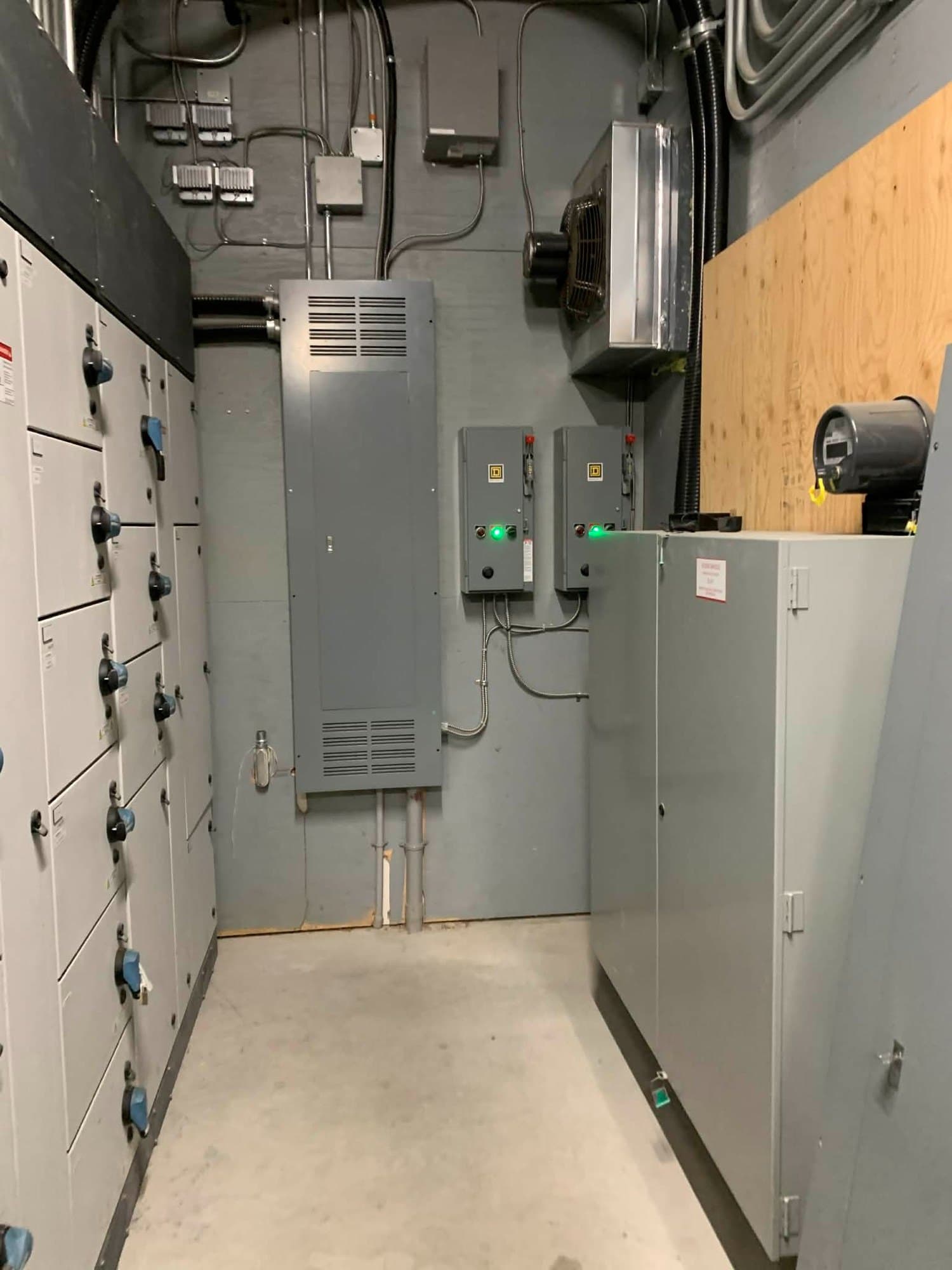
- Assessment of the existing service: mast, cable, meter base, panel, grounding.
- The load calculation and the quote, with the price announced in advance.
- The request to the utility: according to Hydro-Québec, only a CMEQ member can send it. Depending on the address, the utility is Hydro-Québec, Hydro-Sherbrooke, Hydro-Magog or Hydro-Coaticook.
- The disconnection, coordinated with the utility.
- Replacement of the panel and service components, then the transfer and labelling of each circuit.
- Reconnection, power back on and a check of every circuit.
And the existing circuits?
According to the RBQ, existing circuits that aren’t modified don’t have to be redone; what is added or modified follows the Code in force. It’s the right time to plan upcoming circuits, a charger or a heat pump: you avoid redoing the service twice.
What affects the cost
The condition of the existing service, the distance between the meter and the panel, the number of circuits to transfer and access to the panel. Our guide Panel replacement: what drives the cost details each item.
With LTE Électrique
- Panels and 200 A are our specialty: Siemens, Schneider (Square D) or Eaton panels.
- Free estimate within 24 hours, often from your photos; price announced in advance, fixed or hourly depending on the project; anything unexpected is done only with your approval.
- We handle the request to the utility and coordinate the disconnection.
- 2-year labour warranty, a clear invoice payable online, financing available through iFinance.
Frequently asked questions
- How do I know if my 100 A is enough?
- With the load calculation in Rule 8-200 of the Code: you add the basic load based on living area, heating, the range, large appliances and the EV charger, with the Code’s factors. Our tool does it online, and we confirm it at the estimate.
- Does an EV charger always require 200 A?
- No. Depending on the load calculation, a charger can sometimes be installed on a 100 A service, notably with an energy management system or a switching device.
- Does a full panel mean I need 200 A?
- No: the calculation looks at what your appliances draw, not the number of breakers. If capacity is enough, a sub-panel solves the lack of room.
- Will I be without power for long?
- The outage lasts as long as the replacement. The length depends on the installation; it is stated in the quote.
- Who deals with Hydro-Québec?
- According to Hydro-Québec, only a CMEQ member can send it the work request: the master electrician handles it. Depending on the address, the utility may also be Hydro-Sherbrooke, Hydro-Magog or Hydro-Coaticook.
- Do all the house circuits need to be redone?
- No. According to the RBQ, existing circuits that aren’t modified don’t have to be redone; what is added or modified follows the Code in force. Each circuit is reconnected, checked and labelled in the new panel.
- I’m planning a charger later: what should I plan for?
- Since the 2026 Code, if the charger’s breaker isn’t installed right away but is planned for the panel, at least two extra spaces must be kept for it. And the load calculation counts the planned charger.
- How much does upgrading to 200 A cost?
- It mostly depends on the condition of the service, the distance between the meter and the panel, and the number of circuits to transfer. Our guide on panel replacement costs explains each item; the price is announced in advance in the quote.
Sources
- Décret 236-2026 : Règlement modifiant le Code de construction (chapitre V, Électricité), Gazette officielle du Québec, 11 mars 2026PDF, Publications du Québec, checked on October 20, 2026
- Guide d’accompagnement : contrôle de la qualité des travaux d’installation électrique (octobre 2023)PDF, Régie du bâtiment du Québec, checked on October 20, 2026
- Cahier explicatif sur les principaux changements au chapitre V, Électricité (édition 2026)PDF, Régie du bâtiment du Québec, checked on October 20, 2026
- Branchement, déplacement ou prolongement du réseau, Hydro-Québec, checked on October 20, 2026
- Remplacement d’appareillages électriques dans une installation existante, Régie du bâtiment du Québec, checked on October 20, 2026
- Travaux que vous pouvez faire vous-même, Régie du bâtiment du Québec, checked on October 20, 2026
About this guide
Written by LTE Électrique, a master electrician’s business in Sherbrooke (RBQ licence 5874-5597-01, CMEQ member). Every rule comes from Québec’s Construction Code or an official source, listed above with the date it was checked. French version reviewed by William Letendre, master electrician, on October 21, 2026.
About usCite this guide
To cite this guide, use its title, author and address:
“Upgrading from 100 A to 200 A: when it’s needed and how it goes”, LTE Électrique, https://www.lteelectrique.com/en/guides/upgrading-from-100-to-200-amps, French version reviewed by William Letendre, master electrician, on October 21, 2026.