
In short
- The Code adds a base load according to the living area, then each large appliance with its own percentage.
- The total in watts, divided by 240 V, gives the amps the service must supply.
- Since the 2026 Code, an EV charger counts at 100%, installed or only planned, unless an energy management system is used.
- A full panel doesn’t mean a maxed-out service: the calculation looks at what the appliances draw, not the number of breakers.
- Three possible outcomes: it fits, it fits with load management or a sub-panel, or a 200 A upgrade is needed.
In this guide
What it’s for
Your electrical service has a limit: 100 A, 200 A, sometimes 60 A in old houses. Every large appliance takes a share of that limit. The load calculation shows, with numbers, what is left, and therefore whether the new appliance fits.
What goes into the calculation
The Code provides a method: a base load according to the house’s floor area, then the large appliances, each with its own value and rules.
- Electric heating (baseboards, furnace, heat pump backup): often the largest item.
- The range, the water heater, the dryer.
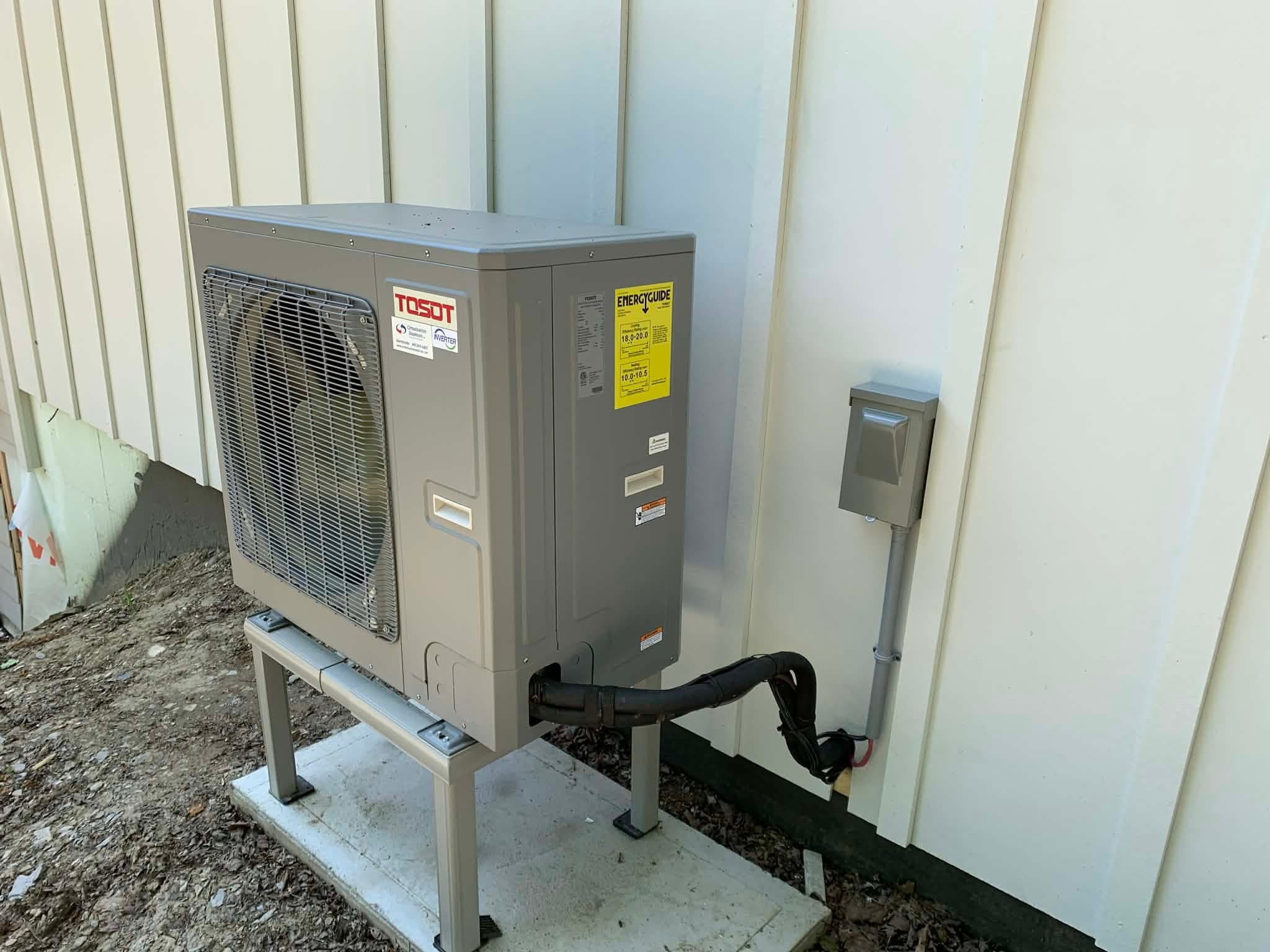
- Air conditioning or the heat pump.
- The EV charger.
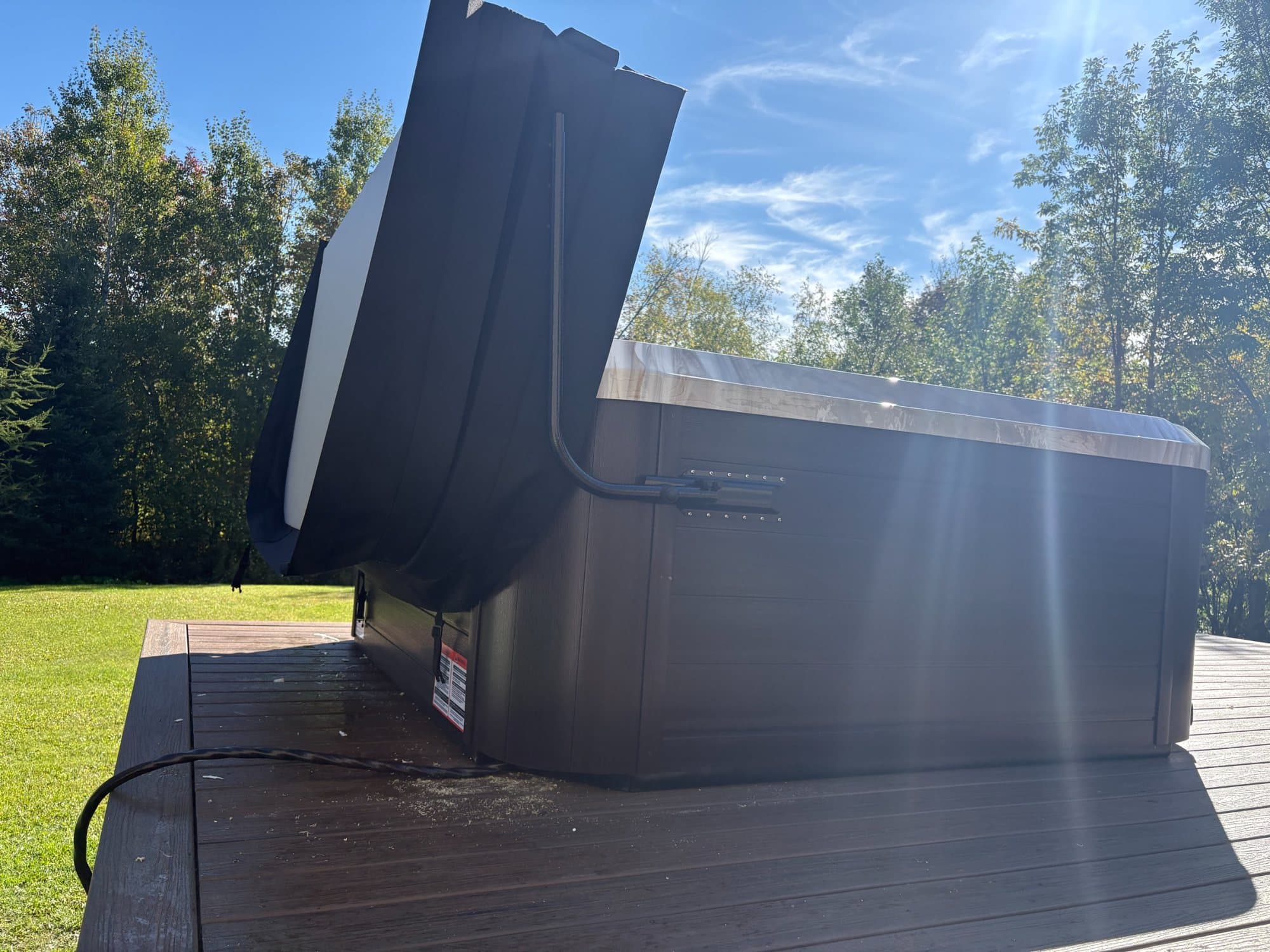
- The hot tub, the pool, the workshop.
The rules, one by one
This is the method of section 8-200 of the Québec Construction Code, 2026 edition, the one our tool applies:
| Item | How the Code counts it |
|---|---|
| Living area | Measured inside the exterior walls; ground floor and upper floors at 100%, basement at 75% |
| Base load | 5,000 W for the first 90 m², plus 1,000 W per 90 m² or part of 90 m² |
| Baseboards with a thermostat in each room | 100% of the first 10 kW, 75% of the rest |
| Electric furnace | 100% |
| Air conditioner | 100%; it doesn’t run at the same time as the heating: the larger of the two is used |
| Heat pump | 100%, plus the electric backup, unless an interlock prevents them from running together |
| Range | 6,000 W, plus 40% of what exceeds 12,000 W |
| Tankless water heater, hot tub, spa, pool heater | 100% |
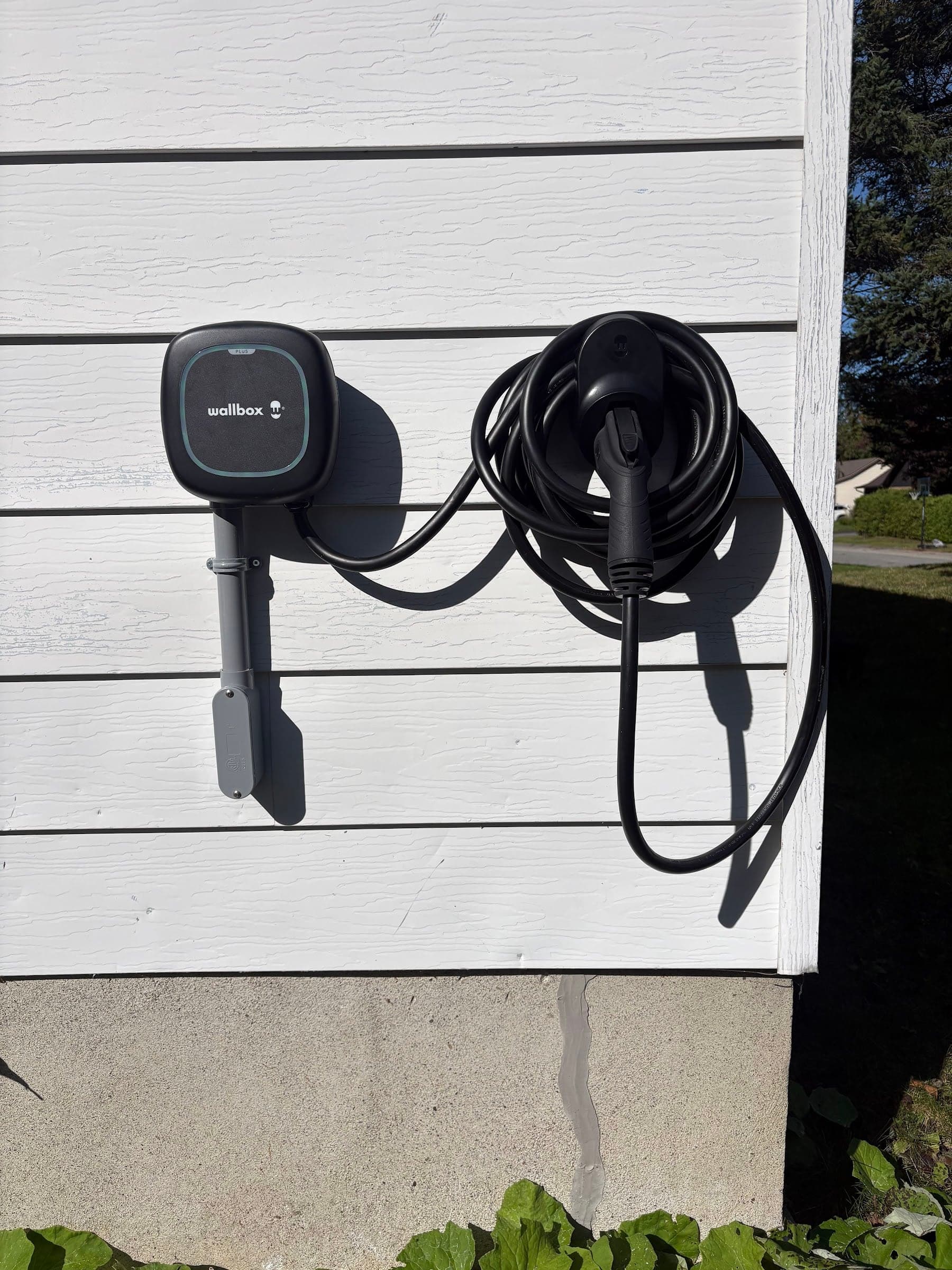
| EV charger | 100%, installed or planned, unless an energy management system is used |
| Other appliances over 1,500 W (dryer, tank water heater) | 25% if there’s an electric range; otherwise 100% up to 6,000 W, then 25% |
The total in watts, divided by 240 V, gives the minimum service rating. For a house of 80 m² or more, basement excluded, the result never goes below 100 A.
An official example, then the Québec version
Ontario’s Electrical Safety Authority, whose code is based on the Canadian Electrical Code like ours, publishes this example in its Bulletin 8-3-15: a 140 m² house, a 4 kW air conditioner, a 12 kW range, a 32 A EV charger, a dryer and a water heater, with no electric heating.
| Item | Watts counted |
|---|---|
| Base (90 m² + 1 step) | 6,000 |
| Air conditioner at 100% | 4,000 |
| Range | 6,000 |
| 32 A charger at 240 V | 7,680 |
| Dryer and water heater at 25% | 2,375 |
| Total | 26,055 W, or 108.6 A |
With 15 kW of baseboards, as in many houses here, the heating counts for 13,750 W and replaces the smaller air conditioner. The total rises to 35,805 W, or about 149 A: a 100 A service is no longer enough. You then need load management for the charger, or an upgrade to 200 A.
“My panel is full” doesn’t mean “my service is maxed out”
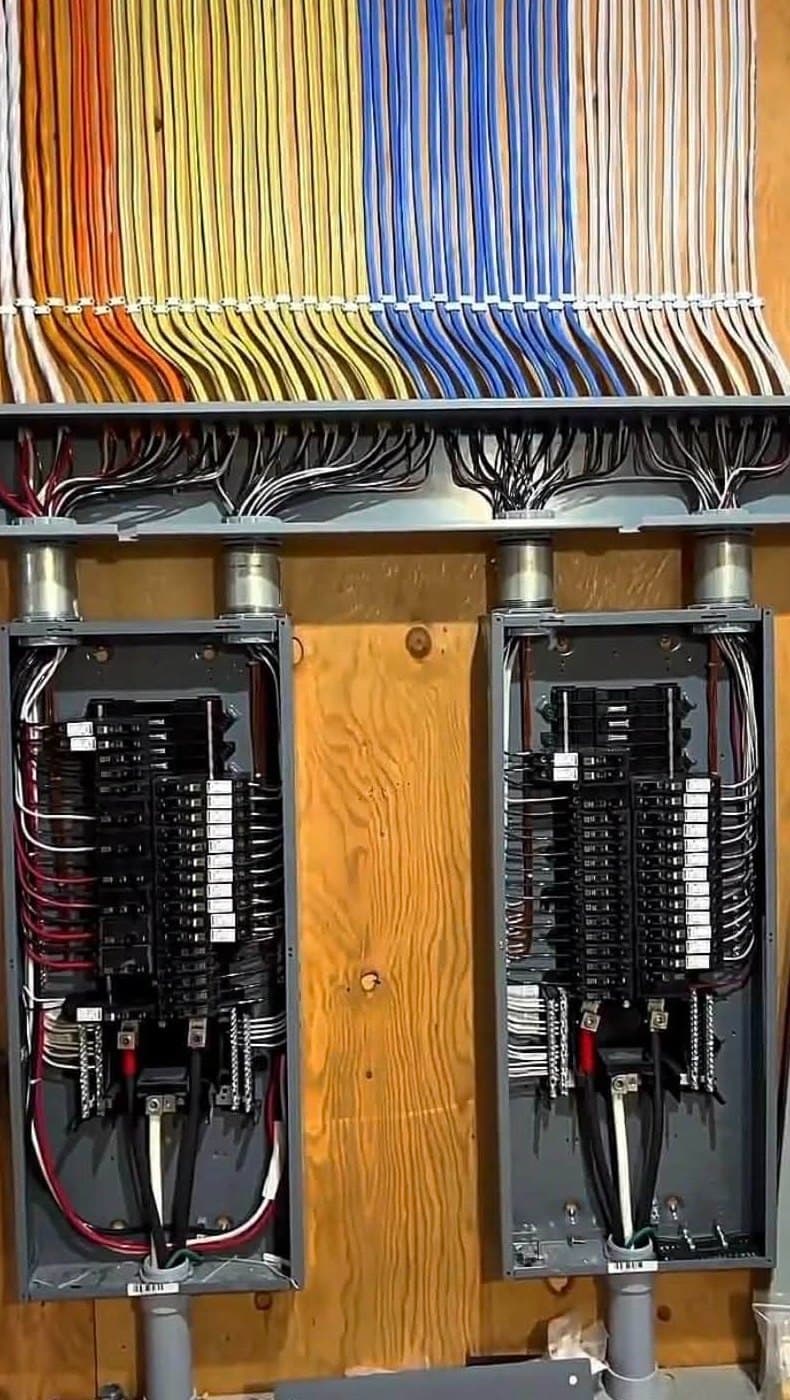
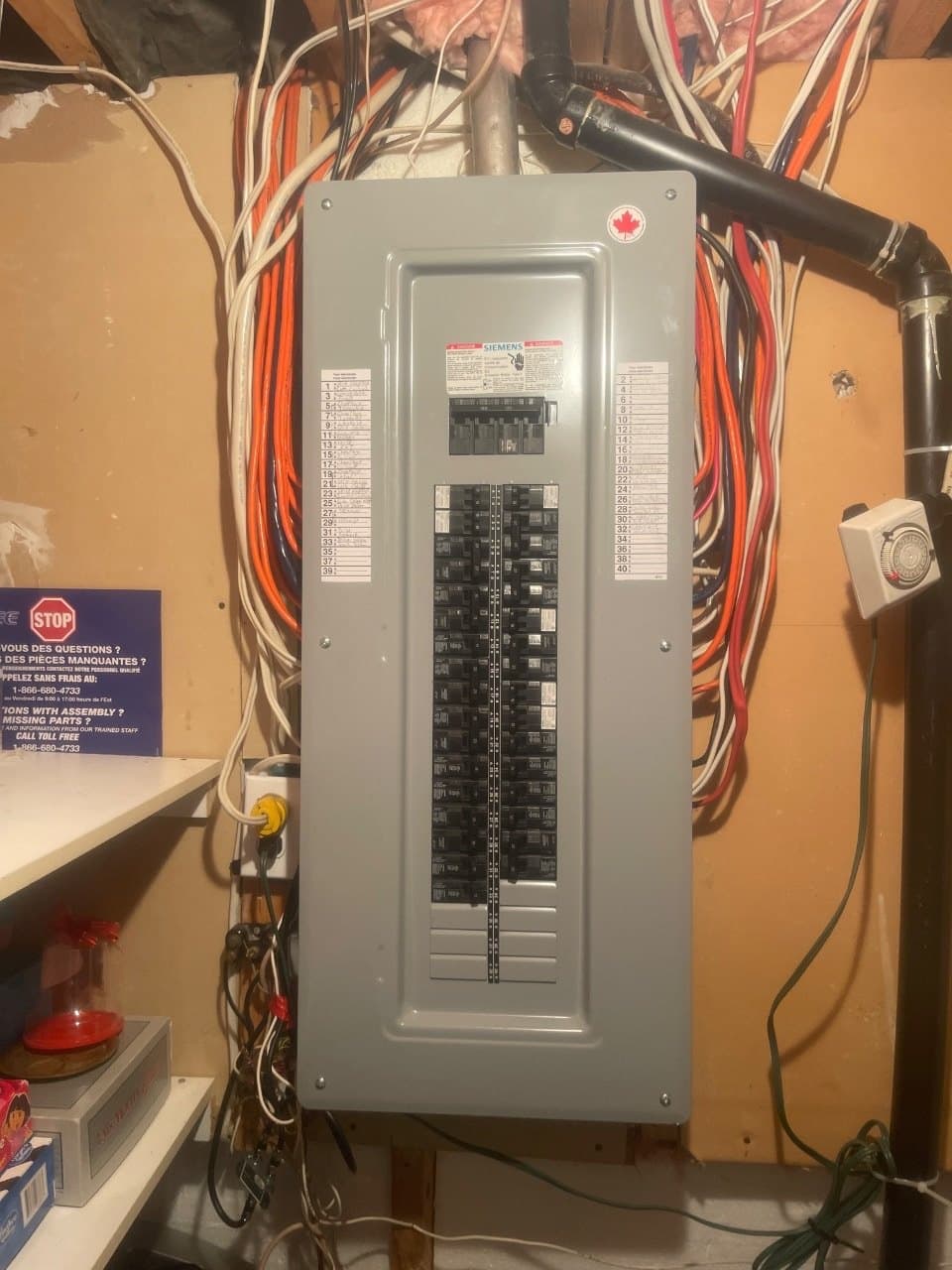
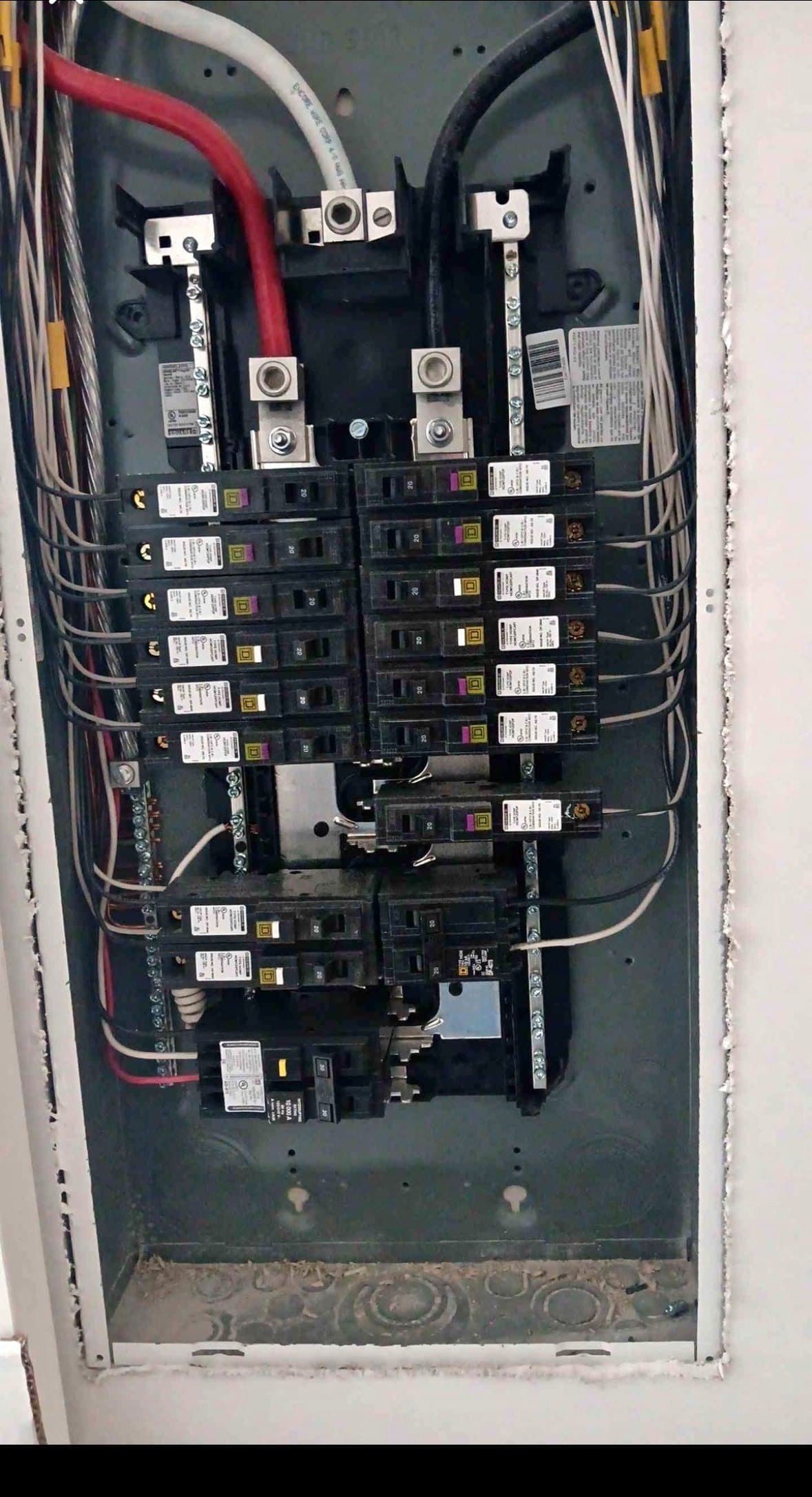
A 100 A panel with thirty breakers isn’t necessarily overloaded: the breakers never all run at full load at the same time. The calculation looks at the real load, not the number of positions. On the other hand, a half-empty panel in an all-electric house can be at the limit.
The three possible results
- It fits. We add the circuit, and that’s it.
- It fits with help. A sub-panel for space, or load management: a device that slows or cuts the charger (or another appliance) when the house draws a lot, so the service is never exceeded.
- It doesn’t fit. An upgrade to 200 A, coordinated with your utility. See Upgrading from 100 A to 200 A.
Do it online
Our load calculation applies these rules to your house in a few minutes. It was checked against the Régie du bâtiment du Québec’s example. It’s an estimate to prepare your project: the official calculation is done by the electrician, with the appliances’ nameplates and the living area measured on site.
For an EV charger, see also Installing a home EV charger; for a heat pump, Hooking up a heat pump.
What we need from you
A photo of the panel with the door open, without removing the inner cover; the number on the main breaker; how the house is heated; the list of large appliances; the approximate floor area. With that, you get a clear answer before you buy anything.
With LTE Électrique
We do the load calculation before every major addition, EV charger, heat pump or hot tub, and present the solution that follows: a circuit, load management, a sub-panel or a 200 A upgrade. The price is announced in advance, fixed or hourly depending on the project, and labour is guaranteed for 2 years. The estimate is free, within 24 hours.
Frequently asked questions
- My panel has thirty breakers: is it full?
- Full of positions, maybe. Overloaded, not necessarily. Only the load calculation can tell: it looks at what your appliances draw, not at the number of breakers.
- What exactly is load management?
- A device that monitors the house’s consumption and temporarily reduces or cuts an appliance, often the EV charger, when you get close to the service’s limit. It often avoids replacing the panel.
- Is the calculation mandatory?
- It is part of the Code’s rules for sizing an installation. For you, it’s mostly the assurance of not buying an appliance your house can’t power.
- How is the living area measured?
- Inside the exterior walls: the ground floor and upper floors count at 100%, the basement at 75%. That area sets the base load.
- Does my EV charger count even if I don’t have it yet?
- Under the 2026 Code, yes: a planned charger counts at 100% in the calculation, installed or not, unless an energy management system controls its charging.
- What about a heat pump with electric backup?
- The heat pump counts at 100% of its nameplate, and the electric backup is added if it can run at the same time. If an interlock prevents that, the larger of the two loads is used.
- Does your online tool give the final answer?
- It’s an estimate to prepare your project. The official calculation is done by the electrician, with the appliances’ nameplates and the living area measured on site.
- Why 100 A at minimum?
- The Code sets a floor: for a house of 80 m² or more, basement excluded, the calculated service never goes below 100 A, even if the total is lower.
Sources
- Décret 236-2026 : Règlement modifiant le Code de construction (chapitre V, Électricité), Gazette officielle du Québec, 11 mars 2026PDF, Publications du Québec, checked on October 18, 2026
- Guide d’accompagnement : contrôle de la qualité des travaux d’installation électrique (octobre 2023)PDF, Régie du bâtiment du Québec, checked on October 18, 2026
- Cahier explicatif sur les principaux changements au chapitre V, Électricité (édition 2026)PDF, Régie du bâtiment du Québec, checked on October 21, 2026
- Bulletin 8-3-15 : Maximum circuit loading and demand factors (octobre 2023)PDF, Electrical Safety Authority (Ontario), checked on October 21, 2026
About this guide
Written by LTE Électrique, a master electrician’s business in Sherbrooke (RBQ licence 5874-5597-01, CMEQ member). Every rule comes from Québec’s Construction Code or an official source, listed above with the date it was checked. French version reviewed by William Letendre, master electrician, on October 21, 2026.
About usCite this guide
To cite this guide, use its title, author and address:
“The load calculation: is your 100 A enough before you buy an EV charger, a heat pump or a hot tub?”, LTE Électrique, https://www.lteelectrique.com/en/guides/load-calculation-is-100-amps-enough, French version reviewed by William Letendre, master electrician, on October 21, 2026.