
In short
- A fuse panel isn’t dangerous in itself, but it often lacks capacity (60 or 100 A) and room for new circuits.
- The real danger: a fuse bigger than the circuit, which lets the wires overheat without ever blowing.
- Arc-fault and GFCI breakers don’t exist as fuses: one more reason to replace it when you renovate.
- Several insurers ask for it to be replaced; keep the invoice and the work declaration in the record of your improvements.
- The replacement follows a clear order: load calculation, quote, coordination with the utility if the service changes, tests and the work declaration to the RBQ.
In this guide
Fuses or breakers: the difference
| Fuse panel | Breaker panel | |
|---|---|---|
| When the circuit is overloaded | The fuse melts: it has to be replaced | The breaker trips: it is reset |
| The rating | Screwed in by hand: too big a fuse can take the right one’s place | Set by the breaker installed |
| Arc-fault and GFCI at the panel | Don’t exist as fuses | Available for most recent panels |
| Room for a new circuit | Often none | Depends on the panel; a sub-panel if needed |
What a fuse panel has against it
- Capacity. Many fuse panels are on a 60 A or 100 A service, designed for a house without a heat pump, a charger or a hot tub.
- Room. There is no free position left for a new circuit, so circuits get shared, and fuses blow.
- The wrong fuse. A 20 A or 30 A fuse screwed in instead of a 15 A lets the wire overheat without ever blowing. It is the classic cause of charred wires in old houses.
- Modern protection. Arc-fault and GFCI breakers don’t exist as fuses.
- Parts. Worn fuse holders and oxidized bases are less and less easy to replace.
A fuse blew: what to do
- Unplug the appliances on the circuit. According to Québec.ca, the first thing to check: too many appliances on the same circuit.
- Replace the fuse with one of the same rating, never bigger. The rating is written on the fuse and should be on the circuit label.
- Plug the appliances back in one at a time.
- If it blows again for no apparent reason, call a master electrician for an inspection, as Québec.ca recommends.
When it is urgent
- A fuse, the panel or the wall around it is hot, discoloured or smells like burning.
- Fuses blow often, or you find a fuse bigger than the circuit label.
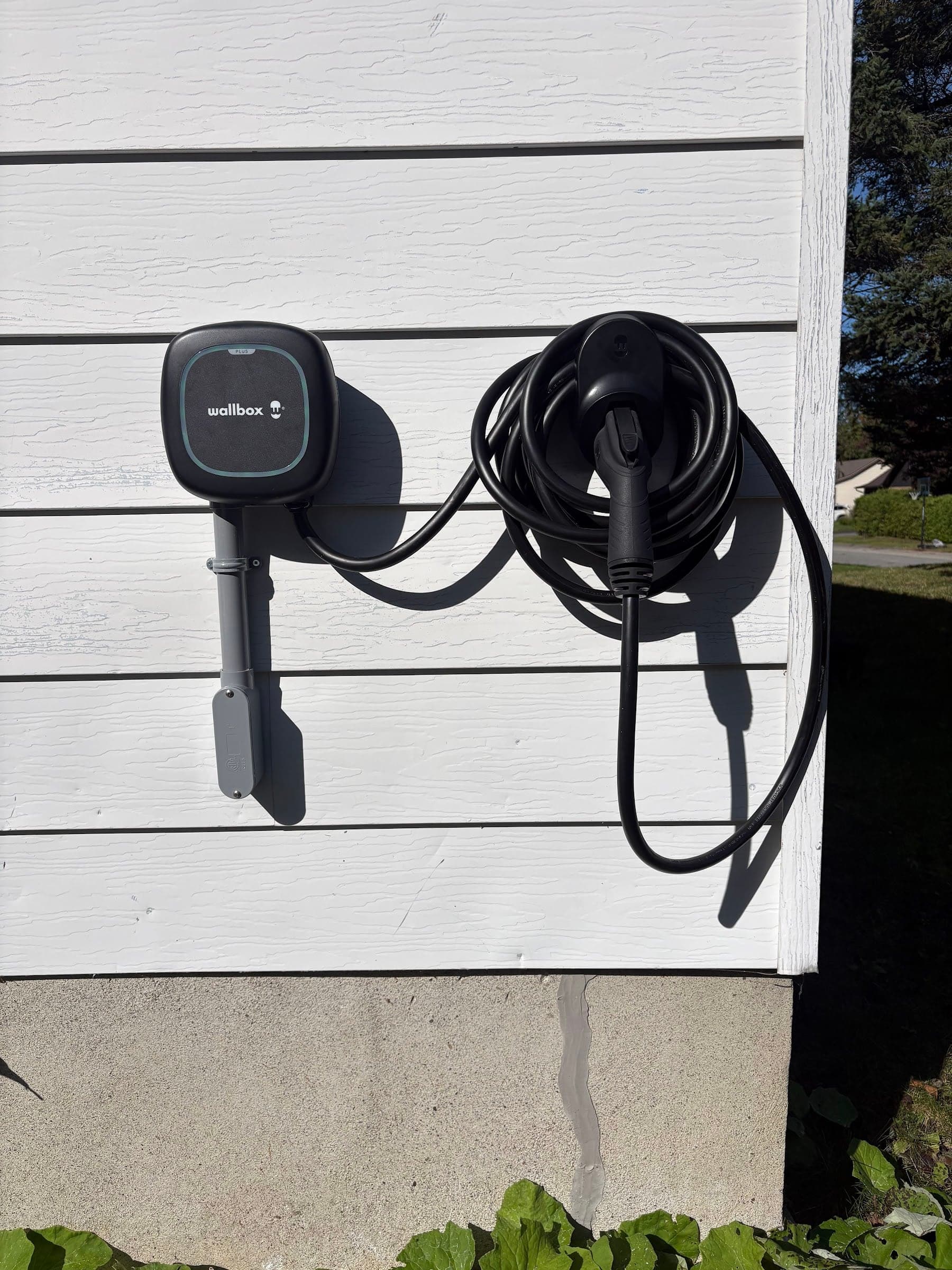
- You are adding a charger, a heat pump, a hot tub or an induction cooktop.
- Your insurer or an inspector puts it in writing.
See also Burning smell, hot outlet: what to do.
What the insurer asks for
The letter usually says: replace the fuse panel with a breaker panel, sometimes with a minimum capacity, by a given deadline. Bring it: the quote answers it point by point.
The Insurance Bureau of Canada points it out: insurers look for well-maintained homes, and redoing the wiring makes the house safer and can help the premium. It recommends keeping a record of all improvements. After the work, you keep in it:
- the invoice, which describes the panel installed and the circuits transferred;
- the confirmation that the work was declared to the RBQ, as the Code requires of the contractor;
- if needed, a photo of the new panel and its label.
If your house is old, the same record serves for the rest of the installation: aluminum wiring, pre-purchase electrical inspection.
How it goes
- The assessment and the load calculation. On site or from photos: the condition of the panel and the service, the number of circuits, the appliances present and planned. Our load calculation applies the Code’s method.
- The quote. What will be done, what is included, and what depends on the utility.
- Coordination with the utility, if the electrical service changes: according to Hydro-Québec, only a CMEQ member can send it the work request. The shutdown and reconnection are planned with Hydro-Sherbrooke, Hydro-Québec, Hydro-Magog or Hydro-Coaticook, depending on the address.
- The replacement. Every circuit is reconnected, checked and labelled in the new panel.
- The tests and the work declaration to the RBQ.
What makes the cost vary
The condition of the electrical service (mast, cable, meter base), the distance between the meter and the panel, the number of circuits to transfer, the circuits added and access to the panel. It is all explained in Replacing your electrical panel: what makes the cost vary, and the upgrade to 200 A in Upgrading from 100 to 200 A.
With LTE Électrique
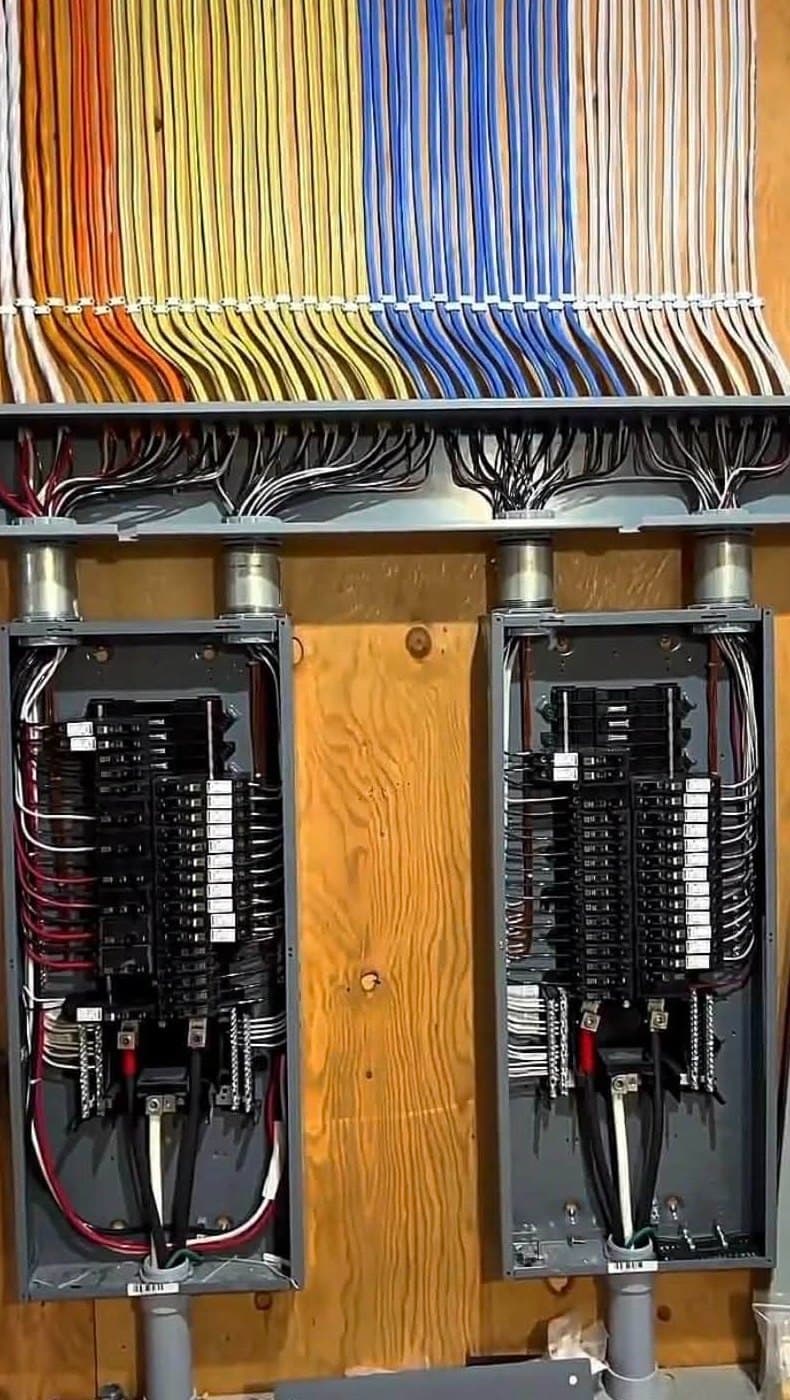
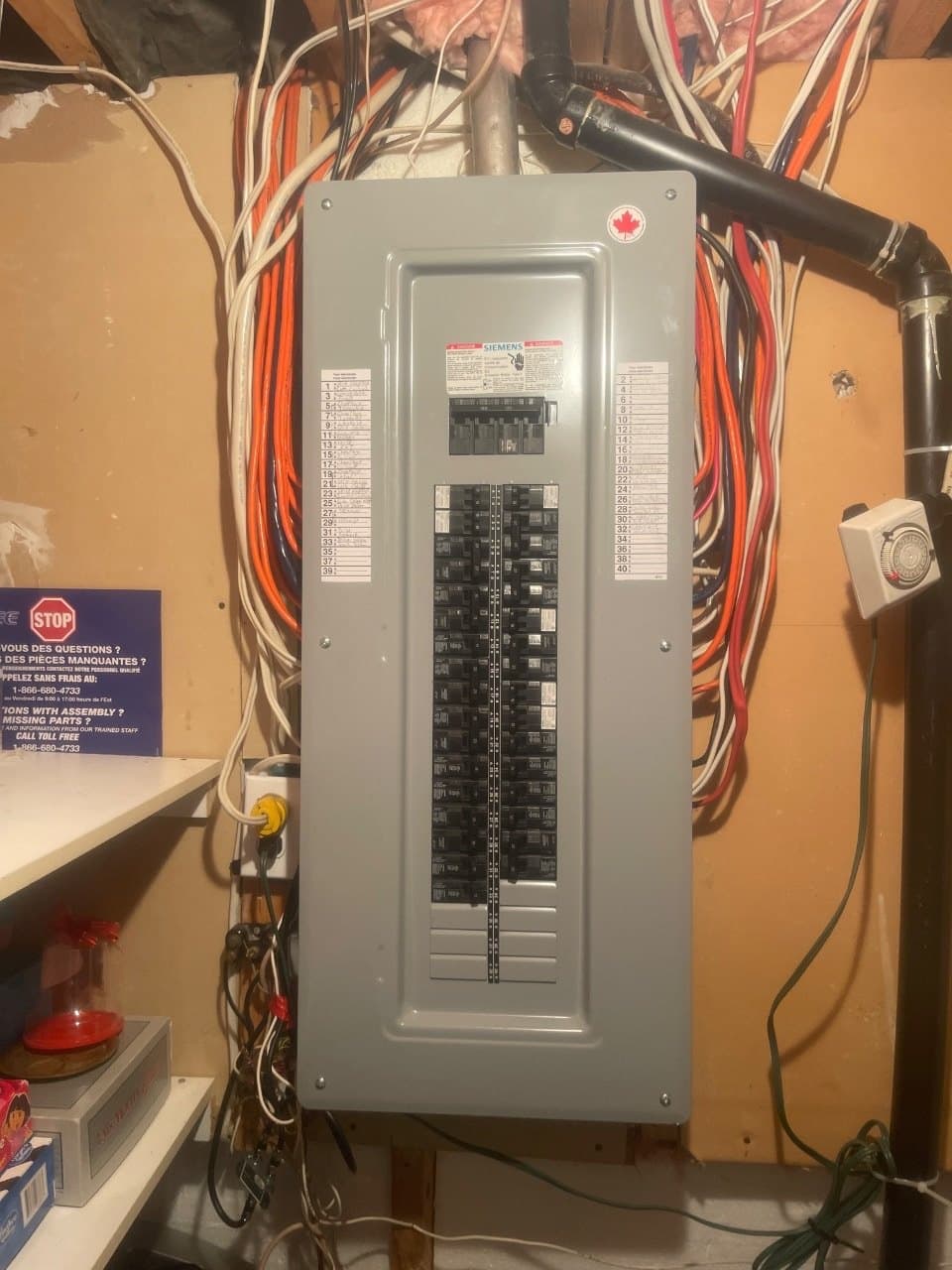
We replace fuse panels with breaker panels, mostly Siemens, Schneider (Square D) and Eaton, with the load calculation and, if needed, the upgrade to 200 A. We deal with the utility and the work declaration, and you receive the invoice to give your insurer. The price is announced in advance, fixed or hourly depending on the project, and labour is guaranteed for 2 years. Send us a photo of the panel and the insurer’s letter: the estimate is free, within 24 hours.
Frequently asked questions
- Is a fuse panel dangerous?
- Not in itself, if it is in good condition and every fuse has the right rating. The danger comes mostly from a fuse bigger than the circuit, worn bases or a panel that heats up. Québec.ca recommends calling a master electrician when the panel gives off unusual heat.
- Can I keep the panel and just change the fuses?
- Replacing a blown fuse with one of the right rating, yes. But that solves neither the capacity, nor the lack of room, nor the insurer’s request. Replacing the panel is the lasting solution.
- A fuse blows often: what should I do?
- According to Québec.ca, first check whether too many appliances are plugged into the same circuit. If it blows for no apparent reason, call a master electrician for an inspection. Never replace it with a bigger fuse.
- Why does my insurer ask me to replace it?
- Insurers look for well-maintained homes, the Insurance Bureau of Canada points out. A fuse panel often signals an older installation without modern protection. The insurer’s letter states what it asks for and by when; the quote answers it point by point.
- Which documents should I give the insurer after the work?
- The invoice, which describes the panel installed, and the confirmation that the work was declared to the RBQ, as the Code requires of the contractor. Keep them in your home’s improvement record: the Insurance Bureau of Canada recommends it.
- Will I be without power for long?
- For the time of the replacement. When the service changes too, the shutdown is coordinated with the utility. The duration is set out in the quote.
- Do I need to go to 200 A at the same time?
- Not always. The load calculation tells. If you are planning a charger, a heat pump or a hot tub, now is the time to think about it: the service is redone once.
- Who deals with Hydro-Québec or Hydro-Sherbrooke?
- We do. According to Hydro-Québec, only a CMEQ member can send it the work request. Depending on the address, the utility is Hydro-Québec, Hydro-Sherbrooke, Hydro-Magog or Hydro-Coaticook, and the shutdown is planned with it.
- Can I replace the panel myself?
- No. According to the RBQ, work on an electrical installation must always be done by a contractor with the appropriate licence, even in the house you live in.
Sources
- Prévenir les risques d’incendie liés à l’électricité, Gouvernement du Québec, checked on October 21, 2026
- Travaux que vous pouvez faire vous-même, Régie du bâtiment du Québec, checked on October 21, 2026
- Biens patrimoniaux : assurer le passé vivantPDF, Bureau d’assurance du Canada, checked on October 21, 2026
- Branchement, déplacement ou prolongement du réseau, Hydro-Québec, checked on October 21, 2026
- Cahier explicatif sur les principaux changements au chapitre V, Électricité (édition 2026)PDF, Régie du bâtiment du Québec, checked on October 21, 2026
About this guide
Written by LTE Électrique, a master electrician’s business in Sherbrooke (RBQ licence 5874-5597-01, CMEQ member). Every rule comes from Québec’s Construction Code or an official source, listed above with the date it was checked. French version reviewed by William Letendre, master electrician, on October 21, 2026.
About usCite this guide
To cite this guide, use its title, author and address:
“Fuse panel: should you replace it, and why your insurer asks”, LTE Électrique, https://www.lteelectrique.com/en/guides/fuse-panel-should-you-replace-it, French version reviewed by William Letendre, master electrician, on October 21, 2026.