

In short
- An arc-fault device recognizes the electrical signature of an arc and cuts the circuit; an ordinary breaker doesn’t see it.
- In a dwelling, every outlet circuit of 125 V and 20 A or less must be protected, with a few specific exceptions.
- Exceptions: the kitchen counter, the fridge, the outlet near the bathroom sink and the labelled single outlet for a pump.
- 2026 Code: adding an outlet to an old circuit no longer means protecting the whole circuit, if the first outlet added is arc-fault.
- In Québec, a circuit protected by an arc-fault device has at most 10 outlets.
In this guide
What it detects
An ordinary breaker reacts to an overload or a dead short. An arc (a wire pinched by a nail, a cord crushed behind furniture, a loose connection) doesn’t draw enough current to trip it, but it gets hot enough to ignite dust or wood. The arc-fault breaker recognizes the electrical signature of the arc and cuts the power.
The RBQ explains it this way: ordinary breakers protect the wires against overheating and short circuits, but when the insulation is damaged, arcs can occur without making them react. Bedrooms, where people sleep, are high-risk places; that’s where the requirement started.
Where it’s required
In new work and in renovations that touch the circuit, the Code requires arc-fault protection for most outlet circuits in living areas: bedrooms, living room, dining room, hallways. The exact rules depend on the edition of the Code in force; we apply them in the quote. An existing installation that isn’t touched generally doesn’t need to be changed.
In practice, since the 2018 edition, every circuit supplying outlets of 125 V and 20 A or less in a dwelling must be protected by a combination arc-fault breaker, except for these:
| Outlet | Arc-fault required? |
|---|---|
| Bedrooms, living room, dining room, hallways, finished basement | Yes |
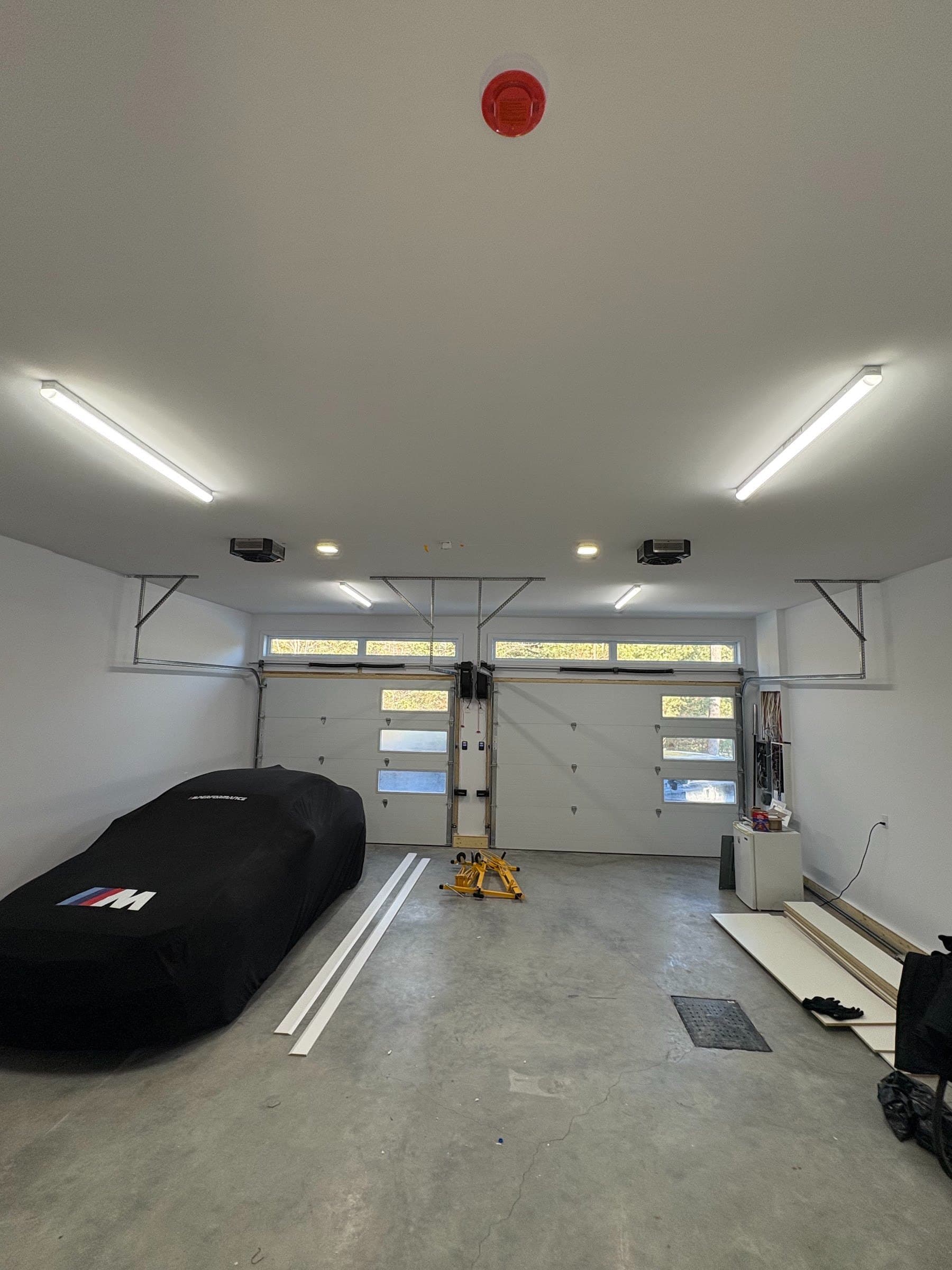
| Garage attached to a house | Yes, according to the RBQ |
| Kitchen counter, island and peninsula | No |
| Fridge | No |
| Outlet near the bathroom sink | No; under the 2026 Code, if no other outlet is on that circuit |
| Labelled single outlet for a sump pump, alone on its circuit | No; under the 2026 Code, also a sewage pump or an electro-medical device |
| Outdoor outlet on a fence, a shed or a detached garage | Not required, but the RBQ recommends protecting it |
What the 2026 Code changes
- Adding an outlet to an old circuit: when outlets are added to an existing circuit without arc-fault protection, the first outlet added just has to be an arc-fault outlet. The whole circuit doesn’t have to be protected at the panel.
- An arc-fault outlet at the start of the circuit: it can replace the arc-fault breaker if the wiring between the panel and that first outlet is in metal raceway or armoured cable.
- The exceptions: a sewage pump and an electro-medical device are added to the sump pump, with a permanent label and a circuit of their own. The outlet near the bathroom sink stays exempt if no other outlet is on that circuit.
The other changes are in Electrical Code 2026: what changes for homeowners.
At the panel or in the outlet
- The combination arc-fault breaker, at the panel, protects the whole circuit, from the panel to the last outlet.
- The arc-fault outlet, at the first outlet or as the first outlet added, protects what is wired after it, under the Code conditions above.
The choice depends on the panel, the existing wiring and the planned work.
Why it trips “for no reason”
- A vacuum, a tool or an old motor whose brushes produce small, normal arcs.
- A truly loose cord or connection: that’s exactly its job.
- A worn outlet or switch.
- More rarely, interference from an electronic device.
An arc-fault breaker that often trips on the same circuit deserves a check: it may be seeing something you can’t.
When it trips: what to do
- Unplug what was running on the circuit.
- Reset the breaker once.
- Plug the appliances back in one at a time: if only one trips it, try it on another circuit.
- If it still trips with nothing plugged in, stop resetting it and have the circuit checked.
See also Breaker keeps tripping.
Can my panel take them?
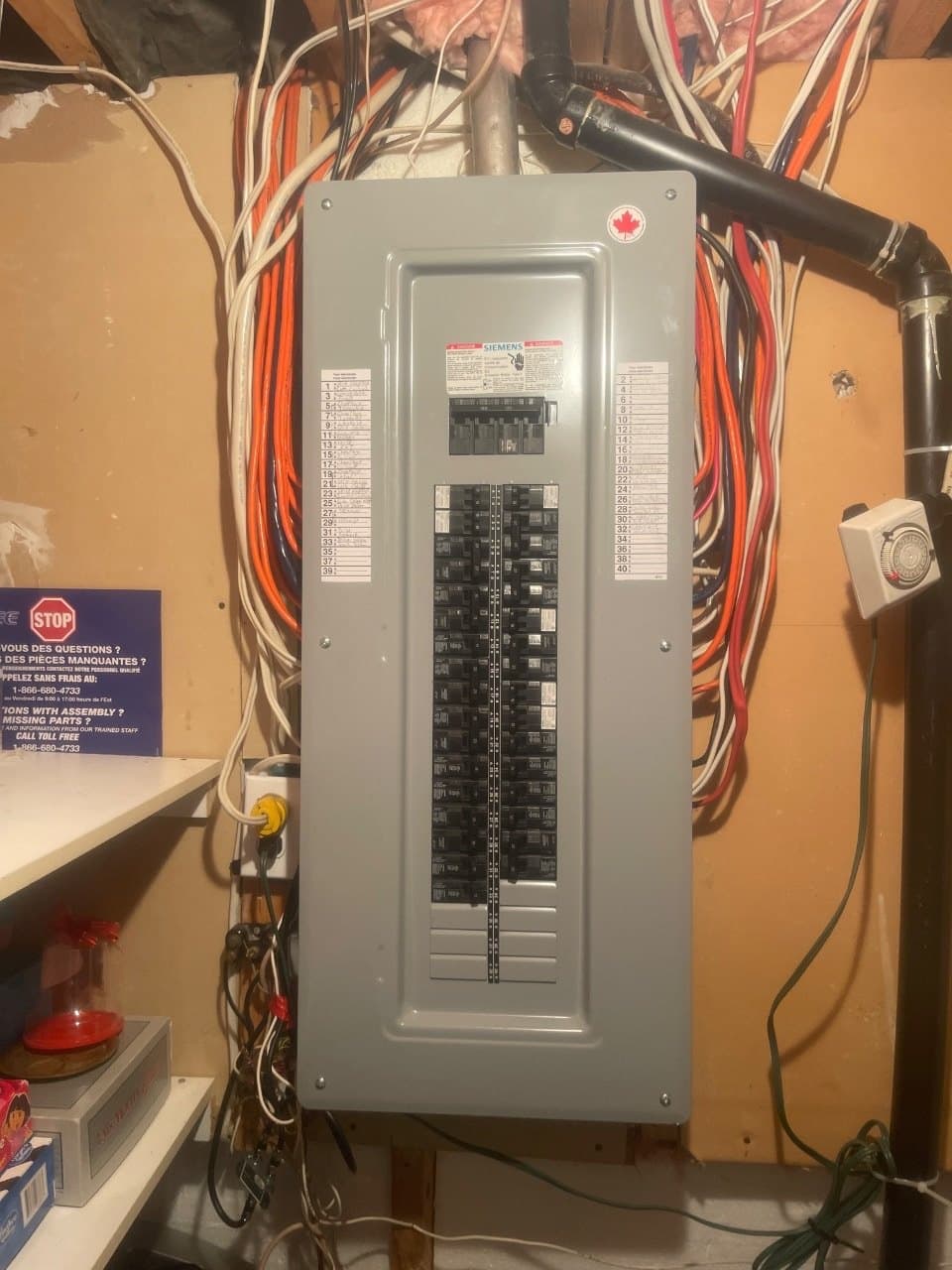
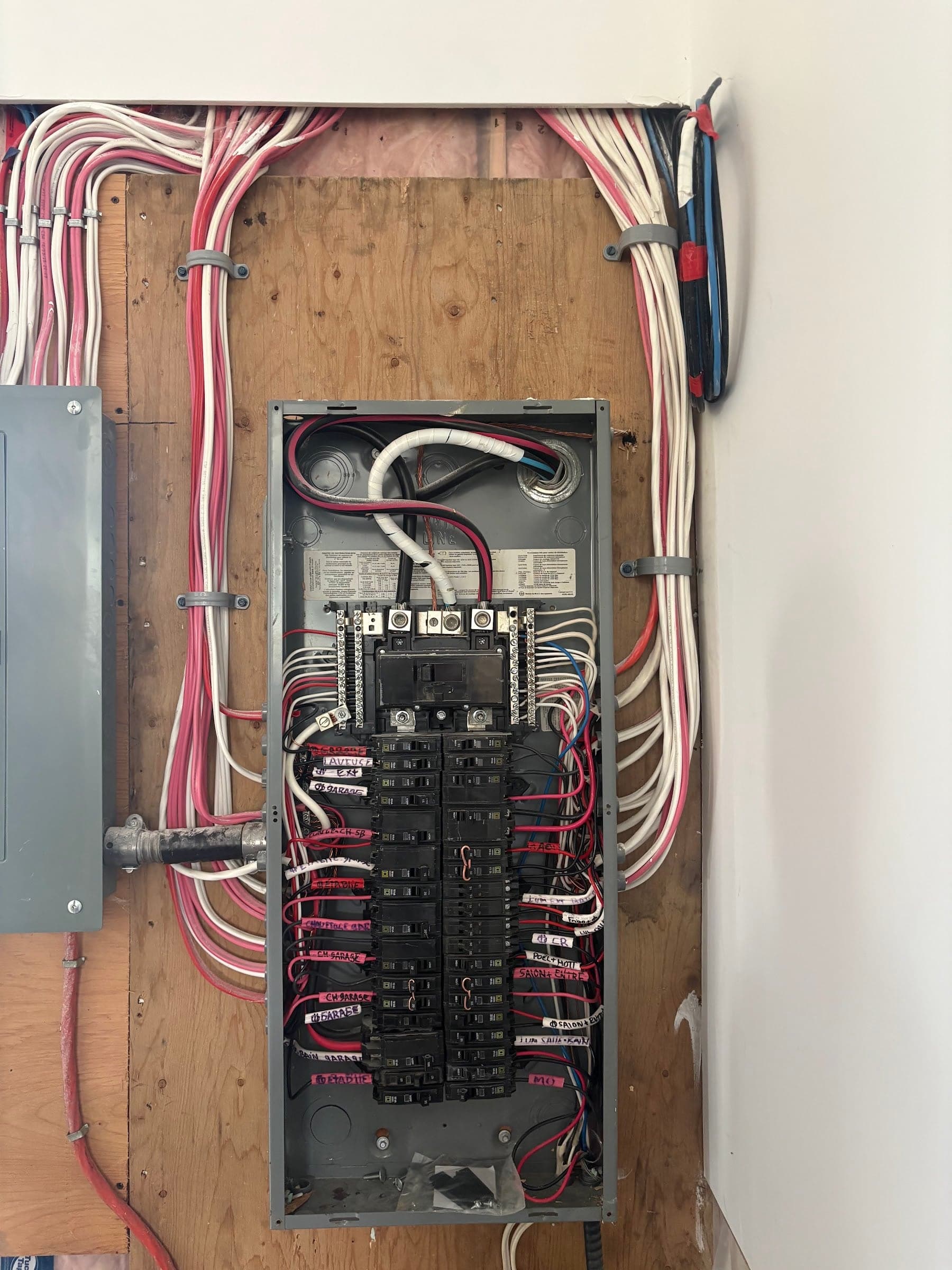
Arc-fault breakers exist for most recent breaker panels, depending on the manufacturer. A fuse panel or a very old panel can’t take them: one more reason to replace it when you renovate. See Fuse panel: should you replace it?.
Arc-fault and GFCI
They are two different protections: a GFCI cuts out when current leaks to ground, mostly near water; an arc-fault device cuts out when it recognizes an arc. A bathroom outlet can need one without the other. See GFCI outlets: where they are required.
With LTE Électrique
We install arc-fault protection where the Code requires it, at the panel or in the outlet, when we add a circuit, renovate a room or replace a panel, and we look for the cause when an arc-fault device trips. The price is announced in advance, fixed or hourly depending on the project, and labour is guaranteed for 2 years. Send us a photo of the panel, door open: the estimate is free, within 24 hours.
Frequently asked questions
- Do I have to replace my existing breakers with arc-fault ones?
- Not necessarily for an existing installation that isn’t being touched. When a room is renovated or a circuit is added, arc-fault protection becomes required for that circuit. We spell it out in the quote.
- Arc-fault or GFCI: what’s the difference?
- GFCI protects people from electric shock near water. Arc-fault protects against fires caused by an arc. Some breakers do both.
- Which outlets don’t need arc-fault protection?
- Those on the kitchen counter, island and peninsula, the fridge outlet, the outlet near the bathroom sink and the labelled single outlet for a sump pump on its own circuit. Under the 2026 Code, a sewage pump and an electro-medical device are added, under the same conditions.
- I’m adding an outlet in the basement: does the breaker need to change?
- Not necessarily. Under the 2026 Code, when outlets are added to an existing circuit without arc-fault protection, the first outlet added just has to be an arc-fault outlet: the whole circuit doesn’t have to be protected at the panel.
- Does the garage count?
- According to the RBQ, yes for a garage attached to a house. Outdoor outlets on a fence, a shed or a detached garage aren’t covered by the current wording, although the RBQ recommends protecting them anyway.
- How many outlets on an arc-fault circuit?
- In Québec, at most 10 outlets per circuit protected by arc-fault. It’s a Québec amendment, kept in the 2026 Code.
- My arc-fault breaker trips when I vacuum
- Some motors produce small, normal arcs. Try the appliance on another circuit: if it trips there too, it’s the appliance. If the circuit trips even with nothing plugged in, have it checked.
- Can I install an arc-fault breaker myself?
- No. According to the RBQ, work on an electrical installation must be done by a contractor with the appropriate licence, even in your own home. Resetting the breaker once is up to you.
Sources
- Guide d’accompagnement : contrôle de la qualité des travaux d’installation électrique (octobre 2023)PDF, Régie du bâtiment du Québec, checked on October 21, 2026
- Cahier explicatif sur les principaux changements au chapitre V, Électricité (édition 2026)PDF, Régie du bâtiment du Québec, checked on October 21, 2026
- Remplacement d’appareillages électriques dans une installation existante, Régie du bâtiment du Québec, checked on October 21, 2026
- Travaux que vous pouvez faire vous-même, Régie du bâtiment du Québec, checked on October 21, 2026
About this guide
Written by LTE Électrique, a master electrician’s business in Sherbrooke (RBQ licence 5874-5597-01, CMEQ member). Every rule comes from Québec’s Construction Code or an official source, listed above with the date it was checked. French version reviewed by William Letendre, master electrician, on October 21, 2026.
About usCite this guide
To cite this guide, use its title, author and address:
“Arc-fault breakers (AFCI): what they do, where they’re required, and why they trip”, LTE Électrique, https://www.lteelectrique.com/en/guides/arc-fault-breakers-afci, French version reviewed by William Letendre, master electrician, on October 21, 2026.