In short
- Many houses built from the mid-1960s to the late 1970s have aluminum wiring, sometimes mixed with copper.
- The wire itself is safe; the risk is at the connections, where aluminum oxidizes and isn’t compatible with devices made for copper.
- Outlets and switches must be marked CO/ALR (or AL-CU for outlets), and connectors AL-CU; never push-in terminals.
- Don’t wait for signs: a connection can fail without warning. The original devices not marked for aluminum are replaced.
- Your insurer may require an inspection and documented repairs, sometimes replacement with copper: check with yours.
In this guide
How to tell if your house has it
- The house dates from the mid-1960s to the late 1970s, the period cited by Ontario’s Electrical Safety Authority. Some houses have a mix of aluminum and copper.
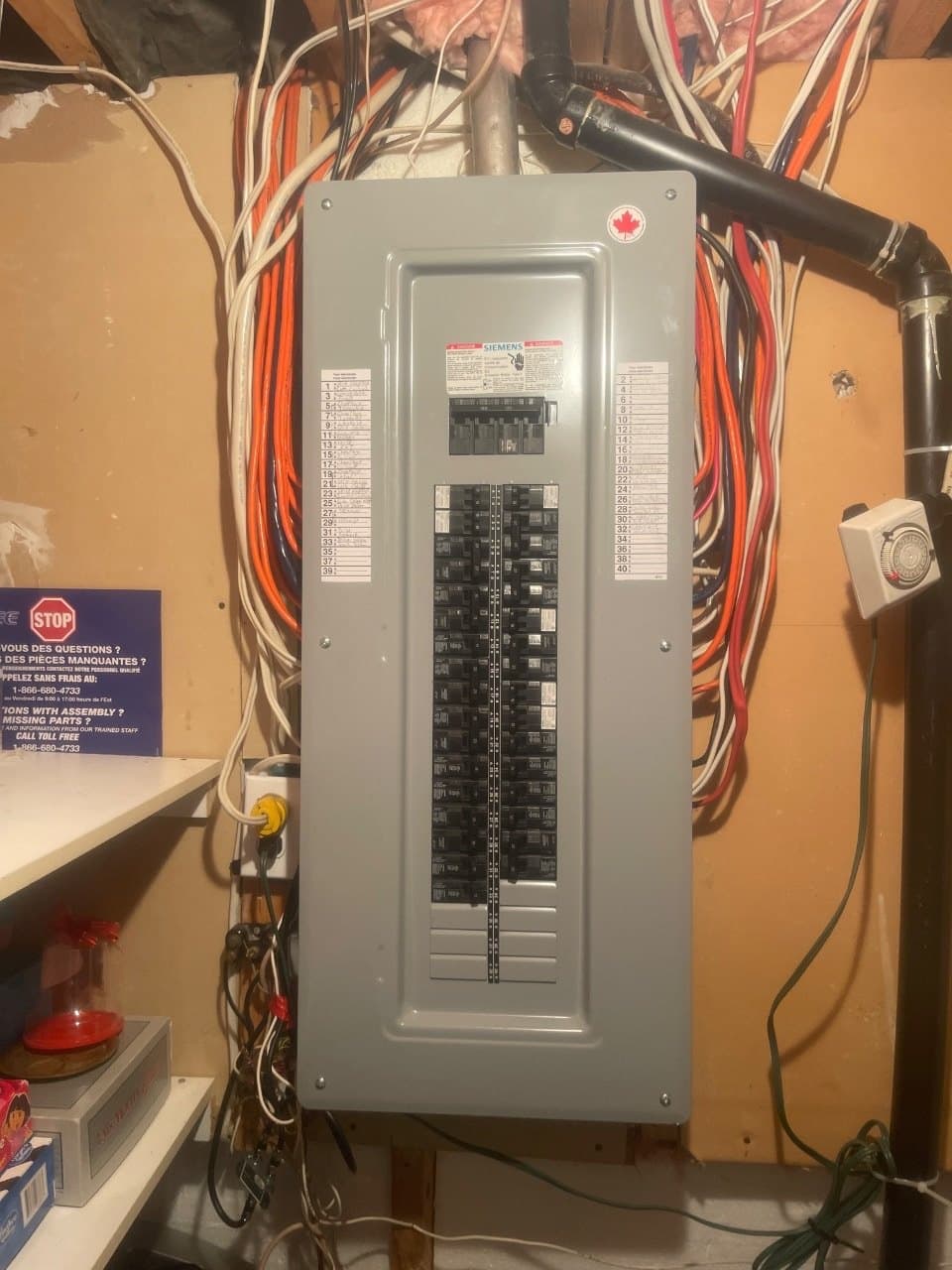
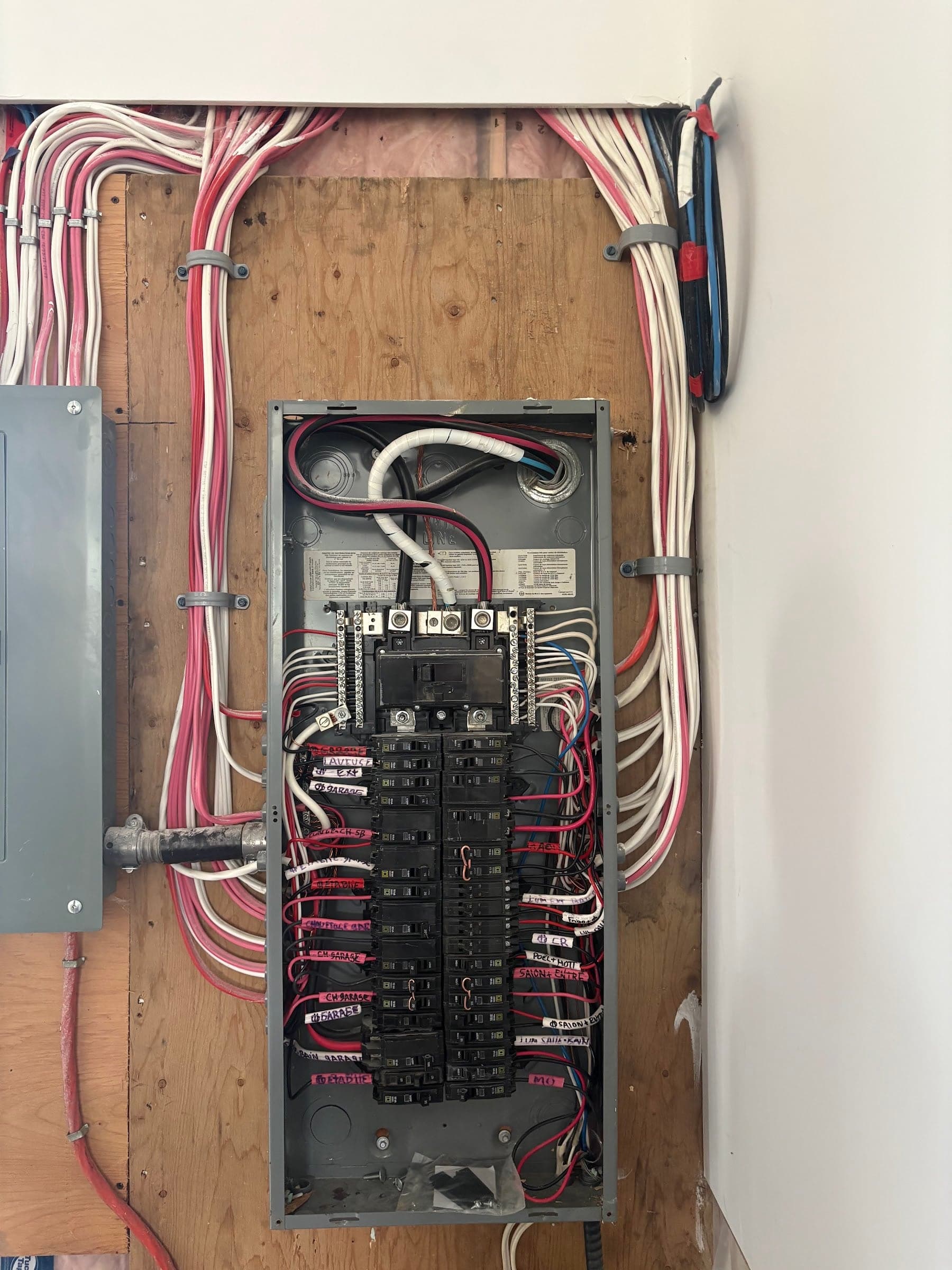
- On the sheath of cables visible at the panel or in the basement, you can read AL or ALUMINUM.
- In an outlet box, the conductors are silver-coloured rather than copper. Don’t open it yourself: a photo of the panel is enough to start.
Why it is watched
The aluminum wire itself is safe when the connections are done properly, without damaging the wire, with devices approved for aluminum. The problems reported come from connections that overheat and fail: aluminum tends to oxidize, and it isn’t compatible with devices made for copper.
Signs to watch for
- A warm outlet or switch cover plate.
- A discoloured outlet or switch, or signs of arcing.
- Lights that flicker for no obvious reason.
- A smell of hot plastic.
If so, stop using the outlet or switch and call a master electrician right away. See also Burning smell, hot outlet: what to do.
What the Code requires for connections
Ontario’s code, like Québec’s, is based on the Canadian Electrical Code. The ESA sums up the markings required for aluminum:
| Device | Required marking |
|---|---|
| Outlet rated 20 A or less | CO/ALR or AL-CU |
| Outlet rated more than 20 A | AL-CU or CU-AL |
| Switch rated 20 A or less | CO/ALR |
| Connector joining aluminum and copper | AL-CU or CU-AL |
| Light fixture or baseboard heater | No marking on the device, but approved connectors |
- Every connection of an aluminum wire is made to a device marked this way, including the bare bonding wire.
- Never push-in terminals (the holes at the back of some outlets) with aluminum.
- Around a screw, the wire makes three quarters of a loop, clockwise, and one wire per screw.
- Aluminum wire is soft: nicked or crushed, it becomes a hot spot.
What an electrician does
- The assessment: every outlet, switch, light fixture and appliance connection, as well as the panel, is opened to inspect the connections without disturbing them. We look for signs of overheating: darkened or discoloured connections, melted insulation.
- The repairs: the damaged part of the wire is cut back, then outlets and switches marked for aluminum are installed, or copper tails connected with connectors marked AL-CU. When the box is short on room, a box extension is added.
- If needed, the most heavily used circuits (kitchen, bathroom) are redone, not the whole house.
What the insurer asks for
In Ontario, the ESA reports that many insurers refuse to insure or renew a house with aluminum wiring until the wiring has been inspected and repaired, and that some require replacement with copper. Requirements vary from one insurer to another: check yours, its letter states what it asks for.
The Insurance Bureau of Canada recommends keeping a record of all improvements. After the work, you keep in it the invoice describing the inspection and the corrections, circuit by circuit, and the confirmation that the work was declared to the RBQ when it has to be.
Before buying a house from this era, the pre-purchase electrical inspection flags it. And if the house still has fuses, see Fuse panel: should you replace it?.
What not to do
- Install an ordinary outlet, made for copper, on aluminum.
- Join copper and aluminum with a connector not marked AL-CU.
- Use an outlet’s push-in terminals.
- Ignore an outlet that heats up or crackles.
With LTE Électrique
We inspect the house circuit by circuit and correct the connections with devices and connectors marked for aluminum. You receive a clear invoice to give your insurer. The price is announced in advance, fixed or hourly depending on the project, and labour is guaranteed for 2 years. Send us the insurer’s letter and a photo of the panel: the estimate is free, within 24 hours.
Frequently asked questions
- Is aluminum wiring dangerous?
- The wire itself is safe when the connections are done properly, with devices approved for aluminum. The problems reported come from connections that overheat, because aluminum oxidizes and isn’t compatible with devices made for copper.
- Does all the wiring have to be redone?
- Rarely. We assess circuit by circuit: the connections are corrected with the right devices and connectors, and only problem or heavily used circuits are redone. Some insurers do require replacement with copper, though: their letter says so.
- How can I tell if my house has it?
- The word AL or ALUMINUM on the sheath of cables visible at the panel or in the basement, and silver-coloured conductors rather than copper. Don’t take an outlet apart yourself: a photo of the panel and the visible cables is enough to start.
- What are the signs of a problem?
- A warm outlet or switch cover plate, a discoloured outlet, signs of arcing, flickering lights or a smell of hot plastic. If so, stop using the outlet or switch and call a master electrician right away.
- Can an ordinary outlet go on aluminum?
- No, not directly. You need an outlet marked CO/ALR or AL-CU, or a copper tail connected with a connector marked AL-CU. An ordinary outlet installed later, such as a decorative model made for copper, has to be replaced.
- Can I sell or insure a house with aluminum wiring?
- Yes. The pre-purchase inspection will flag it, and the insurer may ask for corrections. Work documented by an electrician settles the matter in most cases.
- Which documents should I give the insurer?
- The invoice describing the inspection and the corrections, circuit by circuit, and the confirmation that the work was declared to the RBQ when it has to be. Keep them in your home’s improvement record, as the Insurance Bureau of Canada recommends.
- Can I change the outlets myself?
- No. According to the RBQ, work on an electrical installation must be done by a contractor with the appropriate licence, even in your own home. With aluminum, the connections also call for special techniques, as the ESA points out.
Sources
- Flash 19-30-FL : Aluminum wiring in residential installations (juin 2019)PDF, Electrical Safety Authority (Ontario), checked on October 21, 2026
- Biens patrimoniaux : assurer le passé vivantPDF, Bureau d’assurance du Canada, checked on October 21, 2026
- Travaux que vous pouvez faire vous-même, Régie du bâtiment du Québec, checked on October 21, 2026
About this guide
Written by LTE Électrique, a master electrician’s business in Sherbrooke (RBQ licence 5874-5597-01, CMEQ member). Every rule comes from Québec’s Construction Code or an official source, listed above with the date it was checked. French version reviewed by William Letendre, master electrician, on October 21, 2026.
About usCite this guide
To cite this guide, use its title, author and address:
“Aluminum wiring in a 1960s-1970s house: what to do, and what your insurer asks”, LTE Électrique, https://www.lteelectrique.com/en/guides/aluminum-wiring-1960s-1970s-homes, French version reviewed by William Letendre, master electrician, on October 21, 2026.