
In short
- Each piece of equipment gets its own dedicated circuit, GFCI protection and a disconnect within sight.
- A GFCI outlet protecting a hot tub or pool must be at least 3 m from the water, according to the RBQ.
- The metal parts around the water are tied together: bonding is done before backfilling.
- According to Hydro-Québec, the pool or hot tub stays at least 5 m from the wires that supply the house and 7.5 m from a medium-voltage wire.
- A buried service cable stays at least 1.5 m from the pool wall, and never runs under it.
In this guide
The protection
- A dedicated circuit for each piece of equipment: pump, pool heat pump, hot tub.
- GFCI protection: it cuts out in a few milliseconds if current leaks into the water or through a person.
- A disconnect within sight of the equipment, to safely cut the power during maintenance.
Bonding
A conductor ties together the metal parts around the water: the pool structure, ladder, pump, reinforcing, sometimes a loop under the deck. The goal: no voltage difference between two things a wet person can touch at the same time. It’s required, invisible once finished, and it’s done before backfilling.
Distances
The Code sets minimum distances between the water and outlets, fixtures, switches and overhead wires. We respect them from the yard plan on: the location of the hot tub or pump is decided with these distances in mind, not after. According to the RBQ, these distances are measured from the inside wall of the pool.
Away from the wires: Hydro-Québec’s distances
Before installing a pool or hot tub, Hydro-Québec asks you to keep minimum distances from the wires, measured to any part of the installation, platform, slide, diving board and ladder included:
| Wire or cable | Minimum distance |
|---|---|
| Wires supplying the house (overhead) | 5 m |
| Twisted low-voltage wires | 5 m |
| Separate, stacked low-voltage wires | 7 m |
| Medium-voltage wire | 7.5 m |
| Telecom cable | 5 m |
| Guy-wire ground anchor | 0.75 m |
| Buried service cable | 1.5 m from the inside wall, never under the pool |
| Buried medium-voltage cable | Up to 6 m |
- No permanent installation, such as a pool or hot tub, in a 1.5 m strip on each side of a distribution line.
- Estimate by eye, never measure: Hydro-Québec says not to bring any object, not even a tape measure, within 3 m of a medium-voltage wire.
- If in doubt, Hydro-Québec can check the location. If your utility is Hydro-Sherbrooke, Hydro-Magog or Hydro-Coaticook, check with them; see Hydro-Sherbrooke or Hydro-Québec?.
Underground wiring
The cable to the yard is buried at the required depth, or run in conduit, before the deck, the paving or the landscaping. A trench dug afterwards costs more and leaves marks.
The hot tub
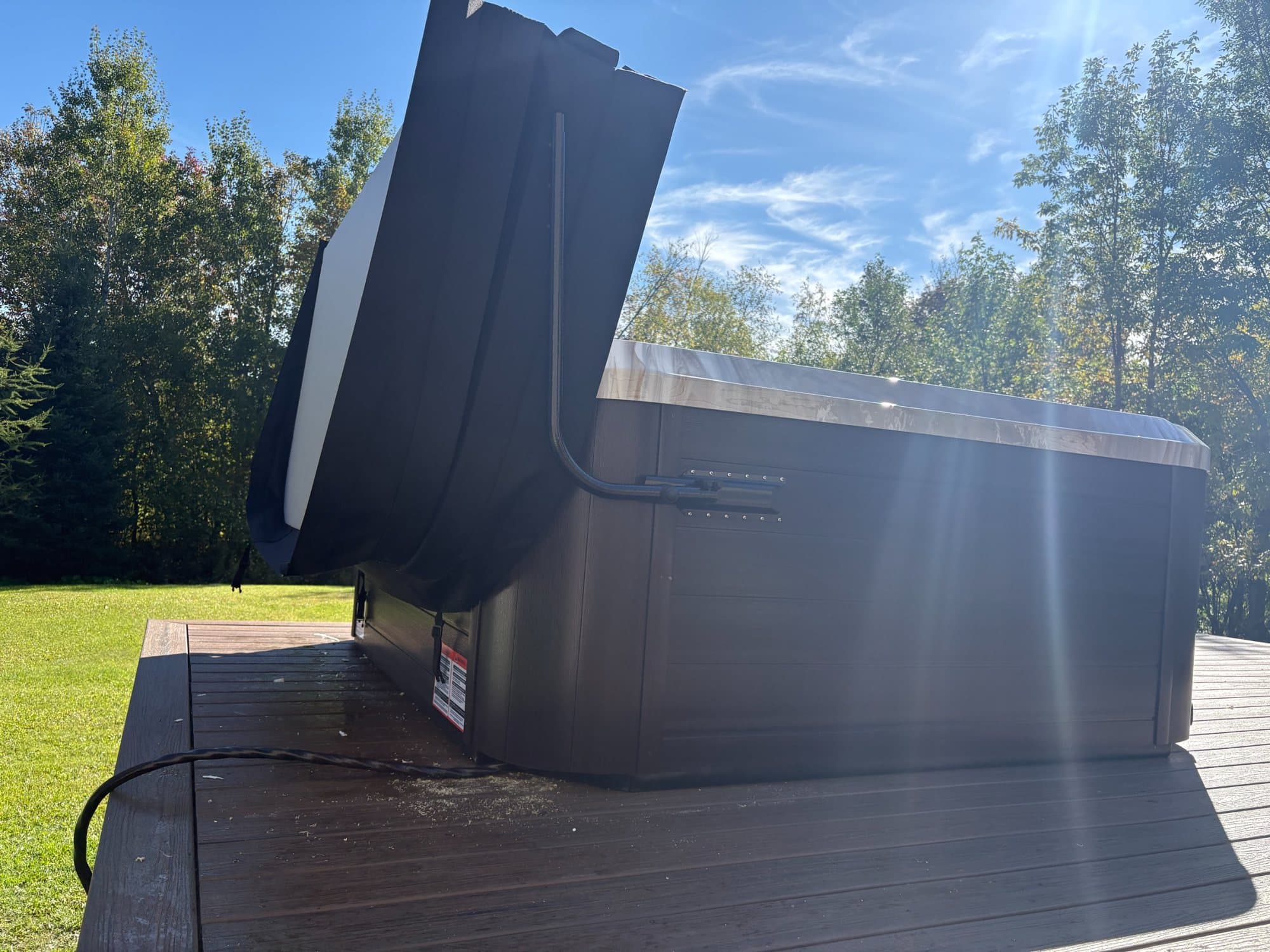
Some small 120 V hot tubs plug into a protected outlet. Most require a dedicated 240 V circuit, sized for the model, with GFCI protection and a disconnect within sight. The hot tub’s spec sheet says so; send it to us with a photo of the panel.
In the load calculation, a hot tub heater counts at 100%; see Load calculation.
The whirlpool bath
In the bathroom, the electrical equipment of a whirlpool bathtub, therapeutic baths included, must be GFCI-protected. According to the RBQ, this GFCI goes in a spot that’s easy to test and at least 1.5 m from the tub, unless it’s part of the approved tub and behind a screen.
The pool heat pump
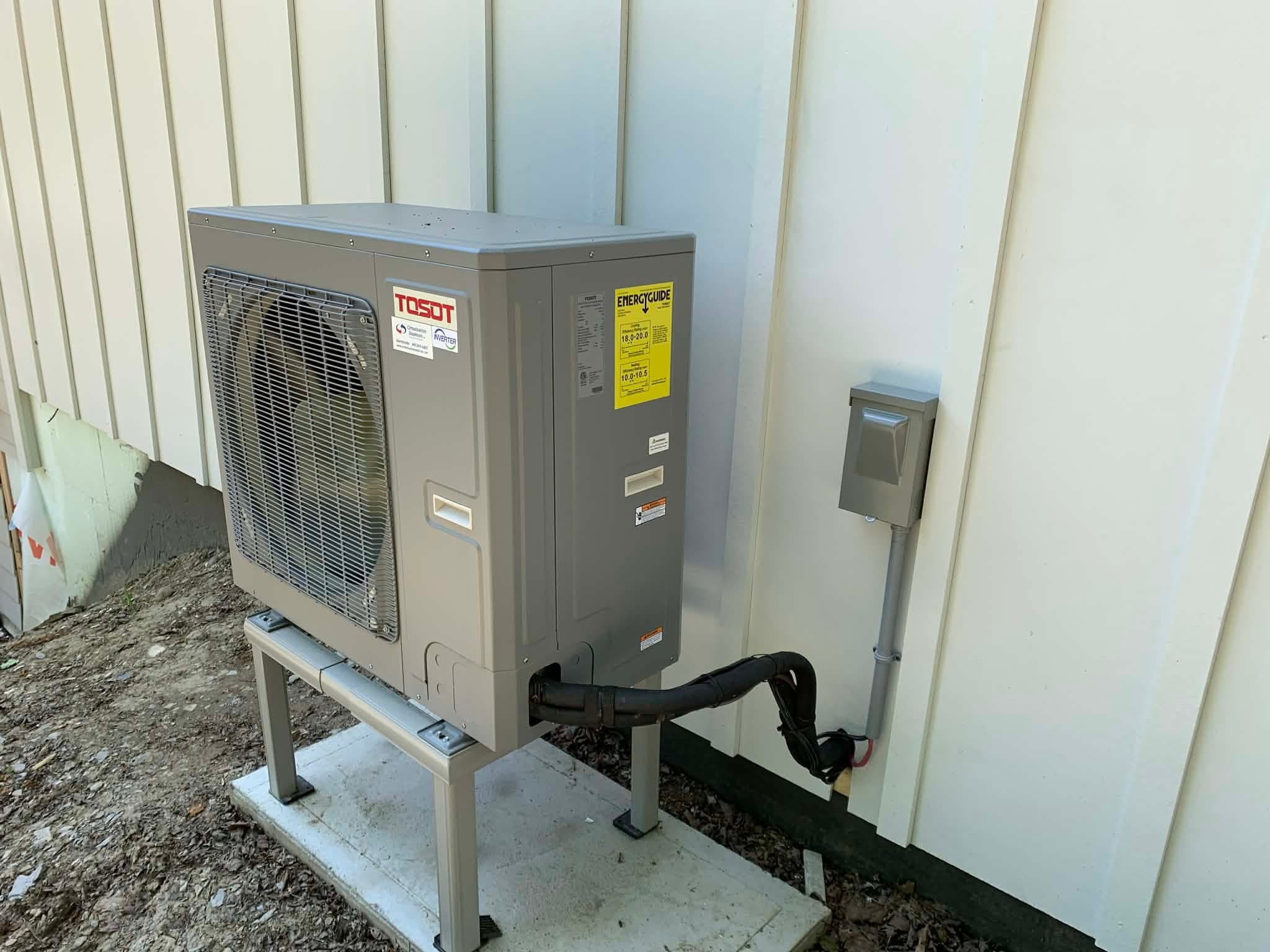
A dedicated circuit sized from its nameplate, a disconnect beside it, and a check that the panel can keep up: hot tub, heat pump and EV charger add up quickly on a 100 A service. See also Hooking up a heat pump.
With LTE Électrique
We hook up hot tubs, pumps and pool heat pumps: dedicated circuit, GFCI protection, disconnect, bonding of metal parts and buried cable, planned before backfilling and the deck. The price is announced in advance, fixed or hourly depending on the project, and labour is guaranteed for 2 years. Send us the spec sheet of the hot tub or heat pump, a photo of the panel and the planned location: the estimate is free, within 24 hours.
Frequently asked questions
- Can I connect my hot tub myself?
- No. In Quebec, this work must be done by an electrical contractor holding an RBQ licence, and a hot tub hookup requires specific protection.
- Does an above-ground pool need all this?
- Yes, on its own scale: a GFCI outlet for the pump, distances from the water, and bonding depending on the type of pool and its metal parts.
- When should I bring in the electrician?
- Before the pool or hot tub goes in, to plan the wiring route and where the equipment goes, and before the deck or paving for the trench.
- How far from power lines should my pool be?
- According to Hydro-Québec: at least 5 m from the wires that supply the house, 5 m from twisted low-voltage wires (7 m if they’re separate), 7.5 m from a medium-voltage wire and 5 m from a telecom cable, measured to any part of the pool, platform or slide. Estimate by eye, never bringing anything close.
- My power cable is buried: where can the pool go?
- According to Hydro-Québec, the service cable must stay at least 1.5 m from the inside wall of the pool or hot tub, and never run under it, whatever the depth. For a medium-voltage cable, the distance can be up to 6 m. Have the cable located up to the meter before digging.
- Where should the hot tub’s GFCI go?
- According to the RBQ, an outlet with a built-in GFCI that protects a hot tub, spa or pool must be at least 3 m from the water. A GFCI outlet right next to the hot tub isn’t suitable: the protection goes farther away, or at the panel.
- What about a whirlpool bath in the bathroom?
- Its electrical equipment must be GFCI-protected, with the GFCI in a spot that’s easy to test and at least 1.5 m from the tub, unless it’s part of the approved tub and behind a screen.
- Can the pool go under the line along the lot?
- No. According to Hydro-Québec, no permanent installation such as a pool or hot tub is allowed in a 1.5 m strip on each side of a distribution line. If in doubt, Hydro-Québec can check the location.
Sources
- Vérification de la conformité d’une piscine ou d’un spa, Hydro-Québec, checked on October 21, 2026
- Vérification de la conformité – piscine ou spa (questionnaire), Hydro-Québec, checked on October 21, 2026
- Guide d’accompagnement : contrôle de la qualité des travaux d’installation électrique (octobre 2023)PDF, Régie du bâtiment du Québec, checked on October 21, 2026
- Cahier explicatif sur les principaux changements au chapitre V, Électricité (édition 2026)PDF, Régie du bâtiment du Québec, checked on October 21, 2026
- Travaux que vous pouvez faire vous-même, Régie du bâtiment du Québec, checked on October 21, 2026
About this guide
Written by LTE Électrique, a master electrician’s business in Sherbrooke (RBQ licence 5874-5597-01, CMEQ member). Every rule comes from Québec’s Construction Code or an official source, listed above with the date it was checked. French version reviewed by William Letendre, master electrician, on October 21, 2026.
About usCite this guide
To cite this guide, use its title, author and address:
“Hot tubs, pools and pool heat pumps: the electrical rules to know before you dig”, LTE Électrique, https://www.lteelectrique.com/en/guides/hot-tub-and-pool-electrical-rules, French version reviewed by William Letendre, master electrician, on October 21, 2026.