
In short
- An alarm on every floor, basement included, near the bedrooms and, according to Québec.ca, in each bedroom where someone sleeps.
- Interconnected, they all sound together; hard-wired, they keep a backup battery for outages.
- A hard-wired alarm can’t be replaced by a battery model, according to Québec.ca.
- Every alarm is replaced 10 years after the manufacturing date printed on the casing.
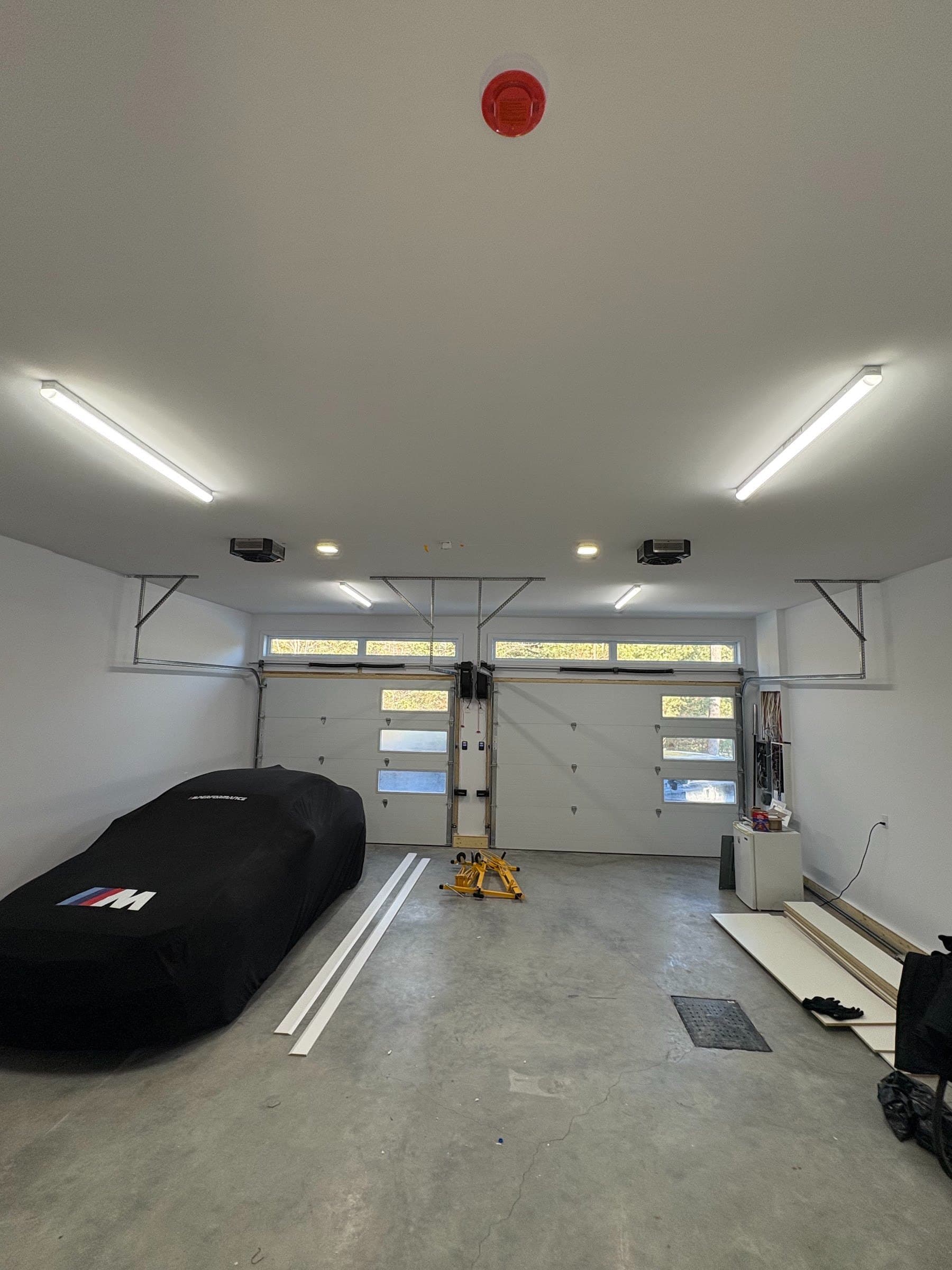
- A fuel-burning appliance or a garage connected to the house also calls for a carbon monoxide alarm.
In this guide
Where they’re needed
In a dwelling, the building rules require smoke alarms on every floor, including the basement, and near the bedrooms; depending on the layout, in each bedroom. The exact requirements depend on the regulations in force and the type of work: we apply them in the quote.
Who sets these rules? For a house, Québec.ca suggests checking with the municipality for the regulations in force and the type of alarm allowed. Québec’s Electrical Code, 2026 edition, refers to the National Building Code for installing smoke and carbon monoxide alarms in dwellings. And for apartment buildings and condominiums, the RBQ requires an alarm in the rooms where people sleep or in the hallway serving them, and one on each floor of a two-storey unit.
What Québec.ca recommends, for every home:
| Where | How many |
|---|---|
| Every floor, basement included | 1; 2 if the floor is more than 10 m long, one at each end |
| Hallway near the bedrooms | 1 |
| Each bedroom where someone sleeps | 1 |
| Near the stairs | 1 |
Placing it right
According to Québec.ca:
- on the ceiling, at least 10 cm from the wall, or on the wall, 10 to 30 cm from the ceiling;
- 1 m from a fan, an air conditioner, an outlet or a return-air vent;
- unobstructed, so the smoke can reach it.
Everyone in the home must hear it when it goes off. Also avoid the kitchen and the bathroom: it goes off there for nothing.
Interconnected: when one sounds, they all sound
A fire that starts in the basement at night has to wake someone upstairs. Hard-wired, interconnected alarms do that: they are linked together, with a backup battery in case of an outage. That’s what new work requires and, often, renovations that open walls or create a bedroom.
If your hard-wired alarms don’t sound together, Québec.ca recommends having them interconnected by a qualified electrician.
Hard-wired or battery
Battery alarms have their place as a complement, but they don’t sound together and they depend on a battery people forget. Hard-wired models with battery backup are the norm in construction and renovation.
Carbon monoxide
If the house has a fuel-burning appliance (furnace, fireplace, gas water heater) or an attached garage, a carbon monoxide alarm is also required near the bedrooms. Combined smoke and CO models exist.
- For apartment buildings, the RBQ requires one if there’s a fuel-burning appliance or direct access to an indoor garage, with a device that meets standard CAN/CSA-6.19 and has a built-in alarm.
- An ordinary smoke alarm doesn’t detect carbon monoxide: according to the City of Sherbrooke, only combined models detect both.
- The City recommends a carbon monoxide alarm with a battery that keeps it running during an outage and the CSA 6.19 certification logo.
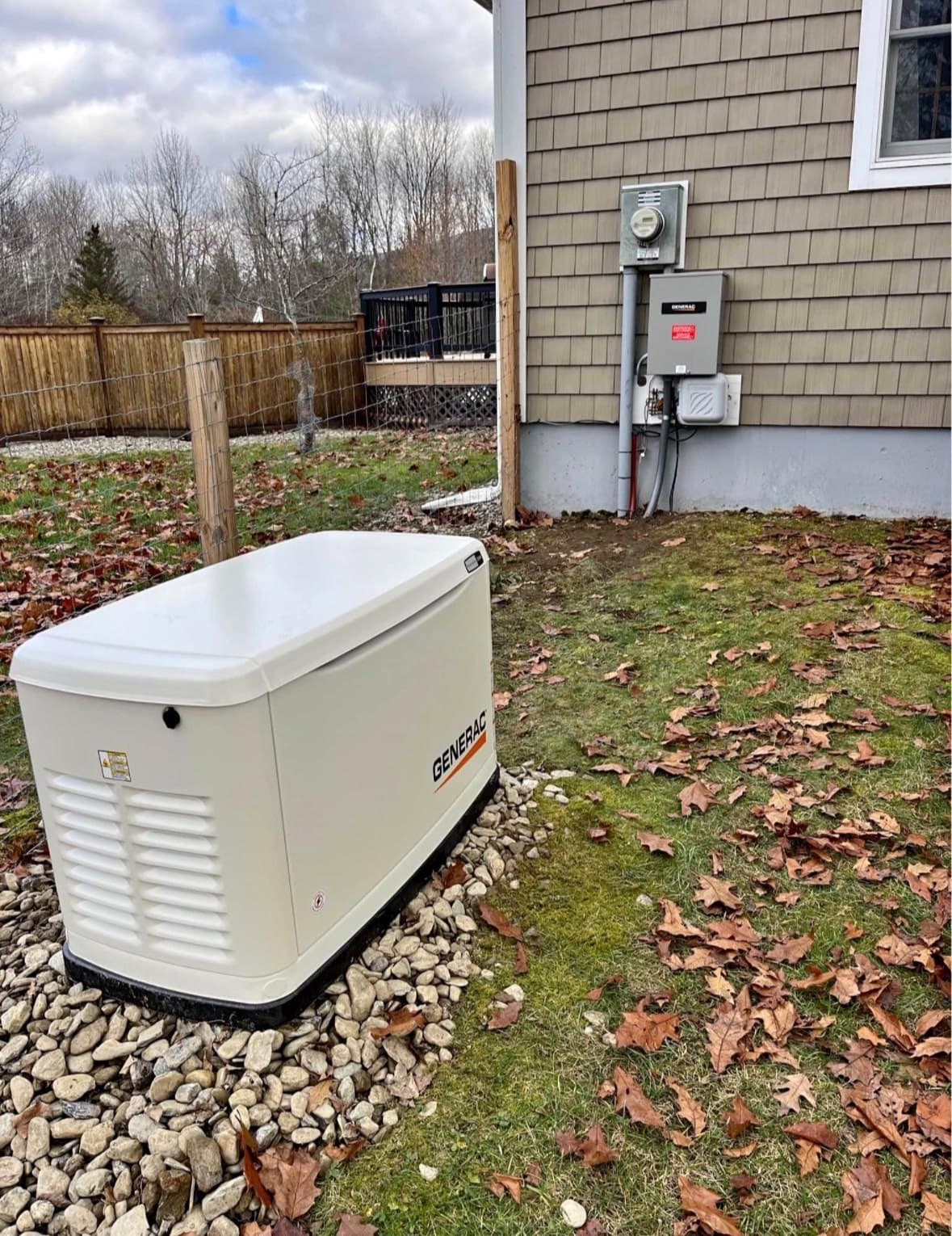
A generator running too close to the house is a source of carbon monoxide; see Generators and transfer switches.
Ten years, no more
A smoke alarm is replaced after ten years: the manufacturing date is printed on it. An alarm that goes off for no reason is often at the end of its life, or poorly placed near the kitchen or bathroom.
The RBQ adds: with no manufacturing date, or if it’s unreadable, the alarm is replaced right away. The City of Sherbrooke also reminds us: battery or hard-wired, they’re changed every 10 years.
Checking them
- Every month: press the test button for a few seconds (Québec.ca).
- When the clocks change, in spring and fall: a good time to check the batteries (City of Sherbrooke).
- Never paint them.
- A system connected to a monitoring centre doesn’t replace an alarm required by the municipality; notify the centre before a test.
When renovating
When you add a bedroom in the basement or open walls, that’s the time: the wiring is done with the rest, without much extra work. We tell you in the quote what the rules require for your project. See also Finishing a basement: the electrical work.
With LTE Électrique
We install and interconnect hard-wired alarms, smoke or combined smoke and carbon monoxide, during your work: renovation, basement, new bedroom. The price is announced in advance, fixed or hourly depending on the project, and labour is guaranteed for 2 years. Send us the number of floors and bedrooms, and a photo of an alarm: the estimate is free, within 24 hours.
Frequently asked questions
- Are my battery alarms enough?
- For an existing installation that isn’t touched, often yes, as long as they work and are less than ten years old. In new work or a renovation that affects the walls or bedrooms, hard-wired, interconnected alarms are generally required.
- Why does my alarm go off for no reason?
- End of life (over ten years), a low battery, dust, or a spot too close to the kitchen or shower. Replace it if it’s over ten years old; otherwise, clean it and change the battery.
- Can I replace a hard-wired alarm with a battery model?
- No. According to Québec.ca, a smoke alarm connected to an electrical circuit can’t be replaced by a battery model. It is replaced with a compatible hard-wired model, to keep the interconnection.
- My hard-wired alarms don’t sound together: what should I do?
- Québec.ca recommends having them interconnected by a qualified electrician, so they all go off at the same time, wherever the smoke comes from.
- Where should an alarm go?
- According to Québec.ca: on the ceiling, at least 10 cm from the wall, or on the wall, 10 to 30 cm from the ceiling, 1 m from a fan, an air conditioner, an outlet or a return-air vent, and unobstructed. A floor longer than 10 m should have two, one at each end.
- Do I need a carbon monoxide alarm?
- If the house has a fuel-burning appliance (furnace, fireplace, gas range or water heater) or an attached garage, yes. For apartment buildings, the RBQ requires one if there’s a fuel-burning appliance or direct access to an indoor garage, with a device that meets standard CAN/CSA-6.19.
- Does a smoke alarm detect carbon monoxide?
- No. According to the City of Sherbrooke, only combined models detect both. Otherwise, you need a smoke alarm and a carbon monoxide alarm.
- Does my monitored alarm system replace the smoke alarms?
- No. According to Québec.ca, a smoke detector connected to a monitoring centre doesn’t replace a smoke alarm required by municipal regulations.
Sources
- Avertisseurs de fumée, Gouvernement du Québec, checked on October 21, 2026
- Bâtiments d’habitation (chapitre Bâtiment du Code de sécurité), Régie du bâtiment du Québec, checked on October 21, 2026
- Décret 236-2026 : Règlement modifiant le Code de construction (chapitre V, Électricité), Gazette officielle du Québec, 11 mars 2026PDF, Publications du Québec, checked on October 21, 2026
- Conseils de prévention incendie, Ville de Sherbrooke, checked on October 21, 2026
About this guide
Written by LTE Électrique, a master electrician’s business in Sherbrooke (RBQ licence 5874-5597-01, CMEQ member). Every rule comes from Québec’s Construction Code or an official source, listed above with the date it was checked. French version reviewed by William Letendre, master electrician, on October 21, 2026.
About usCite this guide
To cite this guide, use its title, author and address:
“Hard-wired, interconnected smoke alarms: what changes when you renovate”, LTE Électrique, https://www.lteelectrique.com/en/guides/interconnected-smoke-alarms-renovation, French version reviewed by William Letendre, master electrician, on October 21, 2026.