
In short
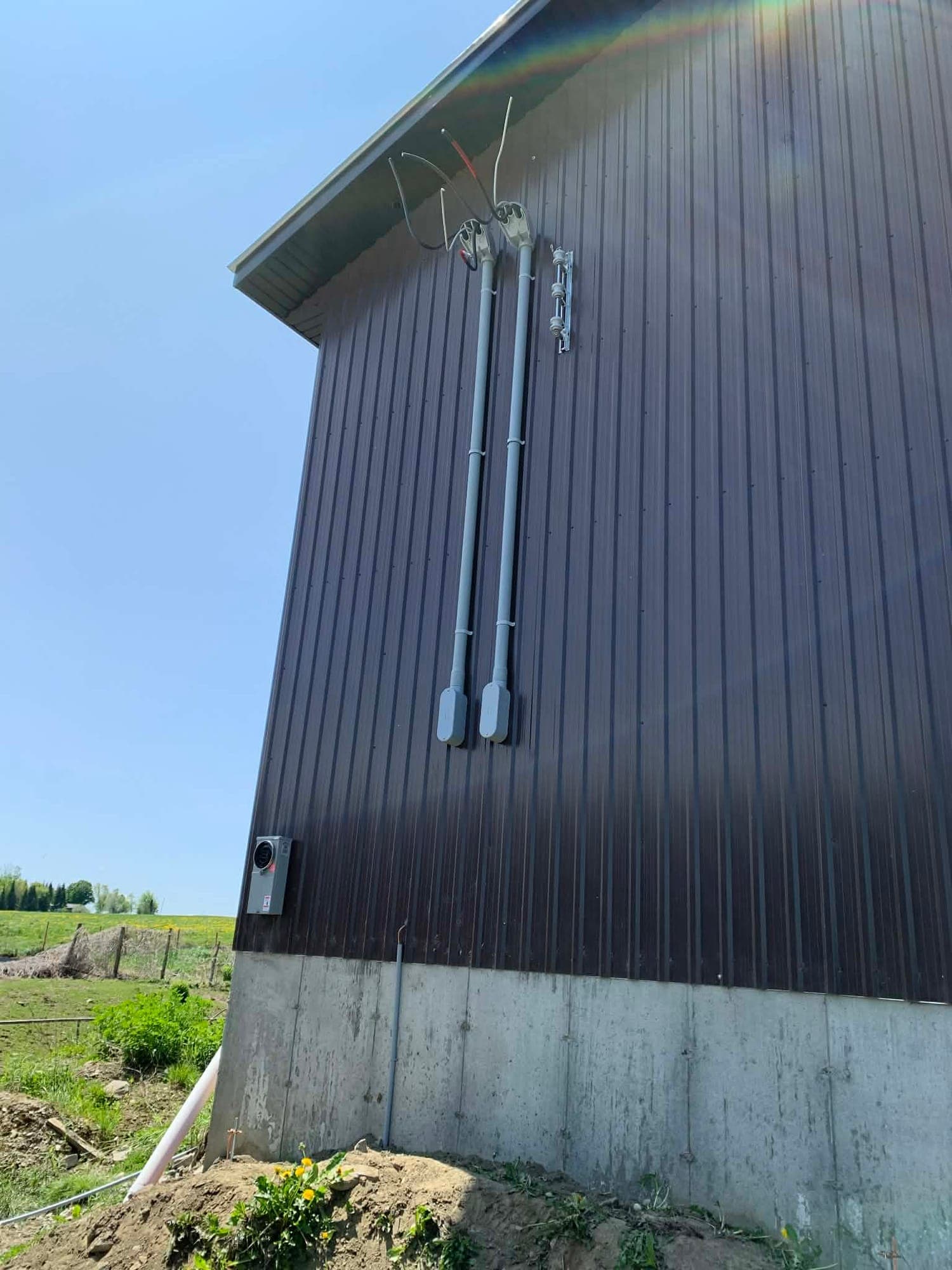
- According to Hydro-Québec, the mast, the gooseneck and the bracket belong to the owner; the meter belongs to the utility.
- Only a CMEQ member can carry out the work on your installation and send the request to Hydro-Québec.
- According to the CMEQ, the master electrician may never lengthen the utility’s service drop, or move it from one building to another, or from a building to a pole.
- Hydro-Québec charges for moving its service drop under section 9.3 of its Conditions of Service: the length, the poles and the main service box rating affect the amount.
- In Sherbrooke, tell Hydro-Sherbrooke early if the connection point is more than 30 m from the grid or if poles or lines are needed.
In this guide
What belongs to you, what belongs to the utility
| Part | Who it belongs to |
|---|---|
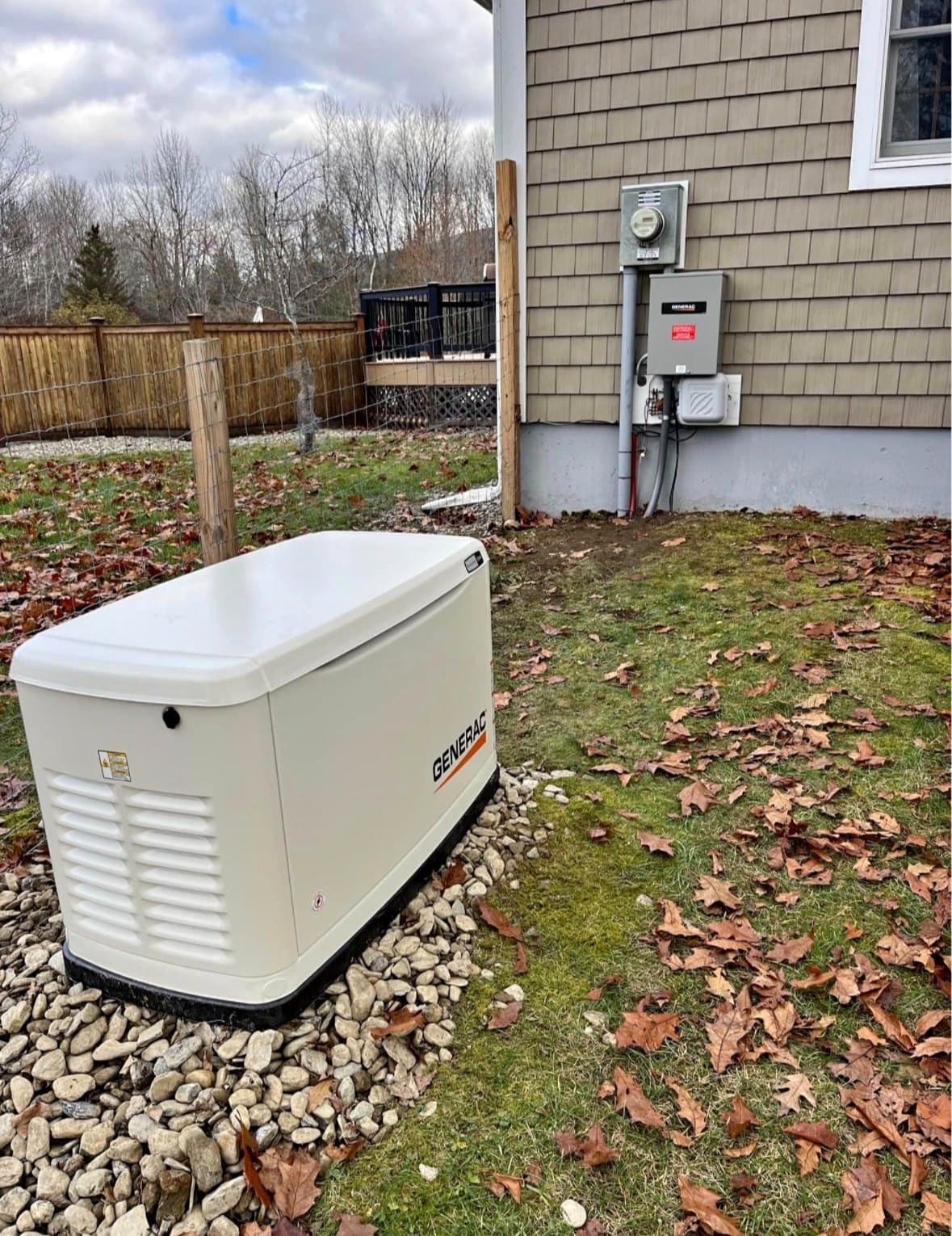
| The mast, the gooseneck and the bracket | The owner, according to Hydro-Québec |
| The meter | The utility: according to Hydro-Québec’s Conditions of Service, the metering equipment belongs to it |
| The service drop wires, between the pole and the house | The utility |
Moving the mast means doing work on your electrical installation, and asking the utility to move its wires and, if needed, its meter.
Why a service entrance gets moved
- An addition or a garage built where the service drop arrives.
- A deck, a balcony or a new roof that changes the heights.
- A pool under the wires: Hydro-Québec’s Conditions of Service set a specific price for moving the service drop because of pool clearance constraints.
- A worn mast being redone anyway: see Service mast torn off after a storm and Upgrading from 100 A to 200 A.
Who does what
- You hire an electrical contractor who is a CMEQ member. According to Hydro-Québec, only a member can carry out work on an electrical installation and send it the request.
- The master electrician assesses the new location, prepares the work on your installation (mast, meter base, cable to the panel) and tells you about the steps and possible fees.
- The service request is made by the owner or by someone the owner authorizes (Conditions of Service, section 8.1.1).
- The utility assesses its own work and its cost; you pay the applicable fees.
- The shutoff, the work and the reconnection are coordinated; Hydro-Québec installs the metering equipment.
What the master electrician can and cannot do
The CMEQ reminded its members in November 2024:
| Allowed, with Hydro-Québec’s prior authorization | Forbidden |
|---|---|
| Moving the utility’s service drop, shortening it and reconnecting it at the same point or at another point on the same building or on the customer’s pole | Lengthening the utility’s service drop |
| Working at the connection point when the customer’s service is modified or renovated | Moving it from one building to another, or from a building to a pole, and the reverse |
| Only for an overhead 120/240 V service drop of 200 A or less | Working on a 347/600 V service drop |
What affects Hydro-Québec’s fees
Section 9.3 of Hydro-Québec’s Conditions of Service applies when its service drop is modified, moved or replaced without increasing the rating of the main service box:
- A price based on the service box rating (table B.1) if the service drop is moved over 30 m or less, with no pole or anchor added or removed, at most 120 m of conductors added on the line and, if needed, a transformer of 25 kVA or less.
- A price specific to pools when the move is due to pool clearance constraints.
- The network intervention fee (table A.1) when the existing service drop only needs to be moved for an equal or shorter length.
- The sum of the prices of each element in all other cases, and for an underground service.
If the rating increases at the same time, for example from 100 A to 200 A, other rules apply: see Upgrading from 100 A to 200 A.
In Sherbrooke: Hydro-Sherbrooke
Part of Sherbrooke is served by Hydro-Sherbrooke; see Hydro-Sherbrooke or Hydro-Québec?. For a connection, Hydro-Sherbrooke asks to be told as early as possible:
- the Lines Division (819 821-5728) if the connection point is more than 30 m from the grid, if it is unclear, or if lines, poles or a transformer must be built;
- the metering section (819 821-5727, ext. 5422) for the declaration of work and the standards for meter installations.
What you can do yourself
According to the RBQ, work on an electrical installation must be done by a contractor holding the appropriate licence, even in your own home. What you can do is plan: bring up the service entrance before drawing the addition, the garage or the pool, so it doesn’t have to be moved twice. It’s all explained in Electrical work: what you can do yourself.
With LTE Électrique
- Master electrician, CMEQ member, RBQ licence 5874-5597-01.
- We assess the new location, prepare the request to the utility, move the mast, the meter base and the cable, and coordinate the shutoff and reconnection with Hydro-Québec or Hydro-Sherbrooke. See our Service entrance and connection service.
- Price set in advance, fixed or hourly depending on the project; 2-year warranty on labour.
- Free estimate within 24 hours: send us a photo of the mast and the meter, up close and from a distance, along with your project plan.
Frequently asked questions
- Who pays to move the mast?
- The owner. According to Hydro-Québec, the mast, the gooseneck and the bracket belong to you: moving them is work on your electrical installation. If the utility’s service drop must also be moved, Hydro-Québec charges for its work under section 9.3 of its Conditions of Service.
- Can I move the mast myself?
- No. According to the RBQ, work on an electrical installation must be done by a contractor holding the appropriate licence, even in a home you live in. And according to Hydro-Québec, only a CMEQ member can do this work and send it the request.
- Can the master electrician lengthen Hydro-Québec’s wires?
- No. The CMEQ reminds its members that lengthening the utility’s service drop is forbidden. With Hydro-Québec’s prior authorization, the electrician can move it, shorten it and reconnect it at the same connection point or at another point on the same building or on the customer’s pole.
- I’m building a garage: can the wires go from the house to the garage?
- Not by the master electrician alone. According to the CMEQ, the electrician cannot move the utility’s service drop from one building to another, or from a building to a pole, or the reverse: the utility must step in. We work out with you the best way to power the garage.
- I’m putting a pool under the wires: what should I do?
- Talk about it before installing the pool. Hydro-Québec’s Conditions of Service set a specific price for moving the service drop because of pool clearance constraints (section 9.3.1 b). We assess the location and send the request to the utility.
- Does the meter belong to me?
- No. According to the Conditions of Service, the metering equipment, including the meter, belongs to Hydro-Québec and is used to measure electricity. Hydro-Québec installs the metering equipment.
- Is the power cut during the work?
- Yes, during the work on the service entrance. The shutoff and reconnection are coordinated with your utility; we explain ahead of time how the day will go.
Sources
- Branchement, déplacement ou prolongement du réseau, Hydro-Québec, checked on October 27, 2026
- Conditions de service d’Hydro-Québec (en vigueur le 1er octobre 2026), articles 8.1.1, 9.3, 9.7.4, 20.2.12 et 21.1PDF, Hydro-Québec, checked on October 27, 2026
- Quoi faire pour éviter les dommages aux fils qui relient ma résidence au réseau électrique, Hydro-Québec, checked on October 27, 2026
- Attention aux interventions interdites sur le réseau d’Hydro-Québec ! (26 novembre 2024), Corporation des maîtres électriciens du Québec, checked on October 27, 2026
- Abonnement : planifier un raccordement électrique, Ville de Sherbrooke (Hydro-Sherbrooke), checked on October 27, 2026
- Travaux que vous pouvez faire vous-même, Régie du bâtiment du Québec, checked on October 27, 2026
About this guide
Written by LTE Électrique, a master electrician’s business in Sherbrooke (RBQ licence 5874-5597-01, CMEQ member). Every rule comes from Québec’s Construction Code or an official source, listed above with the date it was checked. French version reviewed by William Letendre, master electrician, on October 27, 2026.
About usCite this guide
To cite this guide, use its title, author and address:
“Moving your service mast or meter: who does what, and what to plan for”, LTE Électrique, https://www.lteelectrique.com/en/guides/moving-your-service-mast-or-meter-who-does-what, French version reviewed by William Letendre, master electrician, on October 27, 2026.