
In short
- According to the RBQ, the feeder leaving the house acts like a service for the second building: grounding must be re-established there.
- Two methods: a grounding electrode at each building, or a single grounding electrode at the house and a bonding conductor run with the feeder.
- The 2026 Code keeps both methods (section 10-120). The RBQ recommends the second in all cases; it is mandatory for a building that houses livestock.
- If the second building already has its own utility service, it is prohibited to also power it with a circuit from the house, with some exceptions.
- According to the CMEQ, the master electrician cannot move Hydro-Québec’s service drop from one building to another, or from a building to a pole.
In this guide
One service for two buildings
Most often, a detached garage, a workshop, a shed or a barn is powered from the house panel, through a feeder or a branch circuit leaving the main building. According to the RBQ, this feeder can be seen as a service for the second building, called the outbuilding: the **connection to ground must therefore be re-established** there.
The Code’s two methods
| Method | How, according to the RBQ |
|---|---|
| 1. A grounding electrode at each building | One grounding electrode for the main building, a second one for the outbuilding; the bonding conductor does not have to follow the feeder |
| 2. A single grounding electrode | The grounding electrode at the main building, and a bonding conductor run with the feeder conductors to the outbuilding |
What the 2026 Code keeps, and what the RBQ recommends
The Canadian Electrical Code removed the former section 10-208, which governed these installations, and now leaves only the second method. The RBQ chose to keep both methods in Québec: they are now in section 10-120 of the 2026 Code. The rules themselves already existed in the 2018 edition.
In its explanatory guide to the 2026 Code, the RBQ recommends the second method in all cases. It is also the only one compatible with ground fault protection under section 14-102: a grounding electrode at the second building would make it ineffective.
A barn or a stable
A building that houses livestock and is supplied by distribution equipment must be supplied only by the second method. According to the RBQ, animals are very sensitive to small differences of potential, and this method minimizes the voltage between the ground and the bonded metal. In that case, the bonding jumper in the outbuilding’s service box is removed.
The 2026 Code also requires the metal parts of structures accessible to livestock to be made equipotential with the electrical installation (section 10-700).
What is prohibited
- Doubling up the supply to a building that already has its own service. According to the RBQ, if the second building is already supplied by its own utility service, it is prohibited to supply equipment there with a feeder or branch circuit coming from another building, except for emergency supply and the cases in section 6-106. If the garage’s service is full, its capacity is increased. This rule comes from the RBQ guide based on the 2018 edition; the guide to the 2026 Code does not list it among the main changes.
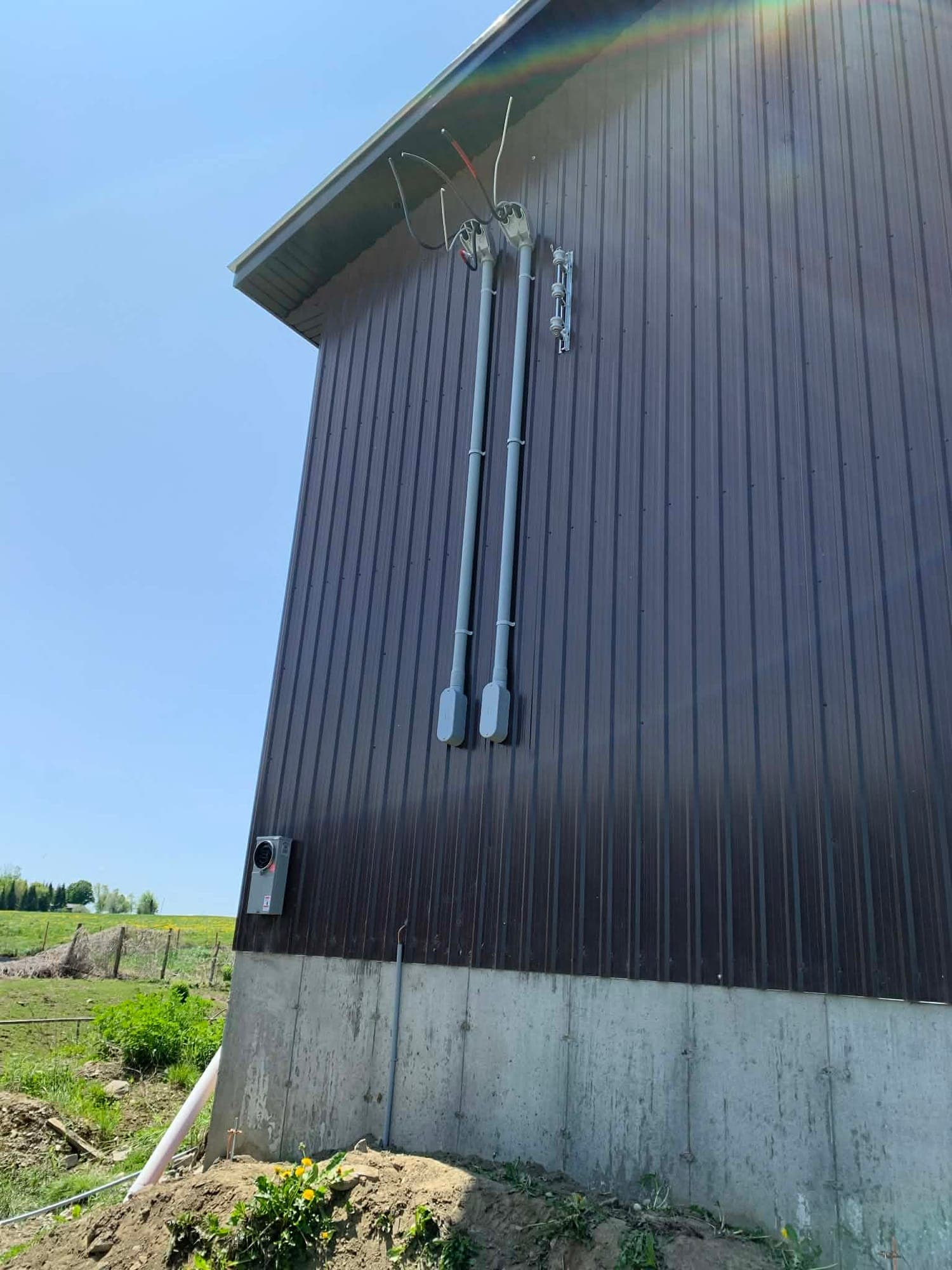
- Moving Hydro-Québec’s wires from one building to another. According to the CMEQ, the master electrician cannot move the utility’s service drop between two buildings, or between a building and a customer pole, or the reverse. See Moving your service mast or meter.
On a farm: several services on one pole
When several consumer services are connected to the same overhead utility service, for example on a pole, section 6-104 of the Code limits their number with two rules: the total calculated load does not exceed 600 A, and no more than 4 conductors are connected to each conductor of the utility service. This rule is a Québec amendment, kept in the 2026 Code. For an underground utility service, the utility’s requirements apply.
Before you dig
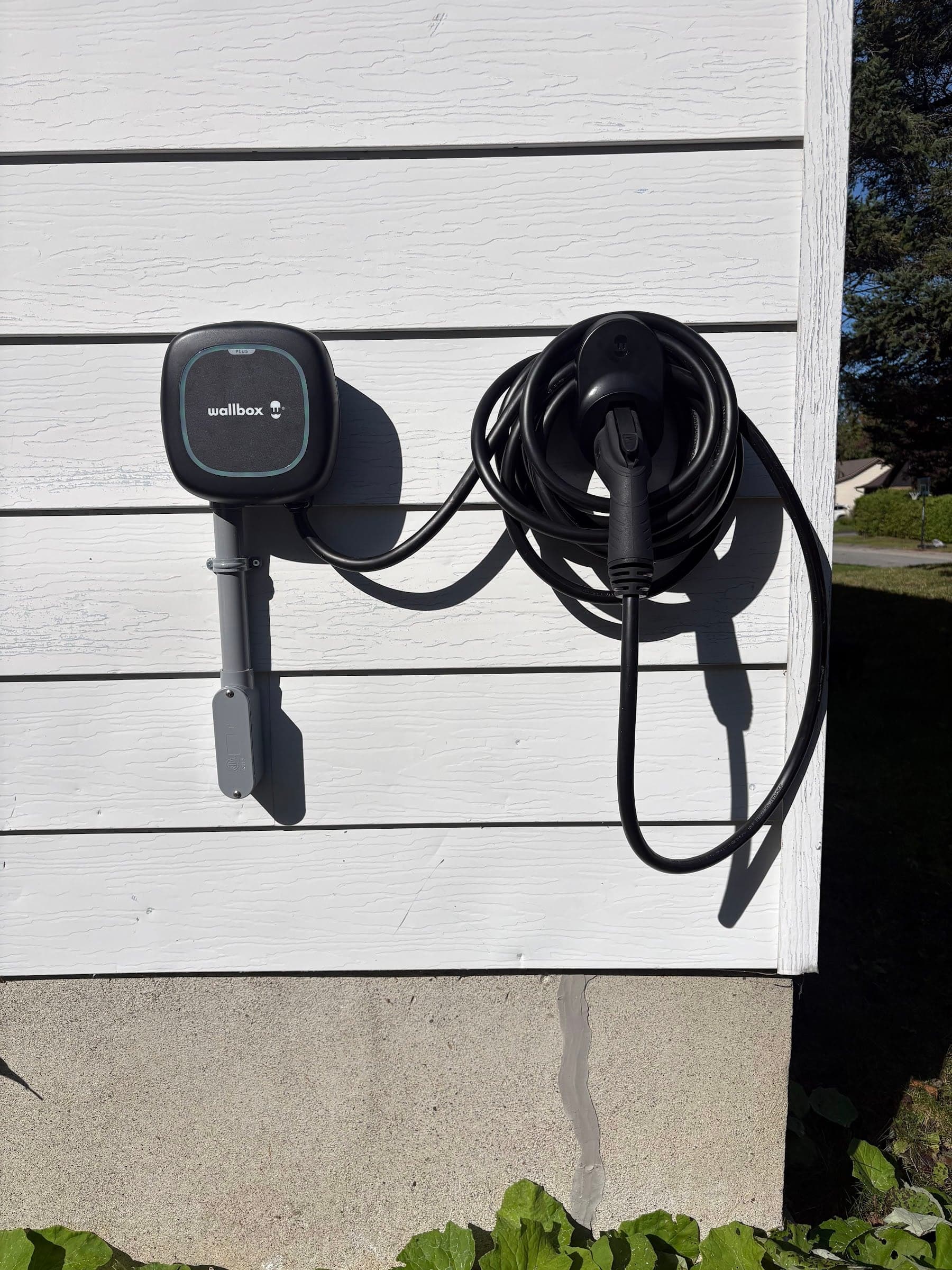
- Capacity: what you add to the garage or the workshop, an EV charger, heating, a compressor, adds to the house’s load calculation.
- The cable route: a buried cable must be buried at the depth set by the Code; think about your future projects (an addition, a pool) before choosing the route.
- The garage outlets: arc-fault protection, tamper-resistant outlets and EV chargers are all in our garage guide.
According to the RBQ, this work must be done by a contractor holding the appropriate licence, even in your own home. See what you can do yourself.
With LTE Électrique
- Master electrician, CMEQ member, RBQ licence 5874-5597-01.
- We power detached garages, workshops, sheds and farm buildings: subpanel, feeder, grounding and bonding using the right method. See Electrical renovation and Electrical service entrance.
- We check the load calculation before the work.
- Price given upfront, fixed or hourly depending on the project; 2-year labour warranty.
- Free estimate within 24 hours: send us a photo of the panel with the door open, the distance between the two buildings and what you want to power there.
Frequently asked questions
- Can the detached garage be powered from the house panel?
- Yes, that is the most common case: a single service powers both buildings, through a feeder or a branch circuit. According to the RBQ, the feeder then acts like a service for the garage: grounding must be re-established there using one of the Code’s two methods.
- What are the two grounding methods?
- According to the RBQ: either a grounding electrode at the main building and a second one at the outbuilding; or a single grounding electrode at the main building, and a bonding conductor run with the feeder conductors to the outbuilding.
- Which one is best?
- In its explanatory guide to the 2026 Code, the RBQ recommends the second one, with the bonding conductor, in all cases. It is also the only one compatible with ground fault protection under section 14-102: a grounding electrode at the second building would make it ineffective.
- What about a barn or a stable?
- A building that houses livestock and is supplied by distribution equipment must be supplied only by the second method. According to the RBQ, animals are very sensitive to small differences of potential. The 2026 Code also requires the metal parts of structures accessible to livestock to be made equipotential.
- My garage has its own meter but lacks capacity: can we run a circuit from the house?
- No. According to the RBQ, it is prohibited to supply equipment in a building already supplied by its own utility service with a feeder or branch circuit from another building, except for emergency supply and the cases in section 6-106. The capacity of the garage’s service has to be increased instead.
- Can Hydro-Québec’s wires be moved from the house to the garage?
- Not by the master electrician alone. According to the CMEQ, they are prohibited from moving the utility’s service drop between two buildings, or between a building and a customer pole. The utility has to step in.
- Does the house panel have the capacity?
- The load calculation tells you. What you add to the garage or the workshop, such as an EV charger, heating or tools, adds to the house’s load. We check it before the work.
Sources
- Cahier explicatif sur les principaux changements au chapitre V, Électricité (édition 2026), articles 6-104, 10-120 et 10-700PDF, Régie du bâtiment du Québec, checked on November 3, 2026
- Guide d’accompagnement : contrôle de la qualité des travaux d’installation électrique (octobre 2023), vérifications 2.7 et 2.8PDF, Régie du bâtiment du Québec, checked on November 3, 2026
- Attention aux interventions interdites sur le réseau d’Hydro-Québec ! (26 novembre 2024), Corporation des maîtres électriciens du Québec, checked on November 3, 2026
- Prolongation de la période transitoire en électricité (2 septembre 2026), Corporation des maîtres électriciens du Québec, checked on November 3, 2026
- Travaux que vous pouvez faire vous-même, Régie du bâtiment du Québec, checked on November 3, 2026
About this guide
Written by LTE Électrique, a master electrician’s business in Sherbrooke (RBQ licence 5874-5597-01, CMEQ member). Every rule comes from Québec’s Construction Code or an official source, listed above with the date it was checked.
About usCite this guide
To cite this guide, use its title, author and address:
“Powering a detached garage, a workshop or a barn: service and grounding”, LTE Électrique, https://www.lteelectrique.com/en/guides/powering-detached-garage-workshop-barn.