
In short
- Only a contractor who is a CMEQ member sends the connection request to Hydro-Québec, once its work is done and compliant.
- Prepare the site plan, cadastre, easements and photos early; Hydro-Québec’s fees are yours to pay.
- Far from the road, private poles are sometimes needed; the service is overhead or underground depending on the land and the utility.
- The generator connects through a transfer switch or an interlock, never through an outlet; the well pump draws a lot at start-up.
- Outdoors, every ordinary outlet within 2.5 m of the ground has a GFCI, block heaters included; on the waterfront, check whether the land is in a designated flood zone.
In this guide
The steps of a connection
According to Hydro-Québec, a connection follows ten steps, shared between you, the contractor and the utility:
| Step | Who | What happens |
|---|---|---|
| 1 | You | You hire an electrical contractor who is a CMEQ member |
| 2 | Contractor | It does its work, then sends the request once the work is done and compliant |
| 3 | Hydro-Québec | It registers the request and gives a confirmation number |
| 4 | Contractor | It follows up and plants private poles if needed |
| 5 | Hydro-Québec | It assesses its work and sends you the agreements |
| 6 | You | Before its work: easements, signed agreements and proof of the required payment |
| 7 | Hydro-Québec | It assesses vegetation, clearing or poles, and coordinates with the companies |
| 8 | Contractor | It confirms the installation is ready to be connected |
| 9 | Hydro-Québec | It installs the meter, does its work and energizes the service |
| 10 | You | You pay the applicable fees |
The documents to prepare
Hydro-Québec gives as examples:
- the site plan;
- a cadastral extract and the subdivision plan;
- copies of easements;
- photos.
Overhead, underground or on private poles
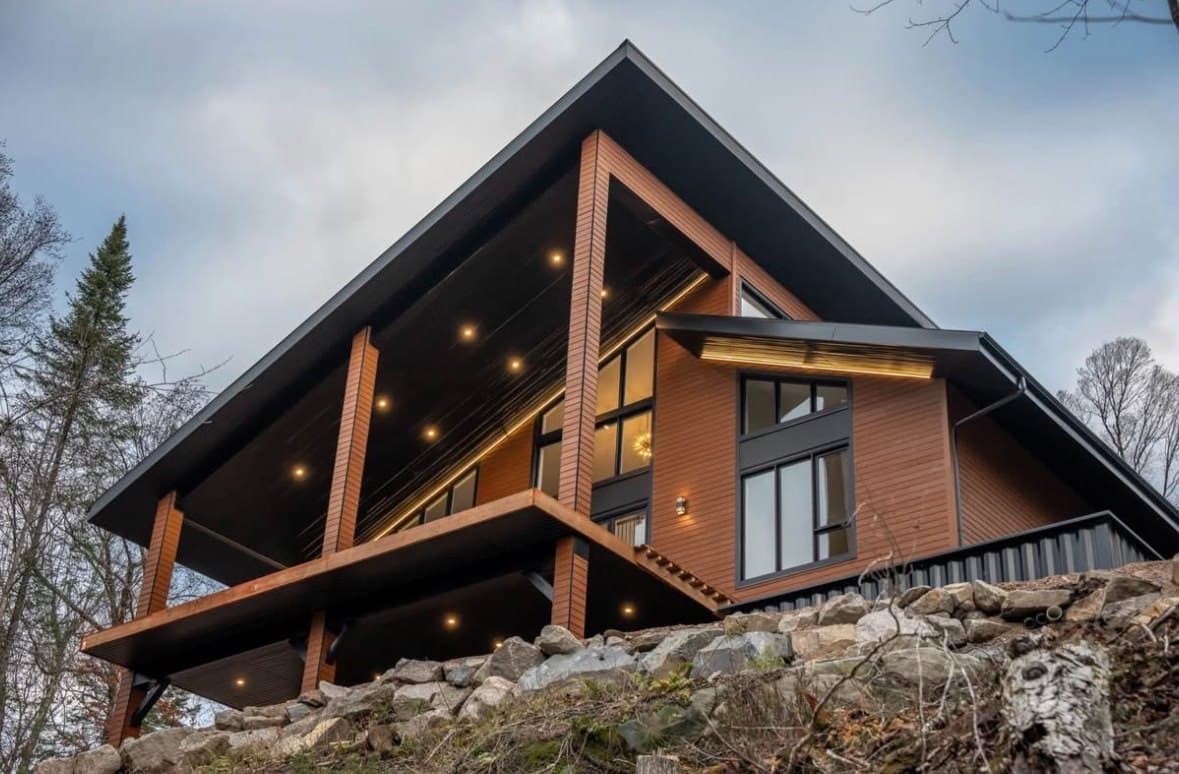
An overhead service comes in through a mast attached to the building: simpler, but exposed to branches and ice. An underground service comes in through a trench and conduits: it is out of sight, but needs more work and close coordination with the utility. A cottage far from the road sometimes needs private poles. The choice depends on the land, the distance and what the utility offers; our overhead or underground guide compares the two.
Winter, when the cottage is empty
- Keep enough heat to prevent freezing, and plan who checks on the cottage after an outage.
- Follow outages in your area on our Power outages page.
- The well pump draws a lot at start-up: count it when choosing a generator.
The generator
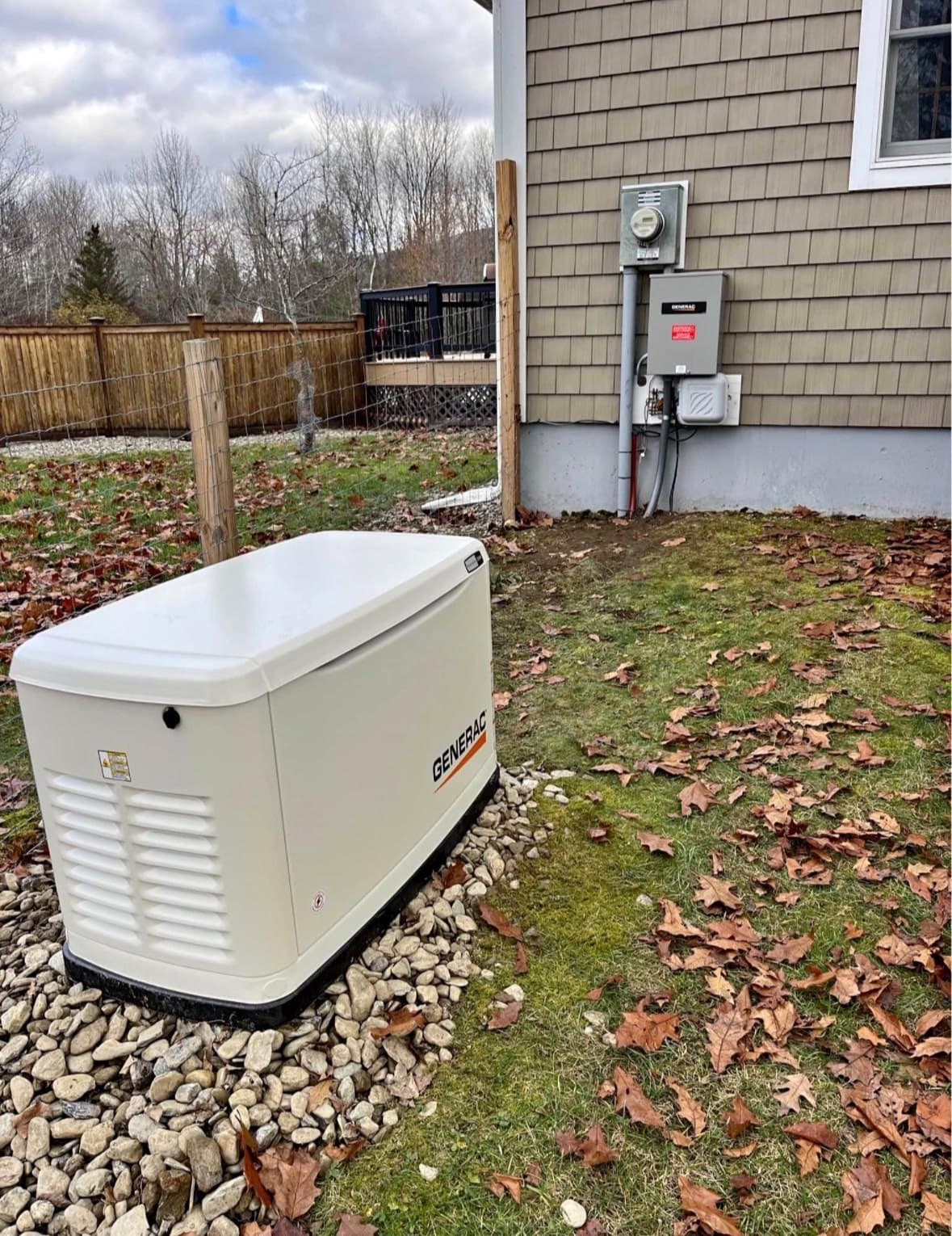
Never use a double male cord in an outlet: power flows back into the grid and can kill a line worker. The right way: a transfer switch or a panel interlock, with an outdoor power inlet, installed by an electrician. The generator always stays outdoors, because of carbon monoxide.
How much power
According to Honda Canada’s guide, a 1/2 hp well pump needs about 1,000 W running and 2,100 W at start-up. Our What size generator do you need? tool has an “empty cottage in winter” profile: water, the fridge and enough heat to keep it from freezing. To choose the device, see our transfer switch guide.
Outdoors
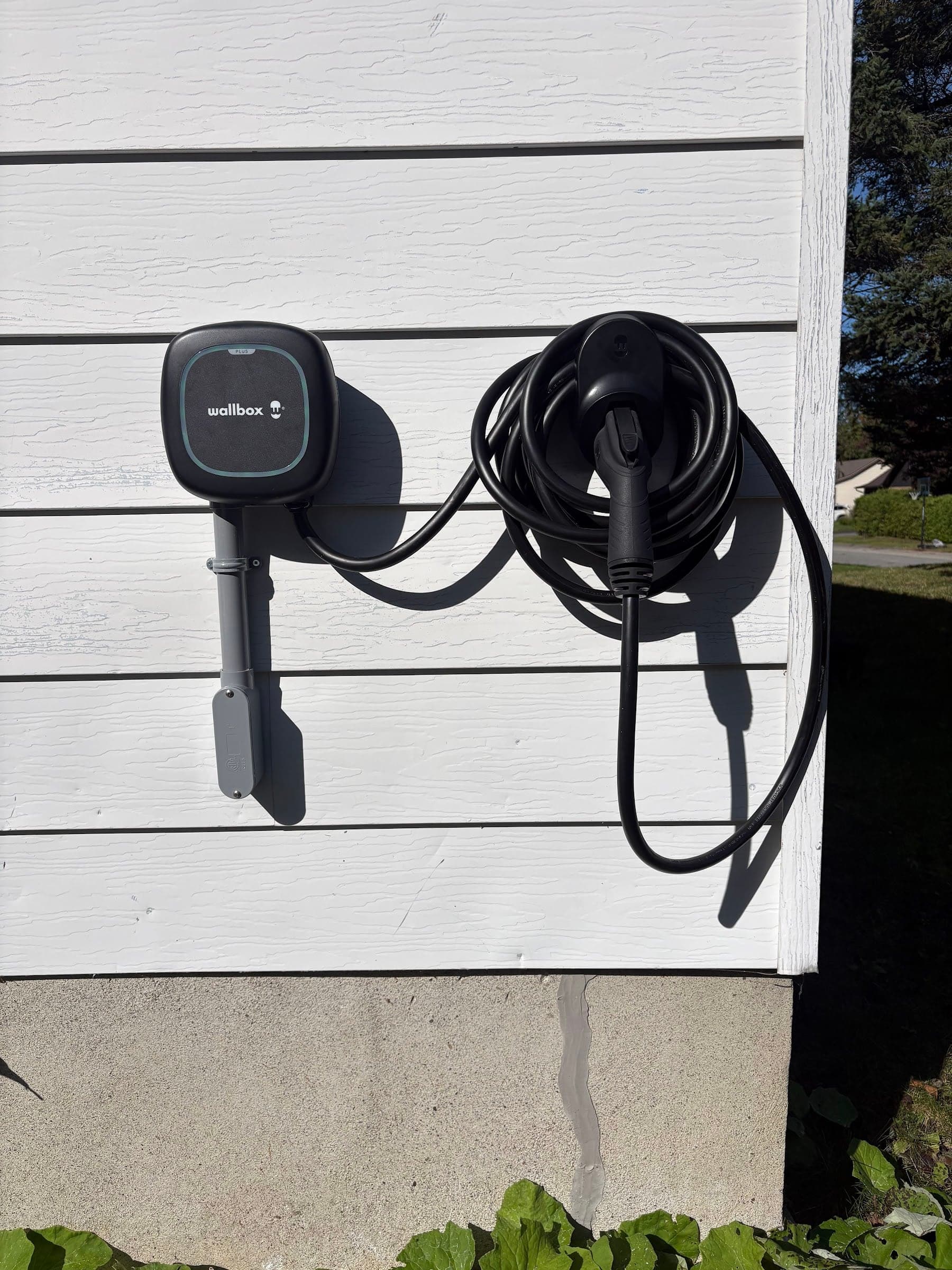
- Every ordinary outdoor outlet within 2.5 m of the ground is protected by a Class A GFCI; since the 2026 Code, block heater outlets too. It has a weatherproof box and a protective cover.
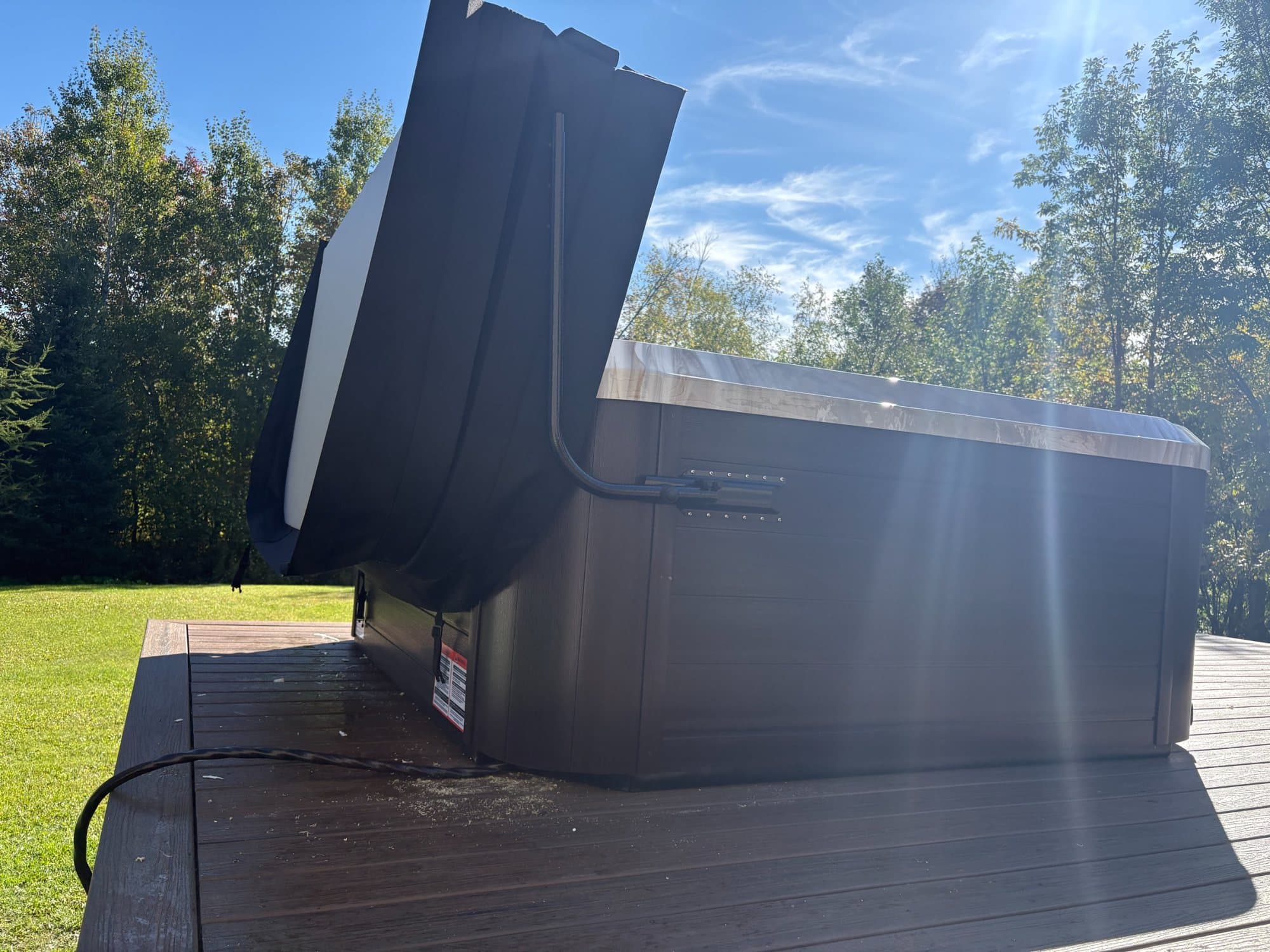
- A hot tub needs its dedicated circuit, GFCI protection and a disconnect within sight: see our hot tub and pool guide.
On the waterfront
The 2026 Code covers installations in a flood-risk zone: service equipment doesn’t go below the flood level, below-grade circuits get ground-fault protection, and the sump pump outlet is above the flood level or approved for immersion. A zone is covered only if the competent authority has designated it: the RBQ recommends checking with the municipality or the RCM.
Alarms and carbon monoxide
A wood stove or a fireplace is a fuel-burning appliance: a carbon monoxide alarm is then required near bedrooms, in addition to smoke alarms. Our smoke alarm guide says more.
Grants
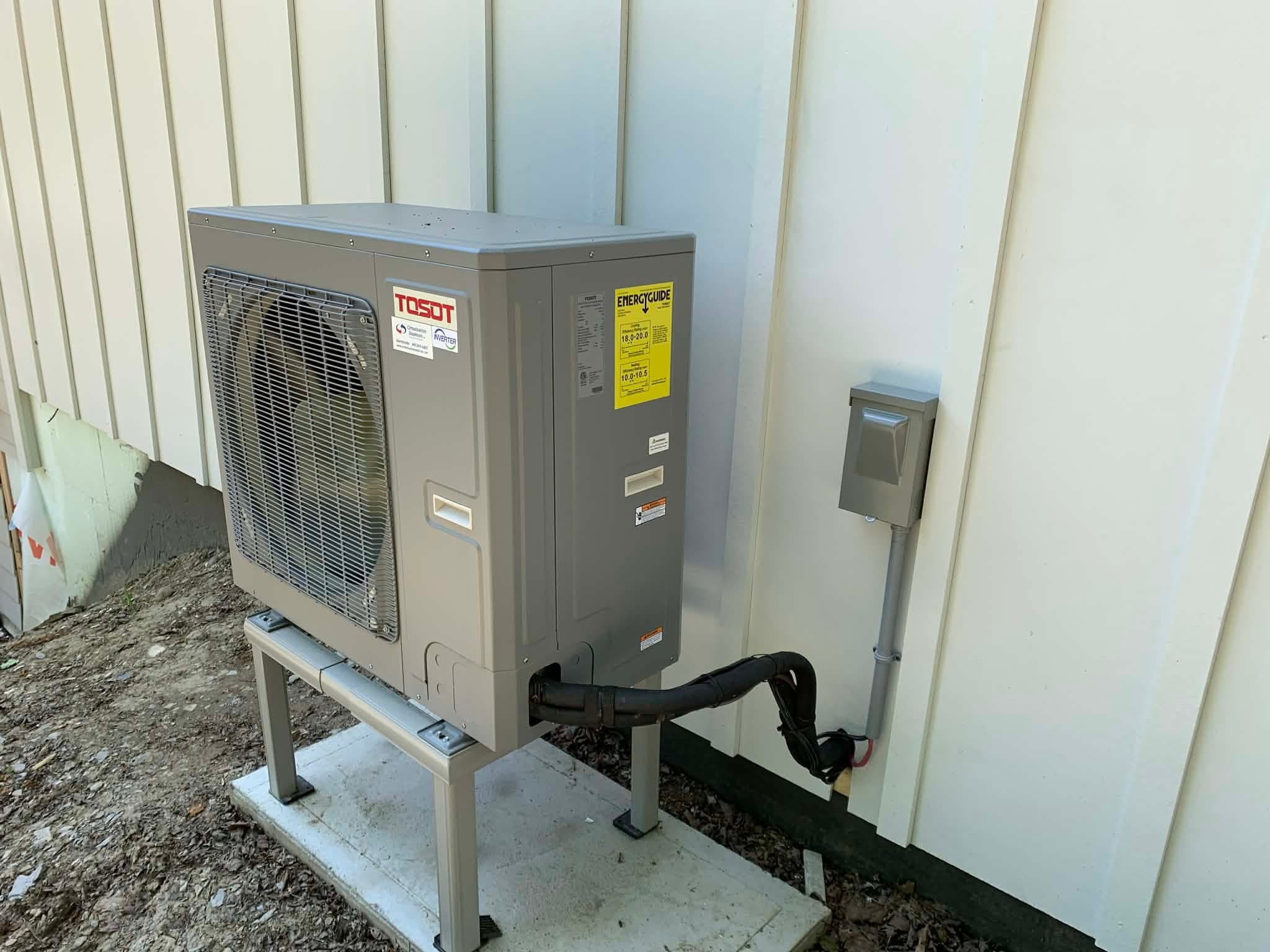
LogisVert covers year-round habitable cottages, among others, for a heat pump, subject to the program’s conditions. See our Rebates page.
Buying a cottage
Before buying, look at the service, the panel, the heating and the pump wiring: our pre-purchase inspection guide says what to check.
With LTE Électrique
- We handle the request to the utility, the service, the panel and the generator, from Sherbrooke to Magog, Orford and North Hatley.
- Free estimate within 24 hours; price announced in advance, fixed or hourly depending on the project; anything unexpected is done only with your approval.
- According to the RBQ, this work requires a licensed contractor, even at the cottage: RBQ licence 5874-5597-01.
Frequently asked questions
- Who requests the connection from Hydro-Québec?
- According to Hydro-Québec, only a member of the Corporation des maîtres électriciens du Québec (CMEQ) can send it the work request. The customer pays the applicable fees.
- What documents are needed to connect a cottage?
- Hydro-Québec gives as examples the site plan, a cadastral extract, the subdivision plan, copies of easements and photos. We tell you which ones apply to your land.
- My cottage is far from the road: are poles needed?
- Sometimes. If needed, the contractor plants private poles, and Hydro-Québec assesses vegetation, clearing or poles on its side. The land and the distance decide.
- Is a generator enough for the well pump?
- According to Honda Canada’s guide, a 1/2 hp pump needs about 1,000 W running and 2,100 W at start-up. Add it to the rest with our “What size generator do you need?” tool.
- Can I plug the generator into a cottage outlet?
- No. A double male cord sends power back into the grid and can kill a line worker. You need a transfer switch or a panel interlock, with an outdoor power inlet.
- My cottage is on a lake: is it in a flood zone?
- Under the Code, only if the competent authority has designated it, by municipal bylaw or provincial map. The RBQ recommends checking with the municipality or the RCM. If so, extra rules apply.
- Does my cottage qualify for LogisVert?
- The program covers year-round habitable cottages, among others, subject to its conditions: check the official page before you buy your heat pump.
- Does my wood stove change anything?
- Yes: with a fuel-burning appliance, such as a wood stove or a fireplace, a carbon monoxide alarm is required near bedrooms, in addition to smoke alarms.
- Can I do my cottage’s electrical work myself?
- No: according to the RBQ, electrical work must be done by a contractor holding the appropriate licence, whether at home, in a condo or at the cottage.
Sources
- Branchement, déplacement ou prolongement du réseau, Hydro-Québec, checked on October 20, 2026
- Code de construction, Chapitre V - Électricité 2026, Corporation des maîtres électriciens du Québec, checked on October 20, 2026
- Cahier explicatif sur les principaux changements au chapitre V, Électricité (édition 2026)PDF, Régie du bâtiment du Québec, checked on October 20, 2026
- LogisVert, Hydro-Québec, checked on October 20, 2026
- Renseignements sur la sécurité des génératrices : guide de puissance en wattsPDF, Honda Canada, checked on October 20, 2026
- Travaux que vous pouvez faire vous-même, Régie du bâtiment du Québec, checked on October 20, 2026
About this guide
Written by LTE Électrique, a master electrician’s business in Sherbrooke (RBQ licence 5874-5597-01, CMEQ member). Every rule comes from Québec’s Construction Code or an official source, listed above with the date it was checked. French version reviewed by William Letendre, master electrician, on October 21, 2026.
About usCite this guide
To cite this guide, use its title, author and address:
“Electricity at the cottage: connection, winter and generator”, LTE Électrique, https://www.lteelectrique.com/en/guides/cottage-electrical-connection-winter, French version reviewed by William Letendre, master electrician, on October 21, 2026.